How Yellowstone Became the First National Park
AdvancedTravel & PlacesGuion modelo de una presentación en inglés con traducción al español. Escucha y practica diapositiva por diapositiva.
How Yellowstone Became the First National Park
An idea that changed travel
Model script
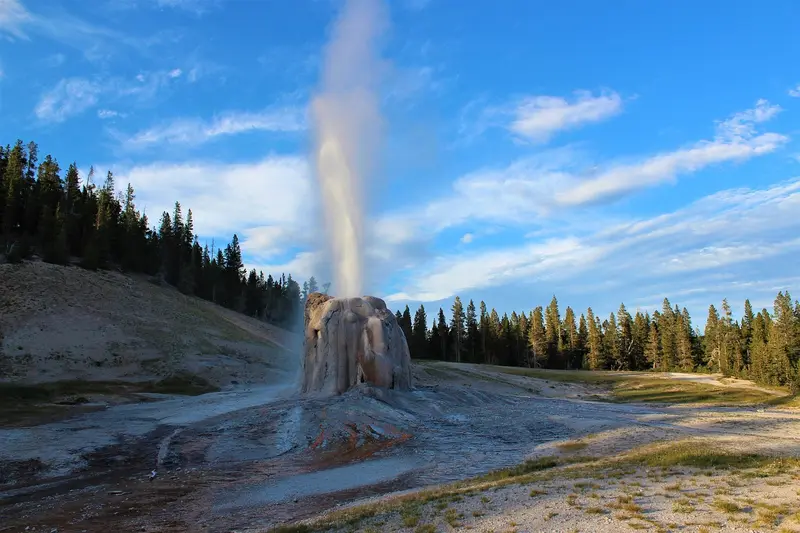
Good afternoon, everyone. Last summer, I watched a geyser shoot hot water into the sky in Yellowstone. Standing there, I wondered: who decided that this land should belong to everyone? Today, I'll explain how the idea of a national park began.
Your recording
Say this slide out loud, then listen to yourself.
Recordings stay on this device and disappear when you leave the page.
Useful phrases
Standing there, I wondered:
While I was there, I asked myself.
belong to everyone
Be owned by all people together.
Full script
Read the whole talk.
All slides in one place. Read it through once, then practice slide by slide.
01How Yellowstone Became the First National Park
Good afternoon, everyone. Last summer, I watched a geyser shoot hot water into the sky in Yellowstone. Standing there, I wondered: who decided that this land should belong to everyone? Today, I'll explain how the idea of a national park began.
Buenas tardes a todos. El verano pasado vi un géiser lanzar agua caliente al cielo en Yellowstone. Allí de pie, me pregunté: ¿quién decidió que esta tierra debía pertenecer a todos? Hoy les voy a explicar cómo empezó la idea de un parque nacional.
02A Land of Wonders
Yellowstone is famous for its geysers, colorful hot springs, and wild animals like bison and bears. Even today, descriptions of boiling mud and exploding water sound almost unbelievable.
Yellowstone es famoso por sus géiseres, sus aguas termales de colores y sus animales salvajes, como los bisontes y los osos. Incluso hoy, las descripciones del lodo hirviendo y del agua que estalla suenan casi increíbles.
03March 1, 1872
On March first, eighteen seventy-two, President Ulysses S. Grant signed the law that created Yellowstone National Park. It is known as the first national park.
El primero de marzo de mil ochocientos setenta y dos, el presidente Ulysses S. Grant firmó la ley que creó el Parque Nacional de Yellowstone. Se le conoce como el primer parque nacional.
Source: U.S. National Park Service, "Grant and Yellowstone"
04A Revolutionary Idea
What made it revolutionary was the purpose. The law set the land aside as a public park "for the benefit and enjoyment of the people." In other words, beautiful nature would not belong only to the rich or be sold for profit.
Lo revolucionario fue su propósito. La ley reservó esas tierras como parque público «para el beneficio y disfrute del pueblo». Es decir, la naturaleza hermosa no pertenecería solo a los ricos ni se vendería para obtener ganancias.
Source: U.S. National Park Service, "Grant and Yellowstone"
05Not the Whole Story
But we should tell the whole story. According to the National Park Service, people have spent time in the Yellowstone region for more than eleven thousand years, and twenty-seven tribes have connections to the park. Their history is part of Yellowstone, too.
Pero debemos contar la historia completa. Según el Servicio de Parques Nacionales, ha habido personas en la región de Yellowstone durante más de once mil años, y veintisiete tribus tienen vínculos con el parque. Su historia también forma parte de Yellowstone.
Source: U.S. National Park Service, Yellowstone "Associated Tribes" and "Park History"
06From One Park to Hundreds
From that one park, the idea grew. Today, the U.S. National Park Service manages more than four hundred sites, including sixty-three national parks, and many countries around the world have created their own.
A partir de ese único parque, la idea creció. Hoy, el Servicio de Parques Nacionales de Estados Unidos administra más de cuatrocientos sitios, entre ellos sesenta y tres parques nacionales, y muchos países del mundo han creado los suyos.
Source: U.S. National Park Service, "National Park System"
07What It Means for Travelers
For us as visitors, the idea of "for the people" comes with responsibility. Stay on the trails, keep a safe distance from wild animals, and leave nothing behind, so the next visitors can enjoy it too.
Para nosotros, como visitantes, la idea de «para el pueblo» viene con una responsabilidad. No se salgan de los senderos, mantengan una distancia segura de los animales salvajes y no dejen nada atrás, para que los próximos visitantes también puedan disfrutarlo.
08Conclusion
To sum up, in 1872 a simple but powerful idea was born: some places are too special to belong to anyone, so they should belong to everyone. Next time you visit a national park, remember that idea. Thank you.
En resumen, en 1872 nació una idea sencilla pero poderosa: algunos lugares son demasiado especiales para pertenecer a alguien, así que deben pertenecer a todos. La próxima vez que visiten un parque nacional, recuerden esa idea. Gracias.
Source: U.S. National Park Service, "Grant and Yellowstone"
Cover photo by Darilon on Pixabay