Why You Should Learn a Second Language
IntermediateSchool & StudyGuion modelo de una presentación en inglés con traducción al español. Escucha y practica diapositiva por diapositiva.
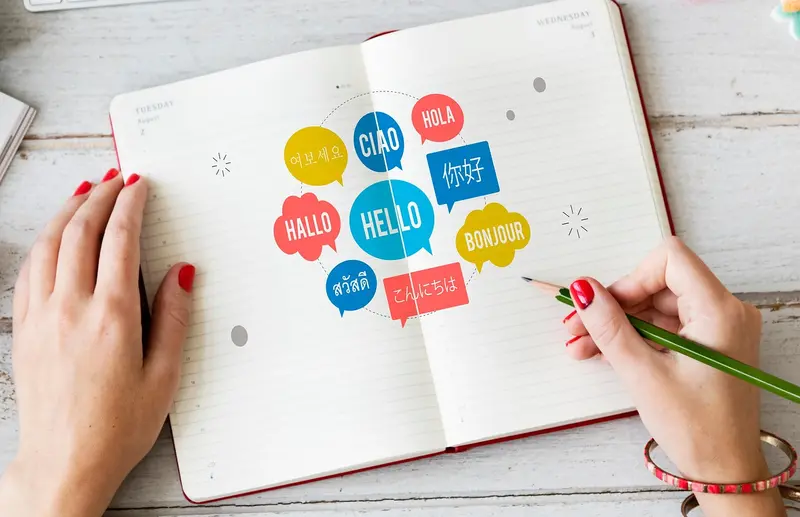
Why You Should Learn a Second Language
It's more than a school subject
Model script
Good afternoon. How many languages do you speak? Today, I'd like to convince you that learning a second language is one of the best things you can do for yourself.
Your recording
Say this slide out loud, then listen to yourself.
Recordings stay on this device and disappear when you leave the page.
Useful phrases
I'd like to convince you that...
Say that you want the audience to agree with you.
one of the best things
Use this to say that something is very good.
Full script
Read the whole talk.
All slides in one place. Read it through once, then practice slide by slide.
01Why You Should Learn a Second Language
Good afternoon. How many languages do you speak? Today, I'd like to convince you that learning a second language is one of the best things you can do for yourself.
Buenas tardes. ¿Cuántos idiomas hablan? Hoy me gustaría convencerlos de que aprender un segundo idioma es una de las mejores cosas que pueden hacer por ustedes mismos.
02More People to Talk To
The first reason is simple: you can talk to more people. When you learn a new language, you can make friends from other countries and understand them in their own words.
La primera razón es sencilla: pueden hablar con más personas. Cuando aprenden un idioma nuevo, pueden hacer amigos de otros países y entenderlos con sus propias palabras.
03Better Job Chances
Second, a second language can open doors in your career. Many companies work with people around the world, so language skills can help you stand out.
Segundo, un segundo idioma puede abrirles puertas en su carrera. Muchas empresas trabajan con personas de todo el mundo, así que saber idiomas puede ayudarlos a destacar.
04Exercise for Your Brain
Third, learning a language is great exercise for your brain. Switching between two languages makes you think in flexible ways. Some studies even suggest it may help keep the brain healthy as we get older.
Tercero, aprender un idioma es un gran ejercicio para el cerebro. Pasar de un idioma a otro nos hace pensar de forma flexible. Algunos estudios incluso sugieren que podría ayudar a mantener el cerebro sano a medida que envejecemos.
Source: Bialystok, Craik & Freedman, "Bilingualism as a protection against the onset of symptoms of dementia", Neuropsychologia (2007)
05"But It's Too Hard!"
Of course, many people say, "I don't have time," or "I'm too old." But even ten minutes a day can make a difference, and you can start at any age. Mistakes are not a problem; they are part of learning.
Claro, mucha gente dice: “No tengo tiempo” o “Ya soy demasiado mayor”. Pero incluso diez minutos al día pueden marcar la diferencia, y se puede empezar a cualquier edad. Los errores no son un problema; son parte del aprendizaje.
06How to Start
So how can you start? First, choose one language. Next, set a small goal for every day. Then, start speaking early, even if it's difficult. Finally, find a partner or a group to practice with.
Entonces, ¿cómo pueden empezar? Primero, elijan un idioma. Luego, pónganse una pequeña meta para cada día. Después, empiecen a hablar pronto, aunque cueste. Por último, busquen un compañero o un grupo con quien practicar.
07Conclusion
To wrap up, a second language gives you new friends, new chances, and new ways of thinking. It's never too late to start. Why not begin today? Thank you.
Para terminar, un segundo idioma les da nuevos amigos, nuevas oportunidades y nuevas formas de pensar. Nunca es tarde para empezar. ¿Por qué no comenzar hoy? Gracias.
Cover photo by Tridindia on Pixabay