Why Does Bread Rise? The Science in Your Kitchen
AdvancedFood & Cooking英語プレゼンのお手本の原稿と日本語訳。スライドごとに、聞いて・話して練習できます。
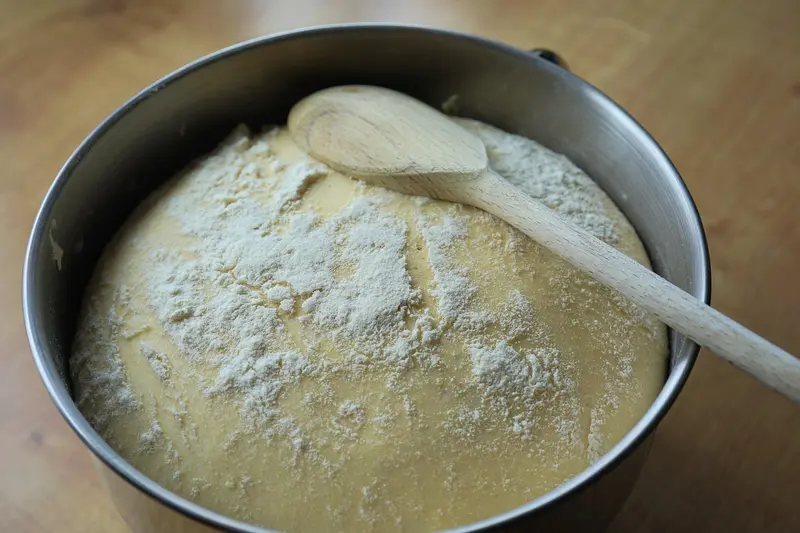
Why Does Bread Rise?
The science in your kitchen
Model script
Good morning. I'm a chemistry teacher, and on weekends, I bake bread with my children. They always ask me, "Why does the dough get bigger?" Today, I'll explain the science, step by step.
Your recording
Say this slide out loud, then listen to yourself.
Recordings stay on this device and disappear when you leave the page.
Useful phrases
get bigger
Grow in size.
step by step
One stage at a time.
Full script
Read the whole talk.
All slides in one place. Read it through once, then practice slide by slide.
01Why Does Bread Rise?
Good morning. I'm a chemistry teacher, and on weekends, I bake bread with my children. They always ask me, "Why does the dough get bigger?" Today, I'll explain the science, step by step.
おはようございます。私は化学の教師で、週末には子どもたちとパンを焼きます。子どもたちはいつも「どうして生地が大きくなるの?」と聞いてきます。今日は、その科学を一つずつ説明します。
02Four Simple Ingredients
Basic bread needs only four ingredients: flour, water, salt, and yeast. The star of the story is yeast, which is a tiny living thing. It's actually a type of fungus, made of just one cell.
基本のパンに必要な材料は、小麦粉、水、塩、イーストの四つだけです。この話の主役は、イーストです。イーストは小さな生き物で、実はたった一つの細胞でできた、菌類の一種なのです。
Source: Institute of Food Science & Technology (IFST), Love Food Love Science: "Raising agents: biological (fermentation)"
03Stage 1: Yeast Makes Gas
In the first stage, yeast feeds on sugars in the dough. As it feeds, it produces carbon dioxide gas and a little alcohol. This process is called fermentation.
最初の段階では、イーストが生地の中の糖を食べます。食べるときに、二酸化炭素のガスと、少しのアルコールを出します。この働きを発酵といいます。
Source: Institute of Food Science & Technology (IFST), Love Food Love Science: "Raising agents: biological (fermentation)"
04Stage 2: Gluten Traps the Gas
But gas alone isn't enough. It needs to be trapped. When flour is mixed with water, two proteins in wheat form gluten. Kneading makes the gluten stretchy, like a net of tiny balloons that holds the gas.
でも、ガスだけでは足りません。それを閉じ込める必要があります。小麦粉を水と混ぜると、小麦に含まれる二つのたんぱく質がグルテンを作ります。こねるとグルテンがよく伸びるようになり、ガスをためておく小さな風船の網のようになります。
Source: Exploratorium, "Science of Bread: Bread Science 101"
05Stage 3: The Oven
In the oven, the heat makes the gas expand, so the bread rises even more. The alcohol evaporates, and the yeast is killed by the heat. That's why baked bread doesn't keep growing.
オーブンの中では、熱でガスがふくらむので、パンはさらにふくらみます。アルコールは蒸発し、イーストは熱で死んでしまいます。だから、焼き上がったパンはそれ以上大きくならないのです。
Source: Institute of Food Science & Technology (IFST), Love Food Love Science: "Raising agents: biological (fermentation)"
06Why Bread Sometimes Fails
This also explains why my first loaves were flat. If the water is too hot, it can kill the yeast before it starts. If you don't knead enough, the gas escapes. And if you're impatient, the yeast simply doesn't have time to work.
これで、私が最初に焼いたパンがぺちゃんこだった理由も分かります。水が熱すぎると、イーストが働き始める前に死んでしまうことがあります。こね方が足りないと、ガスが逃げてしまいます。そして、待ちきれないと、イーストが働く時間がないのです。
Sources: Institute of Food Science & Technology (IFST), Love Food Love Science: "Raising agents: biological (fermentation)"; Exploratorium, "Science of Bread: Bread Science 101"
07A Simple Way to Remember
Here's a simple way to remember it: yeast makes the gas, gluten holds the gas, and heat makes the gas grow. Three stages, one fluffy loaf.
簡単な覚え方を紹介します。イーストがガスを作り、グルテンがガスをため、熱がガスを大きくする。三つの段階で、ふわふわのパンが一つできます。
08Conclusion
In conclusion, every loaf of bread is a small science experiment with living things. Next time you eat a slice, think about the tiny workers that made it rise. Thank you.
まとめると、パンの一つ一つは、生き物を使った小さな科学の実験です。次にパンを一切れ食べるときは、それをふくらませた小さな働き手たちのことを思い出してください。ありがとうございました。
Cover photo by webandi on Pixabay