Kanji Felt Impossible. Here's How I Started Making Progress
IntermediateJapan & CultureGuion modelo de una presentación en inglés con traducción al español. Escucha y practica diapositiva por diapositiva.
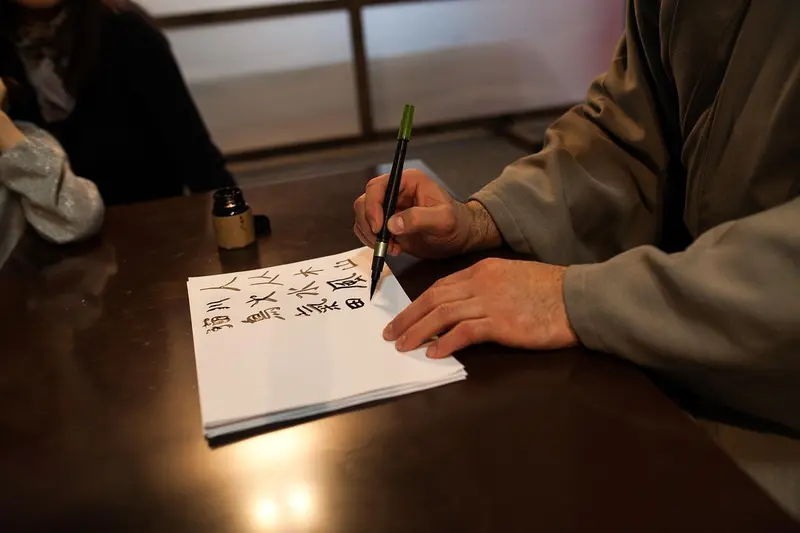
Kanji Felt Impossible
Here's how I started making progress
Model script
Hello, everyone. I'm an engineer from Brazil, and I've been learning Japanese for two years. For a long time, kanji felt impossible. Today, I'll explain why it's hard and what finally helped me.
Your recording
Say this slide out loud, then listen to yourself.
Recordings stay on this device and disappear when you leave the page.
Useful phrases
I've been learning ... for
I started in the past and am still learning.
what finally helped me
The thing that helped me in the end.
Full script
Read the whole talk.
All slides in one place. Read it through once, then practice slide by slide.
01Kanji Felt Impossible
Hello, everyone. I'm an engineer from Brazil, and I've been learning Japanese for two years. For a long time, kanji felt impossible. Today, I'll explain why it's hard and what finally helped me.
Hola a todos. Soy ingeniera de Brasil y llevo dos años aprendiendo japonés. Durante mucho tiempo, los kanji me parecieron imposibles. Hoy voy a explicar por qué son difíciles y qué fue lo que por fin me ayudó.
02The Problem: So Many Characters
The first problem is the number. Japan's official list of common kanji, called the jōyō kanji, has 2,136 characters. Japanese children learn 1,026 of them in primary school, over six years.
El primer problema es la cantidad. La lista oficial de kanji de uso común de Japón, llamada jōyō kanji, tiene 2,136 caracteres. Los niños japoneses aprenden 1,026 de ellos en la escuela primaria, a lo largo de seis años.
Sources: Agency for Cultural Affairs, Japan: 常用漢字表 (Cabinet Notice No. 2, November 30, 2010); MEXT, Japan: 小学校学習指導要領 学年別漢字配当表 (2017, fully implemented from 2020)
03The Problem: Many Readings
The second problem is that one kanji can have several readings. For example, the kanji for "life" is read differently in different words. I memorized a reading, and then it changed!
El segundo problema es que un kanji puede tener varias lecturas. Por ejemplo, el kanji de «vida» se lee de forma diferente en distintas palabras. Memorizaba una lectura, ¡y luego cambiaba!
04Solution 1: Learn Parts, Not Pictures
My first solution was to learn the parts. Many kanji are built from smaller pieces. For example, the part for "water" appears in many words about liquids. Once I knew the parts, new kanji felt less random.
Mi primera solución fue aprender las partes. Muchos kanji están formados por piezas más pequeñas. Por ejemplo, la parte de «agua» aparece en muchas palabras relacionadas con líquidos. Cuando conocí las partes, los kanji nuevos me parecieron menos aleatorios.
05Solution 2: Learn Words, Not Single Kanji
Second, I stopped studying single kanji and started learning whole words. When I learn a kanji inside a word I actually use, the right reading is much easier to remember.
Segundo, dejé de estudiar kanji sueltos y empecé a aprender palabras completas. Cuando aprendo un kanji dentro de una palabra que realmente uso, es mucho más fácil recordar la lectura correcta.
06Solution 3: A Little Every Day
Third, I do a little every day. I learn five new kanji a day and review old ones with a flashcard app on the train. Small steps add up over time.
Tercero, hago un poco cada día. Aprendo cinco kanji nuevos al día y repaso los anteriores con una aplicación de tarjetas en el tren. Los pasos pequeños se suman con el tiempo.
07Conclusion
In conclusion, kanji isn't impossible. It's just a long road. If you learn the parts, study whole words, and practice a little every day, you'll be surprised how far you go. Thank you.
En conclusión, los kanji no son imposibles. Simplemente es un camino largo. Si aprenden las partes, estudian palabras completas y practican un poco cada día, se sorprenderán de lo lejos que llegan. Gracias.
Cover photo by delo on Pixabay