Kanji Felt Impossible. Here's How I Started Making Progress
IntermediateJapan & Culture英语演讲的示范讲稿与中文翻译。每一页都可以听示范、开口练习。
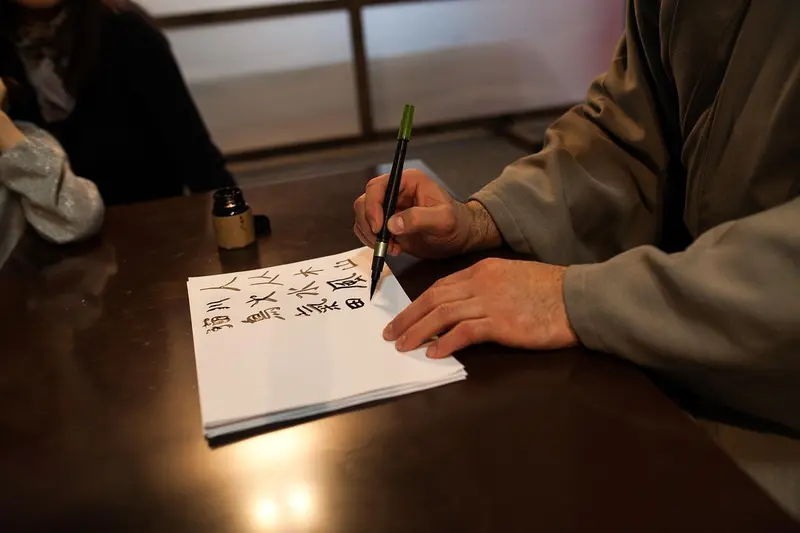
Kanji Felt Impossible
Here's how I started making progress
Model script
Hello, everyone. I'm an engineer from Brazil, and I've been learning Japanese for two years. For a long time, kanji felt impossible. Today, I'll explain why it's hard and what finally helped me.
Your recording
Say this slide out loud, then listen to yourself.
Recordings stay on this device and disappear when you leave the page.
Useful phrases
I've been learning ... for
I started in the past and am still learning.
what finally helped me
The thing that helped me in the end.
Full script
Read the whole talk.
All slides in one place. Read it through once, then practice slide by slide.
01Kanji Felt Impossible
Hello, everyone. I'm an engineer from Brazil, and I've been learning Japanese for two years. For a long time, kanji felt impossible. Today, I'll explain why it's hard and what finally helped me.
大家好。我是来自巴西的工程师,学日语已经两年了。很长一段时间里,汉字让我觉得根本学不会。今天,我来解释一下汉字为什么难,以及最终是什么帮到了我。
02The Problem: So Many Characters
The first problem is the number. Japan's official list of common kanji, called the jōyō kanji, has 2,136 characters. Japanese children learn 1,026 of them in primary school, over six years.
第一个问题是数量。日本官方的常用汉字表,叫作“常用汉字”,共有2,136个字。日本孩子在小学六年里要学其中的1,026个。
Sources: Agency for Cultural Affairs, Japan: 常用漢字表 (Cabinet Notice No. 2, November 30, 2010); MEXT, Japan: 小学校学習指導要領 学年別漢字配当表 (2017, fully implemented from 2020)
03The Problem: Many Readings
The second problem is that one kanji can have several readings. For example, the kanji for "life" is read differently in different words. I memorized a reading, and then it changed!
第二个问题是,一个汉字可能有好几种读法。比如,“生”这个字在不同的词里读法不同。我刚记住一种读法,它就变了!
04Solution 1: Learn Parts, Not Pictures
My first solution was to learn the parts. Many kanji are built from smaller pieces. For example, the part for "water" appears in many words about liquids. Once I knew the parts, new kanji felt less random.
我的第一个办法是学习部件。很多汉字是由更小的部分组成的。比如,表示“水”的部件出现在很多和液体有关的字里。了解了部件以后,新的汉字就不再显得那么杂乱无章了。
05Solution 2: Learn Words, Not Single Kanji
Second, I stopped studying single kanji and started learning whole words. When I learn a kanji inside a word I actually use, the right reading is much easier to remember.
第二,我不再单独学一个个汉字,而是开始学整个词。当我在自己真正会用的词里学一个汉字时,正确的读法就容易记多了。
06Solution 3: A Little Every Day
Third, I do a little every day. I learn five new kanji a day and review old ones with a flashcard app on the train. Small steps add up over time.
第三,我每天学一点。我每天学五个新汉字,并在火车上用单词卡App复习以前学过的。积少成多。
07Conclusion
In conclusion, kanji isn't impossible. It's just a long road. If you learn the parts, study whole words, and practice a little every day, you'll be surprised how far you go. Thank you.
总之,汉字并不是学不会的,只是一条很长的路。如果你学习部件、学习整个词,并且每天练习一点,你会惊讶于自己能走多远。谢谢大家。
Cover photo by delo on Pixabay