Wabi-Sabi: Finding Beauty in Imperfect Things
AdvancedJapan & CultureGuion modelo de una presentación en inglés con traducción al español. Escucha y practica diapositiva por diapositiva.
Wabi-Sabi
Finding beauty in imperfect things
Model script
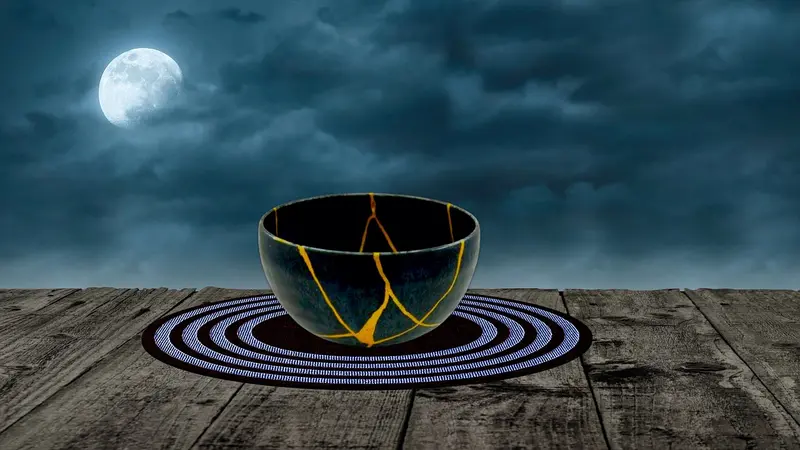
Good evening, everyone. My grandmother has a tea bowl with a crack that was repaired long ago. As a child, I thought it was ugly. Now, it's my favorite object in her house. Tonight, I'll try to explain the Japanese idea behind that feeling: wabi-sabi.
Your recording
Say this slide out loud, then listen to yourself.
Recordings stay on this device and disappear when you leave the page.
Useful phrases
was repaired long ago
Was fixed a long time in the past.
the ... idea behind that feeling
The concept that explains that emotion.
Full script
Read the whole talk.
All slides in one place. Read it through once, then practice slide by slide.
01Wabi-Sabi
Good evening, everyone. My grandmother has a tea bowl with a crack that was repaired long ago. As a child, I thought it was ugly. Now, it's my favorite object in her house. Tonight, I'll try to explain the Japanese idea behind that feeling: wabi-sabi.
Buenas noches a todos. Mi abuela tiene un cuenco de té con una grieta que se reparó hace mucho tiempo. De niño, me parecía feo. Ahora es mi objeto favorito de su casa. Esta noche intentaré explicarles la idea japonesa que hay detrás de ese sentimiento: el wabi-sabi.
02A Difficult Word to Translate
Wabi-sabi is hard to translate. There isn't one English word for it. In simple terms, it means finding beauty in things that are imperfect, simple, and not permanent.
El wabi-sabi es difícil de traducir. No hay una sola palabra en inglés para expresarlo. En términos sencillos, significa encontrar belleza en las cosas imperfectas, sencillas y no permanentes.
03Wabi: Quiet Simplicity
The first part, wabi, is often connected to quiet simplicity: a plain room, a simple meal, or a calm life without too many things.
La primera parte, wabi, suele asociarse con la sencillez tranquila: una habitación sencilla, una comida simple o una vida serena sin demasiadas cosas.
04Sabi: The Beauty of Age
The second part, sabi, is often connected to the beauty of age: an old wooden door, moss on a stone, or the soft color of a well-used tea cup. These things show that time has passed.
La segunda parte, sabi, suele asociarse con la belleza del paso del tiempo: una vieja puerta de madera, musgo sobre una piedra o el color suave de una taza de té muy usada. Estas cosas muestran que ha pasado el tiempo.
05Examples in Daily Life
You can see wabi-sabi in many places: handmade pottery with uneven shapes, falling autumn leaves, or a repaired bowl like my grandmother's. The imperfection is part of the beauty, not something to hide.
Pueden ver el wabi-sabi en muchos lugares: cerámica hecha a mano con formas irregulares, hojas de otoño que caen o un cuenco reparado como el de mi abuela. La imperfección es parte de la belleza, no algo que haya que esconder.
06A Contrast With Perfection
This idea feels very different from much of modern life. Online, we see perfect photos, perfect bodies, and perfect homes. Wabi-sabi suggests another way of seeing: that something can be beautiful because it is imperfect.
Esta idea se siente muy diferente de gran parte de la vida moderna. En internet vemos fotos perfectas, cuerpos perfectos y casas perfectas. El wabi-sabi propone otra forma de mirar: que algo puede ser bello precisamente porque es imperfecto.
07What It Means to Me
For me, wabi-sabi has become a way to be kinder to myself. I don't need to be perfect, and I don't need to replace things just because they're old. Like my grandmother's bowl, a few cracks can tell a story.
Para mí, el wabi-sabi se ha convertido en una forma de ser más amable conmigo mismo. No necesito ser perfecto, y no necesito reemplazar las cosas solo porque son viejas. Como el cuenco de mi abuela, unas cuantas grietas pueden contar una historia.
08Conclusion
To sum up, wabi-sabi is the idea that simple, old, and imperfect things can be beautiful. The next time you see a crack or a scratch, try looking at it with wabi-sabi eyes. Thank you.
En resumen, el wabi-sabi es la idea de que las cosas sencillas, viejas e imperfectas pueden ser bellas. La próxima vez que vean una grieta o un rasguño, intenten mirarlo con ojos de wabi-sabi. Gracias.
Cover photo by MARTYSEB on Pixabay