Wabi-Sabi: Finding Beauty in Imperfect Things
AdvancedJapan & Culture英語プレゼンのお手本の原稿と日本語訳。スライドごとに、聞いて・話して練習できます。
Wabi-Sabi
Finding beauty in imperfect things
Model script
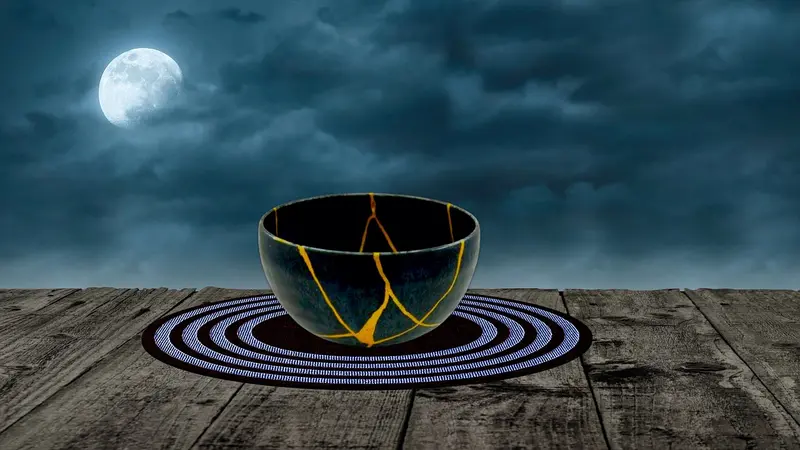
Good evening, everyone. My grandmother has a tea bowl with a crack that was repaired long ago. As a child, I thought it was ugly. Now, it's my favorite object in her house. Tonight, I'll try to explain the Japanese idea behind that feeling: wabi-sabi.
Your recording
Say this slide out loud, then listen to yourself.
Recordings stay on this device and disappear when you leave the page.
Useful phrases
was repaired long ago
Was fixed a long time in the past.
the ... idea behind that feeling
The concept that explains that emotion.
Full script
Read the whole talk.
All slides in one place. Read it through once, then practice slide by slide.
01Wabi-Sabi
Good evening, everyone. My grandmother has a tea bowl with a crack that was repaired long ago. As a child, I thought it was ugly. Now, it's my favorite object in her house. Tonight, I'll try to explain the Japanese idea behind that feeling: wabi-sabi.
皆さん、こんばんは。祖母は、ずっと昔に修理された、ひびのある茶わんを持っています。子どものころ、私はそれを醜いと思っていました。今では、祖母の家で一番好きなものです。今夜は、その気持ちの背景にある日本の考え方、「わびさび」を説明してみたいと思います。
02A Difficult Word to Translate
Wabi-sabi is hard to translate. There isn't one English word for it. In simple terms, it means finding beauty in things that are imperfect, simple, and not permanent.
わびさびは、訳すのが難しい言葉です。英語には、それにあたる一つの言葉がありません。簡単に言うと、不完全で、簡素で、永遠には続かないものの中に美しさを見いだすことです。
03Wabi: Quiet Simplicity
The first part, wabi, is often connected to quiet simplicity: a plain room, a simple meal, or a calm life without too many things.
前半の「わび」は、よく静かな簡素さと結びつけられます。飾りのない部屋、質素な食事、多くの物を持たない穏やかな暮らしなどです。
04Sabi: The Beauty of Age
The second part, sabi, is often connected to the beauty of age: an old wooden door, moss on a stone, or the soft color of a well-used tea cup. These things show that time has passed.
後半の「さび」は、よく年を重ねたものの美しさと結びつけられます。古い木の扉、石の上のこけ、使い込まれた湯のみのやわらかな色などです。こうしたものは、時が流れたことを物語っています。
05Examples in Daily Life
You can see wabi-sabi in many places: handmade pottery with uneven shapes, falling autumn leaves, or a repaired bowl like my grandmother's. The imperfection is part of the beauty, not something to hide.
わびさびは、いろいろなところで見られます。形のふぞろいな手作りの焼き物、舞い落ちる秋の葉、祖母の茶わんのような修理された器などです。不完全さは隠すべきものではなく、美しさの一部なのです。
06A Contrast With Perfection
This idea feels very different from much of modern life. Online, we see perfect photos, perfect bodies, and perfect homes. Wabi-sabi suggests another way of seeing: that something can be beautiful because it is imperfect.
この考え方は、今の生活の多くとはずいぶん違って感じられます。ネットでは、完璧な写真、完璧な体、完璧な家を目にします。わびさびは、もう一つの見方を教えてくれます。不完全だからこそ美しいものもある、という見方です。
07What It Means to Me
For me, wabi-sabi has become a way to be kinder to myself. I don't need to be perfect, and I don't need to replace things just because they're old. Like my grandmother's bowl, a few cracks can tell a story.
私にとって、わびさびは、自分に優しくするための方法になりました。完璧である必要はありませんし、古いからというだけで物を取り替える必要もありません。祖母の茶わんのように、いくつかのひびが物語を語ってくれることもあるのです。
08Conclusion
To sum up, wabi-sabi is the idea that simple, old, and imperfect things can be beautiful. The next time you see a crack or a scratch, try looking at it with wabi-sabi eyes. Thank you.
まとめると、わびさびとは、簡素で、古くて、不完全なものも美しくありうるという考え方です。次にひびや傷を見かけたら、わびさびの目で見てみてください。ありがとうございました。
Cover photo by MARTYSEB on Pixabay