Where Do Our Old Phones Go? The Growing E-Waste Problem
AdvancedTech & Internet英文簡報的示範講稿與中文翻譯。每一頁都可以聽示範、開口練習。
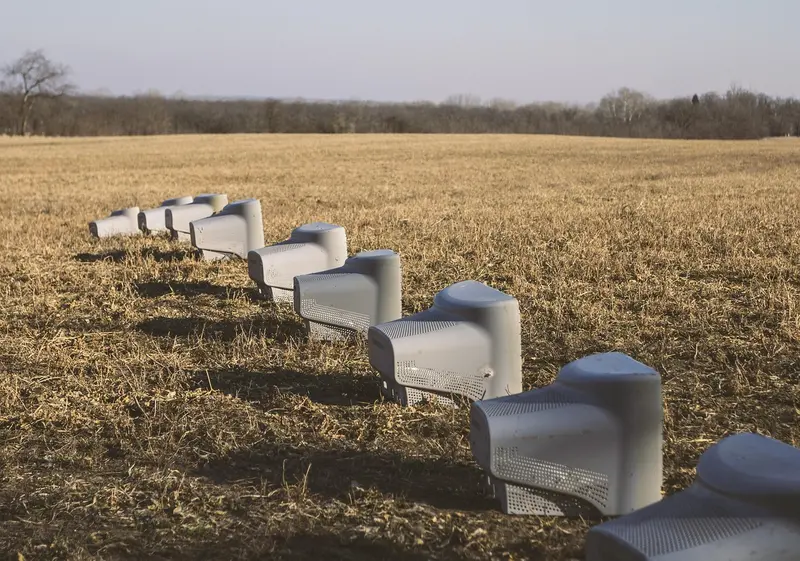
Where Do Our Old Phones Go?
The growing e-waste problem
Model script
Good afternoon, everyone. Last week, I cleaned out a drawer and found four old phones, two broken chargers, and a laptop I hadn't used in years. I started wondering: what happens to all our old electronics? Today, I'll talk about e-waste.
Your recording
Say this slide out loud, then listen to yourself.
Recordings stay on this device and disappear when you leave the page.
Useful phrases
cleaned out a drawer
Took everything out of a drawer to tidy it.
I started wondering:
I began to ask myself.
Full script
Read the whole talk.
All slides in one place. Read it through once, then practice slide by slide.
01Where Do Our Old Phones Go?
Good afternoon, everyone. Last week, I cleaned out a drawer and found four old phones, two broken chargers, and a laptop I hadn't used in years. I started wondering: what happens to all our old electronics? Today, I'll talk about e-waste.
大家午安。上週,我清理了一個抽屜,找到了四部舊手機、兩個壞掉的充電器,還有一臺好幾年沒用過的膝上型電腦。我開始想:我們那些舊電子產品最後都去哪兒了?今天,我來聊聊電子垃圾。
02What Is E-Waste?
E-waste, or electronic waste, means old devices with a plug or a battery that people throw away: phones, laptops, TVs, cables, and even electric toothbrushes.
電子垃圾,也就是電子廢棄物,指的是人們扔掉的、帶插頭或電池的舊裝置:手機、膝上型電腦、電視、資料線,甚至還有電動牙刷。
03How Much?
According to the Global E-waste Monitor 2024, the world produced a record sixty-two million tonnes of e-waste in 2022. And it's on track to reach eighty-two million tonnes by 2030.
根據《2024年全球電子廢棄物監測》,2022年全世界產生了創紀錄的6200萬噸電子垃圾。而且預計到2030年將達到8200萬噸。
Source: ITU & UNITAR, "The Global E-waste Monitor 2024"
04How Much Is Recycled Properly?
Here's the worrying part. Only twenty-two point three percent of that e-waste was documented as properly collected and recycled in 2022. The rest is unrecorded, which can mean it ends up in landfills or is handled in unsafe ways.
令人擔憂的是這一點。2022年,這些電子垃圾中只有22.3%有記錄顯示得到了妥善收集和回收。其餘的都沒有記錄,這可能意味著它們進了垃圾填埋場,或者以不安全的方式被處理了。
Source: ITU & UNITAR, "The Global E-waste Monitor 2024"
05A Widening Gap
The report also found that since 2010, e-waste has been growing almost five times faster than documented recycling. In other words, the gap is getting bigger every year.
報告還發現,自2010年以來,電子垃圾的增長速度幾乎是有記錄的回收量的五倍。換句話說,這個差距每年都在擴大。
Source: ITU & UNITAR, "The Global E-waste Monitor 2024"
06Why It Matters
Why does this matter? Electronics contain valuable metals that we lose when they're thrown away. They can also contain harmful substances, which can hurt people and nature when devices are broken apart unsafely.
這為什麼重要呢?電子產品裡含有貴重金屬,扔掉就浪費了。它們還可能含有有害物質,如果用不安全的方式拆解,可能會傷害人和自然。
07What We Can Do
So what can we do? Use our devices longer, repair them before replacing them, and take old electronics to official collection points instead of the trash. Companies can help by making devices easier to repair.
那我們能做些什麼呢?把裝置用得更久一些,壞了先修再換,把舊電子產品送到正規的回收點,而不是扔進垃圾桶。企業也可以出一份力,把裝置做得更容易維修。
08Conclusion
To conclude, e-waste is growing much faster than our recycling. This week, check your own drawers. You might find old devices that deserve a second life, or at least a proper goodbye. Thank you.
最後總結一下,電子垃圾的增長速度遠遠超過了我們的回收速度。這周,檢查一下你自己的抽屜吧。你可能會發現一些值得擁有第二次生命的舊裝置,或者至少值得好好告別的舊裝置。謝謝大家。
Cover photo by brenkee on Pixabay