Where Do Our Old Phones Go? The Growing E-Waste Problem
AdvancedTech & Internet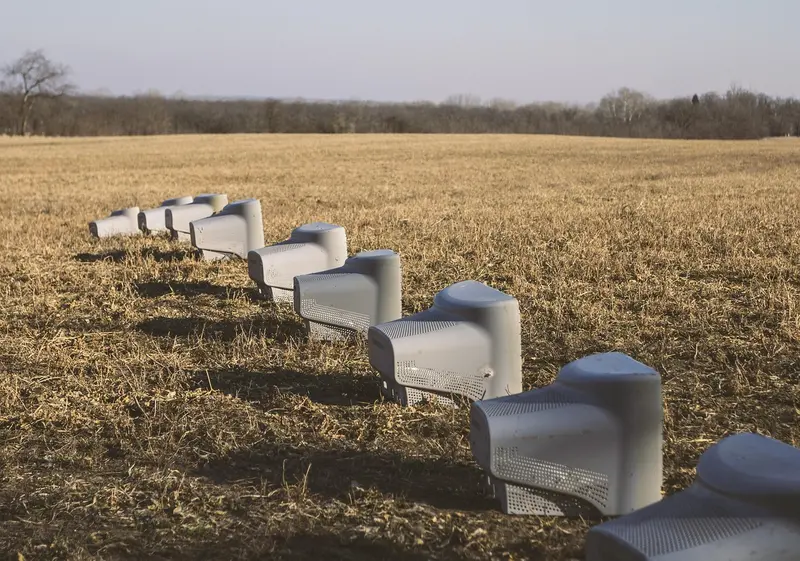
Where Do Our Old Phones Go?
The growing e-waste problem
Model script
Good afternoon, everyone. Last week, I cleaned out a drawer and found four old phones, two broken chargers, and a laptop I hadn't used in years. I started wondering: what happens to all our old electronics? Today, I'll talk about e-waste.
Your recording
Say this slide out loud, then listen to yourself.
Recordings stay on this device and disappear when you leave the page.
Useful phrases
cleaned out a drawer
Took everything out of a drawer to tidy it.
I started wondering:
I began to ask myself.
Full script
Read the whole talk.
All slides in one place. Read it through once, then practice slide by slide.
01Where Do Our Old Phones Go?
Good afternoon, everyone. Last week, I cleaned out a drawer and found four old phones, two broken chargers, and a laptop I hadn't used in years. I started wondering: what happens to all our old electronics? Today, I'll talk about e-waste.
02What Is E-Waste?
E-waste, or electronic waste, means old devices with a plug or a battery that people throw away: phones, laptops, TVs, cables, and even electric toothbrushes.
03How Much?
According to the Global E-waste Monitor 2024, the world produced a record sixty-two million tonnes of e-waste in 2022. And it's on track to reach eighty-two million tonnes by 2030.
Source: ITU & UNITAR, "The Global E-waste Monitor 2024"
04How Much Is Recycled Properly?
Here's the worrying part. Only twenty-two point three percent of that e-waste was documented as properly collected and recycled in 2022. The rest is unrecorded, which can mean it ends up in landfills or is handled in unsafe ways.
Source: ITU & UNITAR, "The Global E-waste Monitor 2024"
05A Widening Gap
The report also found that since 2010, e-waste has been growing almost five times faster than documented recycling. In other words, the gap is getting bigger every year.
Source: ITU & UNITAR, "The Global E-waste Monitor 2024"
06Why It Matters
Why does this matter? Electronics contain valuable metals that we lose when they're thrown away. They can also contain harmful substances, which can hurt people and nature when devices are broken apart unsafely.
07What We Can Do
So what can we do? Use our devices longer, repair them before replacing them, and take old electronics to official collection points instead of the trash. Companies can help by making devices easier to repair.
08Conclusion
To conclude, e-waste is growing much faster than our recycling. This week, check your own drawers. You might find old devices that deserve a second life, or at least a proper goodbye. Thank you.
Cover photo by brenkee on Pixabay