Wabi-Sabi: Finding Beauty in Imperfect Things
AdvancedJapan & Culture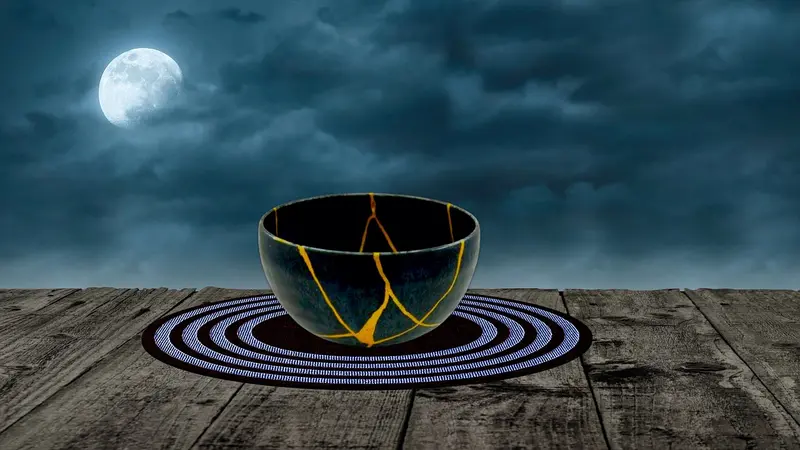
Wabi-Sabi
Finding beauty in imperfect things
Model script
Good evening, everyone. My grandmother has a tea bowl with a crack that was repaired long ago. As a child, I thought it was ugly. Now, it's my favorite object in her house. Tonight, I'll try to explain the Japanese idea behind that feeling: wabi-sabi.
Your recording
Say this slide out loud, then listen to yourself.
Recordings stay on this device and disappear when you leave the page.
Useful phrases
was repaired long ago
Was fixed a long time in the past.
the ... idea behind that feeling
The concept that explains that emotion.
Full script
Read the whole talk.
All slides in one place. Read it through once, then practice slide by slide.
01Wabi-Sabi
Good evening, everyone. My grandmother has a tea bowl with a crack that was repaired long ago. As a child, I thought it was ugly. Now, it's my favorite object in her house. Tonight, I'll try to explain the Japanese idea behind that feeling: wabi-sabi.
02A Difficult Word to Translate
Wabi-sabi is hard to translate. There isn't one English word for it. In simple terms, it means finding beauty in things that are imperfect, simple, and not permanent.
03Wabi: Quiet Simplicity
The first part, wabi, is often connected to quiet simplicity: a plain room, a simple meal, or a calm life without too many things.
04Sabi: The Beauty of Age
The second part, sabi, is often connected to the beauty of age: an old wooden door, moss on a stone, or the soft color of a well-used tea cup. These things show that time has passed.
05Examples in Daily Life
You can see wabi-sabi in many places: handmade pottery with uneven shapes, falling autumn leaves, or a repaired bowl like my grandmother's. The imperfection is part of the beauty, not something to hide.
06A Contrast With Perfection
This idea feels very different from much of modern life. Online, we see perfect photos, perfect bodies, and perfect homes. Wabi-sabi suggests another way of seeing: that something can be beautiful because it is imperfect.
07What It Means to Me
For me, wabi-sabi has become a way to be kinder to myself. I don't need to be perfect, and I don't need to replace things just because they're old. Like my grandmother's bowl, a few cracks can tell a story.
08Conclusion
To sum up, wabi-sabi is the idea that simple, old, and imperfect things can be beautiful. The next time you see a crack or a scratch, try looking at it with wabi-sabi eyes. Thank you.
Cover photo by MARTYSEB on Pixabay