英语演讲的示范讲稿与中文翻译。每一页都可以听示范、开口练习。
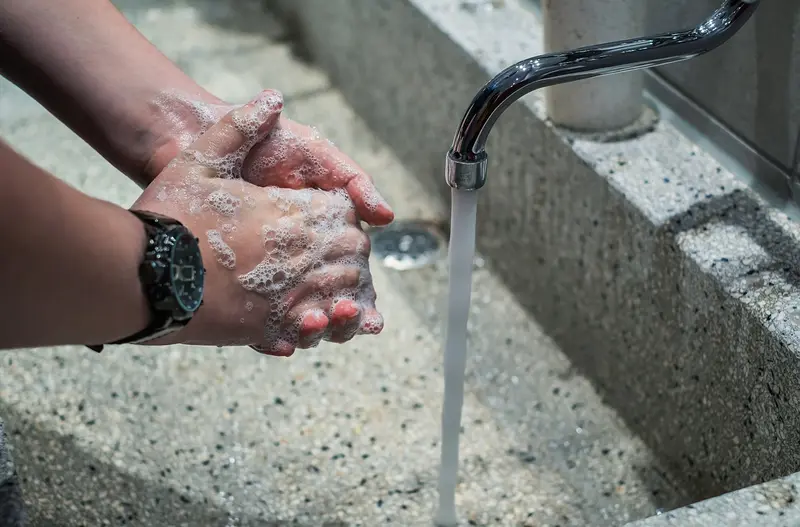
The Simplest Rule in Medicine
Vienna, 1847
1 / 8
Model script
Good morning, everyone. In every hospital, the simplest rule is this: clean your hands. Everyone agrees with it. But how do we actually know it works, and how much? Today I'll look at three real studies. First, I'll go back to Vienna in 1847 and the doctor Ignaz Semmelweis. Then I'll look at a large hospital study from Geneva in the 1990s. After that, I'll show you a surprising problem with how hospitals measure handwashing. Finally, I'll explain what I think nurses and health students can learn from all three.
Your recording
Say this slide out loud, then listen to yourself.
Recordings stay on this device and disappear when you leave the page.
Useful phrases
Everyone agrees with it.
Nobody says it's wrong.
how do we actually know it works
Asks for the evidence behind a common belief.
I'll go back to
I'll talk about a time in the past.
Words
- healthcare-associated infections
- hand gel
- maternity hospital
- death rate
- midwives
- autopsies
- chlorinated lime
- germ theory
- before-and-after comparison
- alcohol hand rub
- hand hygiene
- compliance
- hospital infections
- comparison group
- confounding
- auditor
- electronic counters
- dispensers
- Hawthorne effect
Highlighted words are on this slide. Tap a word to look it up on Google.
Full script
Read the whole talk.
All slides in one place. Read it through once, then practice slide by slide.
01The Simplest Rule in Medicine
Good morning, everyone. In every hospital, the simplest rule is this: clean your hands. Everyone agrees with it. But how do we actually know it works, and how much? Today I'll look at three real studies. First, I'll go back to Vienna in 1847 and the doctor Ignaz Semmelweis. Then I'll look at a large hospital study from Geneva in the 1990s. After that, I'll show you a surprising problem with how hospitals measure handwashing. Finally, I'll explain what I think nurses and health students can learn from all three.
大家早上好。在每一家医院里,最简单的规则就是:把手洗干净。所有人都同意这一点。但我们到底怎么知道它真的有效,又有多有效呢?今天我会介绍三项真实的研究。首先,我会回到1847年的维也纳,讲讲医生伊格纳兹·塞麦尔维斯。然后,我会介绍20世纪90年代在日内瓦进行的一项大型医院研究。接着,我会给大家看医院在测量洗手情况时一个出人意料的问题。最后,我会谈谈护士和医学类学生可以从这三项研究中学到什么。
02Key Term: Healthcare-Associated Infections
Let me start with one key term: healthcare-associated infections. These are infections that patients didn't have when they arrived, but caught while they were being treated. One common route is simple: a health worker touches one patient, then another, and germs travel on their hands. I noticed this rule in action when my grandmother was in hospital last year. There was hand gel at every door, and the nurses used it every time they came into her room. It looked almost automatic. But the question for today is whether it really makes a difference.
我先从一个关键术语说起:医疗相关感染。指的是病人入院时并没有,但在接受治疗期间感染上的疾病。一个常见的途径很简单:医护人员摸了一位病人,接着又去摸另一位病人,细菌就随着手传了过去。去年我奶奶住院的时候,我亲眼看到了这条规则是怎么执行的。每扇门边都有洗手液,护士每次进她的病房都会用。看起来几乎是一个自动的动作。但今天的问题是:它真的能带来改变吗?
03Study 1: Vienna, 1847
My first study is the oldest. In the 1840s, Ignaz Semmelweis worked at a maternity hospital in Vienna. According to the Science History Institute, the ward run by doctors had a death rate about three times higher than the ward run by midwives. Semmelweis suspected that doctors were carrying something from autopsies on their hands. So he required all doctors and medical students to clean their hands with chlorinated lime before examining women. The result was dramatic. In his ward, the death rate fell from 18.27% to 1.27% in 1848.
第一项研究是最早的一项。19世纪40年代,伊格纳兹·塞麦尔维斯在维也纳的一家产科医院工作。根据科学史研究所的介绍,由医生负责的病房,死亡率大约是由助产士负责的病房的三倍。塞麦尔维斯怀疑,医生的手上带着从尸体解剖中沾到的东西。于是,他要求所有医生和医学生在给产妇检查之前,都要用漂白粉溶液清洁双手。结果非常惊人。1848年,他所在病房的死亡率从18.27%降到了1.27%。
Source: Science History Institute, "Ignaz Semmelweis" (Scientific Biographies): the physician-run ward had a mortality rate three times higher than the midwives' ward; Semmelweis required all doctors and medical students to disinfect their hands with chlorinated lime before examining pregnant women; mortality in his ward decreased from 18.27% to 1.27% in 1848
04Strong Numbers, But No Explanation
So, was everyone convinced? No. Many doctors rejected his idea, and it was only accepted after his death. Why? I think there are two reasons, and they're still useful today. First, there was no germ theory yet, so Semmelweis couldn't explain why his method worked. Strong numbers without an explanation were easy to ignore. Second, his evidence was a before-and-after comparison. In a study like this, other things can change at the same time, so we can't be fully sure the handwashing caused the whole drop. Today, we know he was right. But at the time, the doubts were not completely unreasonable.
那么,大家都被说服了吗?没有。很多医生拒绝接受他的观点,直到他去世以后,这个观点才被认可。为什么呢?我认为有两个原因,而且它们今天仍然很有参考价值。第一,当时还没有细菌理论,所以塞麦尔维斯无法解释他的方法为什么有效。没有解释的有力数字,很容易被忽视。第二,他的证据是一种“前后对比”。在这样的研究中,其他因素也可能同时发生变化,所以我们无法完全确定,死亡率的下降全部是洗手带来的。今天我们知道他是对的。但在当时,那些怀疑并不是完全没有道理的。
Source: Science History Institute, "Ignaz Semmelweis" (Scientific Biographies): the introduction of handwashing met with resistance, many doctors continued to dismiss it, and his findings were only accepted throughout the medical establishment after his death
05Study 2: Geneva, 1994–1998
Now let's jump to a modern study. In the 1990s, Didier Pittet and his team ran a campaign across the whole University of Geneva Hospitals. One key change was putting alcohol hand rub right next to patients' beds, so staff didn't have to walk to a sink. Their study, published in The Lancet in 2000, found that hand hygiene compliance rose from 48% in 1994 to 66% in 1997. Compliance here means how often staff cleaned their hands when they should. Over the same period, the share of patients with hospital infections fell from 16.9% to 9.9%.
接下来,我们看看一项现代的研究。20世纪90年代,迪迪埃·皮泰和他的团队在日内瓦大学医院全院开展了一场活动。其中一个关键的改变,是把含酒精的免洗手消毒液放在病人床边,这样医护人员就不用走到水池边去洗手。他们2000年发表在《柳叶刀》上的研究发现,手卫生依从率从1994年的48%上升到了1997年的66%。这里的依从率,是指在应该清洁双手的时候,医护人员实际做到的比例。在同一时期,发生医院感染的病人比例从16.9%降到了9.9%。
Source: Pittet, D., et al. (2000). "Effectiveness of a hospital-wide programme to improve compliance with hand hygiene." The Lancet, 356(9238), 1307–1312: University of Geneva Hospitals; promotion of bedside alcohol-based hand rub; overall compliance improved from 48% in 1994 to 66% in 1997; nosocomial infection prevalence decreased from 16.9% in 1994 to 9.9% in 1998
06What Geneva Can't Prove
This is much stronger evidence than Vienna, but it still has limits. The authors were careful with their words. They said the improvement in hand hygiene happened together with fewer infections. They didn't claim to have proven that it caused all of the drop. That's because this was one hospital with no comparison group. Researchers call the hidden problem confounding. Confounding means another factor, such as new cleaning rules or different patients, could explain part of the change. In my view, this is exactly how good researchers should write: they report a big result, and they also say what it can't prove.
这比维也纳的证据有力得多,但它仍然有局限。作者们用词非常谨慎。他们说,手卫生的改善和感染的减少是同时发生的,但并没有声称已经证明感染的减少全部是由它造成的。这是因为这项研究只在一家医院进行,而且没有对照组。研究人员把这种隐藏的问题叫作“混杂”。混杂的意思是,其他因素,比如新的清洁规定或病人构成的变化,也可能解释一部分变化。在我看来,优秀的研究者就应该这样写:既报告重大的结果,也说明这个结果无法证明什么。
Source: Pittet, D., et al. (2000). The Lancet, 356(9238), 1307–1312: the authors concluded that sustained improvement in compliance coincided with a reduction in nosocomial infections and MRSA transmission (an association reported from one hospital-wide programme, without a separate control group)
07Study 3: People Wash More When Watched
My last study shows a problem with the numbers themselves. Most hospitals measure hand hygiene by sending an auditor, a person who watches and counts. But in 2014, Jocelyn Srigley and her team in Toronto used electronic counters on hand gel dispensers. They found that in hallways where an auditor could be seen, the dispensers were used about three times as often: 3.75 times per hour, compared with 1.48 where no auditor was visible. Interestingly, there was no clear change inside patient rooms. This is called the Hawthorne effect: people change their behavior because they know they're being watched.
最后一项研究揭示了数字本身的问题。大多数医院测量手卫生的方式,是派一名审核员在旁边观察并计数。但在2014年,多伦多的乔斯琳·斯里格利和她的团队在洗手液分配器上安装了电子计数器。他们发现,在能看到审核员的走廊里,分配器的使用次数大约是平时的三倍:每小时3.75次,而在看不到审核员的地方只有1.48次。有意思的是,病房里面并没有明显的变化。这被称为“霍桑效应”:人们知道自己被观察时,就会改变行为。
Source: Srigley, J. A., Furness, C. D., Baker, G. R., & Gardam, M. (2014). "Quantification of the Hawthorne effect in hand hygiene compliance monitoring using an electronic monitoring system: a retrospective cohort study." BMJ Quality & Safety, 23(12), 974–980: two inpatient units at an academic hospital in Toronto; the hand hygiene event rate in hallways was approximately threefold higher when auditors were in eyesight (3.75 vs 1.48 events per dispenser per hour); no significant changes inside patient rooms
08What We Can Learn
To sum up, the three studies point in the same direction: clean hands reduce infections. But each study has a weakness, so the exact size of the effect is still uncertain. For nurses and health students, I take away three lessons. First, make hand hygiene easy, like the bedside hand rub in Geneva. Second, measure it honestly, because watched numbers can look better than the truth. Third, always explain why, because Semmelweis showed us that numbers alone don't change minds. Thank you for listening. I'm happy to take your questions.
总结一下,这三项研究都指向同一个方向:手部清洁能减少感染。但每项研究都有弱点,所以效果到底有多大,目前还不确定。对护士和医学类学生来说,我得出了三点启示。第一,让手卫生变得容易,就像日内瓦把消毒液放在床边那样。第二,要诚实地测量,因为被观察时的数字可能比实际情况好看。第三,一定要解释原因,因为塞麦尔维斯告诉我们,光靠数字是改变不了人们的想法的。谢谢大家的聆听。欢迎大家提问。
More Health & Mind presentations





Cover photo by Couleur on Pixabay