英语演讲的示范讲稿与中文翻译。每一页都可以听示范、开口练习。
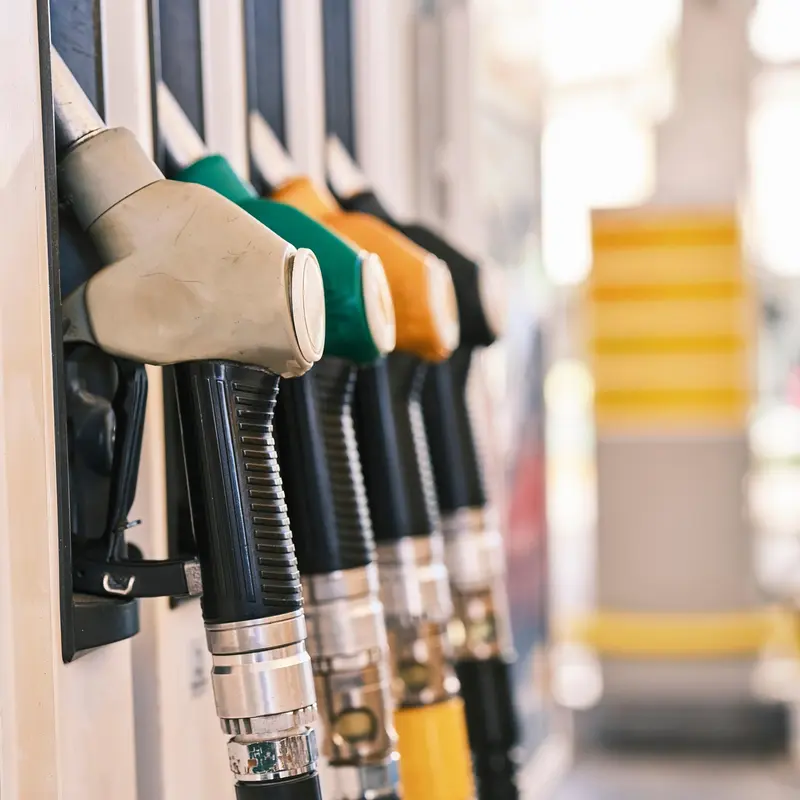
Ban It, or Price It?
Two ways to cut pollution
1 / 8
Model script
Good afternoon, everyone. If we want people to pollute less, we have two basic choices. We can ban things, or we can put a price on pollution. Today I'll look at the second choice: a carbon tax. First, I'll explain the basic idea. Then I'll show you two real cases, Sweden and the Canadian province of British Columbia. Both found that the tax reduced emissions. But British Columbia's story has a surprising ending, so I'll also look at why. Finally, I'll give my view on what this means for climate policy.
Your recording
Say this slide out loud, then listen to yourself.
Recordings stay on this device and disappear when you leave the page.
Useful phrases
we have two basic choices
There are two main ways to do it.
put a price on
Make people pay for something.
has a surprising ending
Ends in a way you don't expect.
Words
- pollute
- carbon tax
- emissions
- climate policy
- carbon dioxide
- economists
- external cost
- synthetic
- gasoline
- revenue-neutral
- negligible
- textbook
- fuel charge
- litre
- hit hardest
- predictably
Highlighted words are on this slide. Tap a word to look it up on Google.
Full script
Read the whole talk.
All slides in one place. Read it through once, then practice slide by slide.
01Ban It, or Price It?
Good afternoon, everyone. If we want people to pollute less, we have two basic choices. We can ban things, or we can put a price on pollution. Today I'll look at the second choice: a carbon tax. First, I'll explain the basic idea. Then I'll show you two real cases, Sweden and the Canadian province of British Columbia. Both found that the tax reduced emissions. But British Columbia's story has a surprising ending, so I'll also look at why. Finally, I'll give my view on what this means for climate policy.
大家下午好。如果我们想让人们减少污染,基本上有两种选择:一是禁止某些东西,二是给污染定一个价格。今天我要讲第二种选择:碳税。首先,我会解释基本概念。然后,我会介绍两个真实的案例:瑞典和加拿大的不列颠哥伦比亚省。两个案例都发现,碳税减少了排放。但不列颠哥伦比亚省的故事有一个出人意料的结局,所以我也会分析其中的原因。最后,我会谈谈这对气候政策意味着什么。
02The Basic Idea: An External Cost
Let's start with the basic idea. When we burn oil or gas, we release carbon dioxide, and everyone pays the cost through climate change. Economists call this an "external cost," because the person who causes it doesn't pay for it. A carbon tax adds that cost to the price. I've seen how a small price changes behavior in my own life. When shops near me started charging for plastic bags, I began carrying my own bag almost immediately. The fee was tiny, but it made me think. A carbon tax tries to do the same thing for a whole economy.
我们先从基本概念说起。我们燃烧石油或天然气时,会排放二氧化碳,而所有人都要通过气候变化来承担代价。经济学家把这叫作“外部成本”,因为造成成本的人并没有为它买单。碳税就是把这部分成本加到价格里。我在自己的生活中就看到过,一个小小的价格如何改变人的行为。我家附近的商店开始对塑料袋收费后,我几乎马上就开始自己带袋子。费用很少,但它让我开始思考。碳税想做的,就是在整个经济中做同样的事。
03Case 1: Sweden, Since 1991
My first case is Sweden, which introduced a carbon tax in 1991, one of the first in the world. But how can we know what the tax did? We can't run a second Sweden without the tax. So economist Julius Andersson built a comparison, a "synthetic Sweden," from a group of similar OECD countries. His study, published in 2019 in the American Economic Journal: Economic Policy, found that carbon dioxide emissions from transport fell almost 11% compared with this synthetic Sweden. In other words, the tax made a real difference, even in a rich country.
第一个案例是瑞典。瑞典在1991年开始征收碳税,是世界上最早的国家之一。但我们怎么知道这项税到底起了什么作用呢?我们不可能再找一个没有碳税的瑞典来对比。所以,经济学家朱利叶斯·安德森用一组相似的经合组织国家,构建了一个“合成瑞典”作为对照。他2019年发表在《美国经济杂志:经济政策》上的研究发现,与这个合成瑞典相比,交通领域的二氧化碳排放下降了将近11%。换句话说,即使在富裕国家,这项税也带来了真正的改变。
Source: Andersson, J. J. (2019). "Carbon Taxes and CO2 Emissions: Sweden as a Case Study." American Economic Journal: Economic Policy, 11(4), 1–30: Sweden's carbon tax was introduced in 1991; after implementation, CO2 emissions from transport declined almost 11 percent relative to a synthetic control unit constructed from a comparable group of OECD countries
04A Strong Reaction, and Two Limits
The same study found something even more interesting. People reacted about three times more strongly to the carbon tax than to normal changes in the price of gasoline. My guess is that a tax feels permanent, while a normal price rise may go back down. However, we should be careful about two limits. First, the study only measured transport, not the whole economy. Second, a synthetic Sweden is a careful estimate, not a perfect experiment. So the evidence is strong, but it tells us about one sector in one country.
同一项研究还发现了一件更有意思的事。人们对碳税的反应,大约是对普通汽油价格变化反应的三倍。我的推测是,税让人觉得会一直存在,而普通的涨价可能还会降回来。不过,我们要注意两个局限。第一,这项研究只测量了交通领域,而不是整个经济。第二,合成瑞典是一种严谨的估算,而不是完美的实验。所以,证据很有力,但它讲的是一个国家里的一个领域。
Source: Andersson, J. J. (2019). "Carbon Taxes and CO2 Emissions: Sweden as a Case Study." American Economic Journal: Economic Policy, 11(4), 1–30: the carbon tax elasticity of gasoline demand is about three times larger than the price elasticity; the estimated effect is for transport emissions, using a synthetic control method
05Case 2: British Columbia, 2008
My second case is British Columbia in Canada. In 2008, it introduced a carbon tax that was "revenue-neutral." This means the government gave the money back through lower taxes. The idea was that people would not pay more tax in total. In 2015, Brian Murray and Nicholas Rivers reviewed the research in the journal Energy Policy. According to their review, the tax reduced emissions in the province by between 5% and 15%, and models showed that it had negligible effects on the overall economy. For many economists, this was close to a textbook success.
第二个案例是加拿大的不列颠哥伦比亚省。2008年,该省推出了“收入中性”的碳税。意思是政府通过降低其他税收,把收来的钱还给民众。设想是让大家缴纳的税款总额不会增加。2015年,布赖恩·默里和尼古拉斯·里弗斯在《能源政策》期刊上对相关研究做了综述。根据他们的综述,这项税让该省的排放减少了5%到15%,而且模型显示它对整体经济的影响微乎其微。对许多经济学家来说,这几乎就是教科书式的成功。
Source: Murray, B., & Rivers, N. (2015). "British Columbia's revenue-neutral carbon tax: A review of the latest 'grand experiment' in environmental policy." Energy Policy, 86, 674–683: the tax has reduced emissions in the province by between 5% and 15% since being implemented (2008); models show negligible effects on the aggregate economy
06The Surprising Ending
However, here is the surprising ending. On April 1, 2025, British Columbia removed its consumer carbon tax. On the same day, Canada's federal government set its own consumer fuel charge to zero. The B.C. government said this would take about 17 cents per litre off the price of fuel. So a tax that research said was working was removed anyway. In my view, this is the strongest point against carbon taxes. It's not that they don't work. It's that people feel the cost every day at the gas station, while the benefits are hard to see.
然而,出人意料的结局来了。2025年4月1日,不列颠哥伦比亚省取消了面向消费者的碳税。同一天,加拿大联邦政府也把面向消费者的燃料费降为零。省政府表示,这会让燃料价格每升降低约17加分。也就是说,一项研究认为有效的税,最终还是被取消了。在我看来,这才是反对碳税最有力的理由。不是因为它没有效果,而是因为人们每天在加油站都能感受到成本,而好处却很难看见。
Sources: Government of British Columbia, Ministry of Finance news release (March 2025): legislation to remove the consumer carbon tax effective April 1, 2025, taking approximately 17 cents per litre off the cost of fuel; Department of Finance Canada (March 2025), "Removing the consumer carbon price, effective April 1, 2025": the federal fuel charge set to zero from April 1, 2025
07My View: Make It Last
So, in my view, the question is not whether carbon taxes work. The evidence from Sweden and British Columbia says they can. The real question is how to make them last. This is my own idea, but I think three things would help. First, show people clearly where the money goes. Second, protect the families who would be hit hardest. Third, raise the price slowly and predictably, so people can plan. A policy that works but cannot survive an election will not solve a long-term problem like climate change.
所以,在我看来,问题不在于碳税有没有效果。瑞典和不列颠哥伦比亚省的证据表明,它是可以有效的。真正的问题是如何让它长久实行。这是我自己的想法,但我认为有三点会有帮助。第一,让人们清楚地看到钱用在了哪里。第二,保护受影响最大的家庭。第三,缓慢而可预期地提高价格,让人们能够提前规划。一项有效却撑不过一次选举的政策,解决不了气候变化这样的长期问题。
08Good Design Is Not Enough
To sum up, a carbon tax puts a price on pollution. Sweden's tax cut transport emissions by almost 11%, and British Columbia's tax cut emissions by 5 to 15% with little effect on its economy. But British Columbia also showed that a working policy can disappear if people don't support it. For me, that's the most important lesson for anyone studying environmental policy: good design is not enough. People have to understand it. Thank you for listening. I'm happy to take your questions.
总结一下,碳税就是给污染定价。瑞典的碳税让交通排放减少了将近11%,不列颠哥伦比亚省的碳税在几乎不影响经济的情况下,让排放减少了5%到15%。但不列颠哥伦比亚省也告诉我们,一项有效的政策如果得不到民众的支持,也可能消失。对我来说,这是学习环境政策的人最重要的一课:好的设计还不够,还必须让人们理解它。谢谢大家的聆听,欢迎提问。
Sources: Andersson, J. J. (2019). "Carbon Taxes and CO2 Emissions: Sweden as a Case Study." American Economic Journal: Economic Policy, 11(4), 1–30; Murray, B., & Rivers, N. (2015). Energy Policy, 86, 674–683: emissions 5–15% lower; negligible effects on the aggregate economy; Government of British Columbia (2025): consumer carbon tax removed effective April 1, 2025
More Environment & Nature presentations





Cover photo by Engin_Akyurt on Pixabay
Slide photos by articonn, Engin_Akyurt on Pixabay