英文簡報的示範講稿與中文翻譯。每一頁都可以聽示範、開口練習。
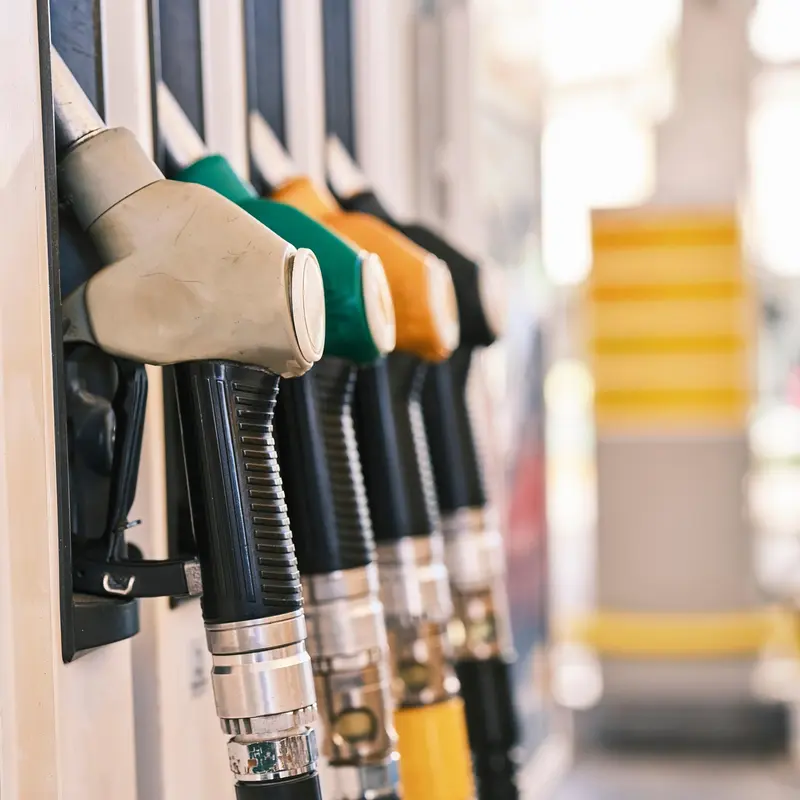
Ban It, or Price It?
Two ways to cut pollution
1 / 8
Model script
Good afternoon, everyone. If we want people to pollute less, we have two basic choices. We can ban things, or we can put a price on pollution. Today I'll look at the second choice: a carbon tax. First, I'll explain the basic idea. Then I'll show you two real cases, Sweden and the Canadian province of British Columbia. Both found that the tax reduced emissions. But British Columbia's story has a surprising ending, so I'll also look at why. Finally, I'll give my view on what this means for climate policy.
Your recording
Say this slide out loud, then listen to yourself.
Recordings stay on this device and disappear when you leave the page.
Useful phrases
we have two basic choices
There are two main ways to do it.
put a price on
Make people pay for something.
has a surprising ending
Ends in a way you don't expect.
Words
- pollute
- carbon tax
- emissions
- climate policy
- carbon dioxide
- economists
- external cost
- synthetic
- gasoline
- revenue-neutral
- negligible
- textbook
- fuel charge
- litre
- hit hardest
- predictably
Highlighted words are on this slide. Tap a word to look it up on Google.
Full script
Read the whole talk.
All slides in one place. Read it through once, then practice slide by slide.
01Ban It, or Price It?
Good afternoon, everyone. If we want people to pollute less, we have two basic choices. We can ban things, or we can put a price on pollution. Today I'll look at the second choice: a carbon tax. First, I'll explain the basic idea. Then I'll show you two real cases, Sweden and the Canadian province of British Columbia. Both found that the tax reduced emissions. But British Columbia's story has a surprising ending, so I'll also look at why. Finally, I'll give my view on what this means for climate policy.
大家午安。如果我們希望大家少製造一些汙染,基本上有兩種做法:一是禁止某些東西,二是替汙染訂一個價格。今天我要談的是第二種做法,也就是碳稅。首先,我會說明基本的概念。接著,我會介紹兩個真實的案例:瑞典,以及加拿大的卑詩省。這兩個案例都發現,碳稅確實減少了排放。不過,卑詩省的故事有一個出乎意料的結局,所以我也會探討背後的原因。最後,我會分享我認為這對氣候政策有什麼意義。
02The Basic Idea: An External Cost
Let's start with the basic idea. When we burn oil or gas, we release carbon dioxide, and everyone pays the cost through climate change. Economists call this an "external cost," because the person who causes it doesn't pay for it. A carbon tax adds that cost to the price. I've seen how a small price changes behavior in my own life. When shops near me started charging for plastic bags, I began carrying my own bag almost immediately. The fee was tiny, but it made me think. A carbon tax tries to do the same thing for a whole economy.
我們先從基本的概念開始。燃燒石油或天然氣時,會排放二氧化碳,而所有人都要透過氣候變遷來承擔代價。經濟學家把這稱為「外部成本」,因為造成成本的人並沒有付這筆錢。碳稅就是把這個成本加進價格裡。我在自己的生活中,就看過小小的價格怎麼改變人的行為。我家附近的商店開始對塑膠袋收費之後,我幾乎馬上就開始自己帶袋子。費用很少,卻讓我開始思考。碳稅想做的,就是在整個經濟裡做同樣的事。
03Case 1: Sweden, Since 1991
My first case is Sweden, which introduced a carbon tax in 1991, one of the first in the world. But how can we know what the tax did? We can't run a second Sweden without the tax. So economist Julius Andersson built a comparison, a "synthetic Sweden," from a group of similar OECD countries. His study, published in 2019 in the American Economic Journal: Economic Policy, found that carbon dioxide emissions from transport fell almost 11% compared with this synthetic Sweden. In other words, the tax made a real difference, even in a rich country.
第一個案例是瑞典。瑞典在1991年開始課徵碳稅,是全世界最早的國家之一。但是,我們要怎麼知道這項稅到底發揮了什麼作用?我們不可能再找一個沒有碳稅的瑞典來比較。所以,經濟學家朱利亞斯・安德森用一群條件相近的OECD國家,建立了一個「合成瑞典」來做比較。他在2019年發表於《美國經濟期刊:經濟政策》的研究發現,和這個合成瑞典相比,交通部門的二氧化碳排放減少了將近11%。換句話說,即使是在富裕的國家,這項稅也帶來了真正的改變。
Source: Andersson, J. J. (2019). "Carbon Taxes and CO2 Emissions: Sweden as a Case Study." American Economic Journal: Economic Policy, 11(4), 1–30: Sweden's carbon tax was introduced in 1991; after implementation, CO2 emissions from transport declined almost 11 percent relative to a synthetic control unit constructed from a comparable group of OECD countries
04A Strong Reaction, and Two Limits
The same study found something even more interesting. People reacted about three times more strongly to the carbon tax than to normal changes in the price of gasoline. My guess is that a tax feels permanent, while a normal price rise may go back down. However, we should be careful about two limits. First, the study only measured transport, not the whole economy. Second, a synthetic Sweden is a careful estimate, not a perfect experiment. So the evidence is strong, but it tells us about one sector in one country.
同一項研究還發現了更有趣的事。大家對碳稅的反應,大約是對一般油價變動的三倍。我的猜測是,稅會讓人覺得會一直存在,而一般的漲價之後可能又會降回來。不過,我們要注意兩個限制。第一,這項研究只測量了交通部門,而不是整體經濟。第二,合成瑞典是很嚴謹的推估,但不是完美的實驗。所以,證據很有力,但它說的是一個國家裡的一個部門。
Source: Andersson, J. J. (2019). "Carbon Taxes and CO2 Emissions: Sweden as a Case Study." American Economic Journal: Economic Policy, 11(4), 1–30: the carbon tax elasticity of gasoline demand is about three times larger than the price elasticity; the estimated effect is for transport emissions, using a synthetic control method
05Case 2: British Columbia, 2008
My second case is British Columbia in Canada. In 2008, it introduced a carbon tax that was "revenue-neutral." This means the government gave the money back through lower taxes. The idea was that people would not pay more tax in total. In 2015, Brian Murray and Nicholas Rivers reviewed the research in the journal Energy Policy. According to their review, the tax reduced emissions in the province by between 5% and 15%, and models showed that it had negligible effects on the overall economy. For many economists, this was close to a textbook success.
第二個案例是加拿大的卑詩省。2008年,卑詩省開始實施「稅收中立」的碳稅。意思是政府透過調降其他稅,把收到的錢還給民眾。設計的想法是,讓大家整體繳的稅不會變多。2015年,布萊恩・莫瑞和尼可拉斯・里弗斯在《能源政策》期刊上整理了相關研究。根據他們的整理,這項稅讓卑詩省的排放減少了5%到15%,而且模型顯示,它對整體經濟的影響微乎其微。對很多經濟學家來說,這幾乎就是教科書等級的成功。
Source: Murray, B., & Rivers, N. (2015). "British Columbia's revenue-neutral carbon tax: A review of the latest 'grand experiment' in environmental policy." Energy Policy, 86, 674–683: the tax has reduced emissions in the province by between 5% and 15% since being implemented (2008); models show negligible effects on the aggregate economy
06The Surprising Ending
However, here is the surprising ending. On April 1, 2025, British Columbia removed its consumer carbon tax. On the same day, Canada's federal government set its own consumer fuel charge to zero. The B.C. government said this would take about 17 cents per litre off the price of fuel. So a tax that research said was working was removed anyway. In my view, this is the strongest point against carbon taxes. It's not that they don't work. It's that people feel the cost every day at the gas station, while the benefits are hard to see.
然而,出乎意料的結局來了。2025年4月1日,卑詩省廢除了針對消費者的碳稅。同一天,加拿大聯邦政府也把針對消費者的燃料費調降為零。卑詩省政府表示,這會讓燃料價格每公升降低大約17分加幣。也就是說,一項研究認為有效的稅,最後還是被廢除了。我認為,這才是反對碳稅最有力的理由。並不是因為它沒有效果,而是因為大家每天在加油站都感受得到成本,好處卻很難看見。
Sources: Government of British Columbia, Ministry of Finance news release (March 2025): legislation to remove the consumer carbon tax effective April 1, 2025, taking approximately 17 cents per litre off the cost of fuel; Department of Finance Canada (March 2025), "Removing the consumer carbon price, effective April 1, 2025": the federal fuel charge set to zero from April 1, 2025
07My View: Make It Last
So, in my view, the question is not whether carbon taxes work. The evidence from Sweden and British Columbia says they can. The real question is how to make them last. This is my own idea, but I think three things would help. First, show people clearly where the money goes. Second, protect the families who would be hit hardest. Third, raise the price slowly and predictably, so people can plan. A policy that works but cannot survive an election will not solve a long-term problem like climate change.
所以,我認為問題不在於碳稅有沒有效果。瑞典和卑詩省的證據顯示,它是可以發揮效果的。真正的問題是,要怎麼讓它長久實施下去。這是我自己的想法,不過我覺得有三件事會有幫助。第一,清楚讓大家看到錢用在哪裡。第二,保護受到最大衝擊的家庭。第三,用緩慢、可以預期的方式調漲價格,讓大家能事先規劃。一項有效、卻撐不過一次選舉的政策,是解決不了氣候變遷這種長期問題的。
08Good Design Is Not Enough
To sum up, a carbon tax puts a price on pollution. Sweden's tax cut transport emissions by almost 11%, and British Columbia's tax cut emissions by 5 to 15% with little effect on its economy. But British Columbia also showed that a working policy can disappear if people don't support it. For me, that's the most important lesson for anyone studying environmental policy: good design is not enough. People have to understand it. Thank you for listening. I'm happy to take your questions.
總結來說,碳稅就是替汙染訂價。瑞典的碳稅讓交通部門的排放減少了將近11%,卑詩省的碳稅則在幾乎不影響經濟的情況下,讓排放減少了5%到15%。但卑詩省也告訴我們,就算是有效的政策,如果得不到大家的支持,也可能會消失。對我來說,這是學習環境政策的人最重要的一課:好的設計還不夠,還必須讓大家理解它。謝謝大家的聆聽,歡迎提問。
Sources: Andersson, J. J. (2019). "Carbon Taxes and CO2 Emissions: Sweden as a Case Study." American Economic Journal: Economic Policy, 11(4), 1–30; Murray, B., & Rivers, N. (2015). Energy Policy, 86, 674–683: emissions 5–15% lower; negligible effects on the aggregate economy; Government of British Columbia (2025): consumer carbon tax removed effective April 1, 2025
More Environment & Nature presentations





Cover photo by Engin_Akyurt on Pixabay
Slide photos by articonn, Engin_Akyurt on Pixabay