英文簡報的示範講稿與中文翻譯。每一頁都可以聽示範、開口練習。
The Return of the Dire Wolf?
What happened in 2025
1 / 8
Model script
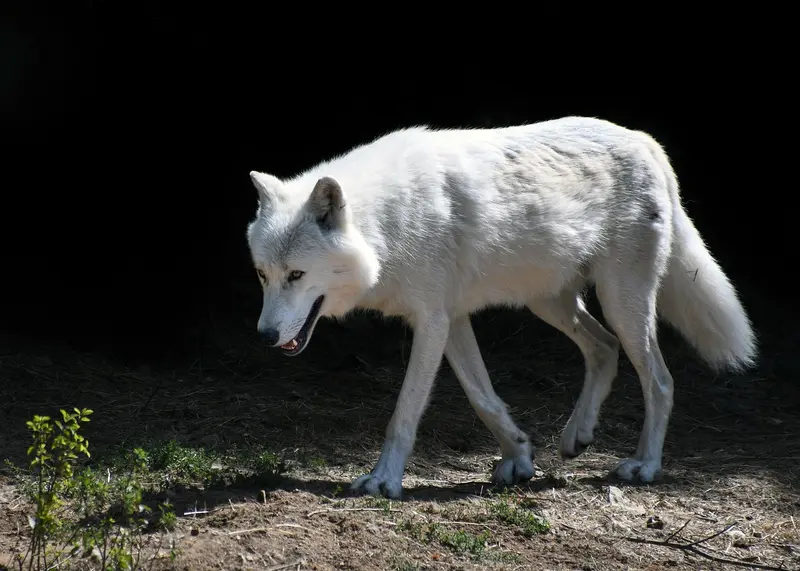
Good morning, everyone. In April 2025, a company called Colossal Biosciences announced that it had brought back the dire wolf, an animal that disappeared more than ten thousand years ago. The photos of white wolf pups went viral. But should we really bring back extinct animals? Today, I'll look at both sides of this question. First, I'll explain what the company actually did. Then I'll give two reasons for de-extinction and two reasons against it. Finally, I'll give my own conclusion, which is a "yes, but only under certain conditions."
Your recording
Say this slide out loud, then listen to yourself.
Recordings stay on this device and disappear when you leave the page.
Useful phrases
announced that it had
Told the public that it did something.
I'll look at both sides of this question
I'll explain the arguments for and against.
only under certain conditions
Only if some rules are followed.
Words
- dire wolf
- went viral
- extinct
- de-extinction
- gray wolf
- gene editing
- DNA
- black-footed ferret
- endangered
- genetic variety
- cloned
- clone
- conservation groups
- in the wild
- opportunity cost
- net loss
- undone
Highlighted words are on this slide. Tap a word to look it up on Google.
Full script
Read the whole talk.
All slides in one place. Read it through once, then practice slide by slide.
01The Return of the Dire Wolf?
Good morning, everyone. In April 2025, a company called Colossal Biosciences announced that it had brought back the dire wolf, an animal that disappeared more than ten thousand years ago. The photos of white wolf pups went viral. But should we really bring back extinct animals? Today, I'll look at both sides of this question. First, I'll explain what the company actually did. Then I'll give two reasons for de-extinction and two reasons against it. Finally, I'll give my own conclusion, which is a "yes, but only under certain conditions."
大家早安。2025年4月,一家名叫巨像生物科學的公司宣布,他們讓恐狼「復活」了。恐狼是一種在一萬多年前就消失的動物。白色小狼的照片很快就在網路上爆紅。但是,我們真的應該讓滅絕的動物復活嗎?今天,我會從正反兩面來看這個問題。首先,我會說明這家公司實際上做了什麼。接著,我會提出支持「去滅絕」的兩個理由,以及反對的兩個理由。最後,我會說出我自己的結論:「可以,但只能在某些條件下。」
Sources: Colossal Biosciences, "The Return of the Dire Wolf" (April 7, 2025): announcement of three dire wolf pups; NPR, "A biotech company says it has bred three pups with traits of the extinct dire wolf" (April 8, 2025)
02What Did the Company Actually Do?
So, what did the company actually do? It didn't find a living dire wolf, and it didn't build one from nothing. Instead, scientists took cells from a gray wolf, a living species, and made 20 changes in 14 of its genes. They used gene editing, a tool that lets scientists change small parts of DNA. Three pups were born, two in October 2024 and one in January 2025. However, many scientists disagreed with the word "dire wolf." They said these are gray wolves with a few changes. In my view, this argument matters, because the name shapes how people see the whole project.
那麼,這家公司到底做了什麼?他們既沒有找到活著的恐狼,也不是從零開始造出一隻恐狼。實際上,科學家從灰狼這個現存物種身上取得細胞,並在其中14個基因上做了20處修改。他們用的是基因編輯,這種工具能讓科學家修改DNA的一小部分。總共生下三隻小狼:兩隻在2024年10月出生,一隻在2025年1月出生。然而,很多科學家不同意「恐狼」這個說法。他們認為,這些只是稍微修改過的灰狼。我認為這個爭論很重要,因為名稱會影響大家怎麼看待整個計畫。
Sources: NPR, "A biotech company says it has bred three pups with traits of the extinct dire wolf" (April 8, 2025): the pups were made by editing gray wolf cells; two were born in October 2024 and one in January 2025; Scientific American, "This Company Claimed to 'De-extinct' Dire Wolves. Then the Fighting Started" (2025): 20 edits in 14 genes; many scientists argued the animals are gray wolves with a small number of changes
03For 1: The Tools Can Save Living Species
Let's start with the arguments for. My first reason is that the same tools can help animals that are still alive. A good example is the black-footed ferret, an endangered animal in North America. All of today's ferrets come from a very small group, so they have little genetic variety. In 2020, scientists cloned a ferret called Elizabeth Ann from cells that had been frozen since 1988. Then, in 2024, the U.S. Fish and Wildlife Service announced that another clone, Antonia, had given birth. This shows that these tools can bring lost genes back into a species that badly needs them.
我們先來看支持的看法。第一個理由是,同樣的技術可以幫助仍然活著的動物。一個很好的例子是黑足鼬,牠是北美的一種瀕危動物。現在所有的黑足鼬,都來自一個非常小的族群,所以遺傳多樣性很低。2020年,科學家用從1988年就冷凍保存的細胞,複製出一隻名叫伊莉莎白・安的黑足鼬。接著在2024年,美國魚類及野生動物管理局宣布,另一隻複製黑足鼬安東妮亞生下了寶寶。這表示,這些技術可以把失去的基因,帶回一個非常需要它們的物種身上。
Sources: U.S. Fish and Wildlife Service, "Innovative genetic research boosts black-footed ferret conservation efforts" (February 2021): Elizabeth Ann, born in December 2020, was cloned from cells of a ferret named Willa that were preserved in 1988; the species descends from a very small founding population with low genetic diversity; U.S. Fish and Wildlife Service, "Advancements in black-footed ferret conservation continue with new offspring from cloned ferret" (November 2024): Antonia, cloned from Willa's 1988 tissue samples, gave birth; the first time a cloned U.S. endangered species has produced offspring
04For 2: It Gets People Interested
My second reason for is about attention. When the dire wolf news came out, my friends who never talk about nature were sharing the photos and asking questions. One friend asked me why the dire wolf disappeared in the first place. That's exactly the kind of question conservation groups want people to ask. In my view, exciting projects like this can be a door into bigger topics, such as why animals go extinct and how we can protect the ones we still have. Of course, this is my own experience, not a study. But attention is often the first step toward support.
支持的第二個理由和關注有關。恐狼的新聞出來以後,我那些平常從來不聊大自然的朋友,都在分享照片、問問題。有個朋友問我,恐狼當初為什麼會消失。這正是自然保育團體希望大家去問的問題。我認為,像這樣令人興奮的計畫,可以成為通往更大話題的一扇門,例如動物為什麼會滅絕,以及我們要怎麼保護現有的動物。當然,這是我自己的經驗,不是研究。但關注往往是得到支持的第一步。
05Against 1: Money Could Save More Species
Now, let's look at the arguments against. The strongest one, in my view, is about money. In 2017, Joseph Bennett and his team published a study in Nature Ecology and Evolution. They estimated the cost of protecting brought-back species in the wild. In New South Wales in Australia, the money needed for five brought-back species could instead protect 42 living species, more than eight times as many. Economists call this opportunity cost: when you spend money on one thing, you lose the chance to spend it on something else. So de-extinction could actually lead to a net loss of nature.
接下來,我們看看反對的看法。我認為最有力的一點和錢有關。2017年,約瑟夫・貝內特和他的團隊在《自然・生態與演化》期刊發表了一項研究。他們估算了在野外保護「復活」物種需要多少費用。在澳洲的新南威爾斯州,保護五個「復活」物種所需的錢,如果拿去用在別的地方,可以保護42個現存的物種,是八倍以上。經濟學家把這叫做「機會成本」:把錢花在一件事上,就失去了把錢花在其他事情上的機會。所以,去滅絕其實可能會讓大自然整體受到損失。
Source: Bennett, J. R., et al. (2017). "Spending limited resources on de-extinction could lead to net biodiversity loss." Nature Ecology & Evolution, 1, 0053: in New South Wales, government funding for the conservation of five resurrected species could instead be used to conserve 42 extant species, more than eight times as many
06Against 2: Their World Is Gone
My second reason against is that the world these animals lived in is gone. The dire wolf lived in a time with very different animals and landscapes. Today, there is no place where a pack of these wolves could live freely. So, for now, the pups live in a fenced area owned by the company. This raises a hard question. If we bring an animal back but it can never live in the wild, who is it really for? Some people say it's mostly for science and for the company's image. That criticism seems fair to me, especially for animals that have been gone for thousands of years.
反對的第二個理由是,這些動物原本生活的世界已經不在了。恐狼生活的時代,動物和地景都跟現在完全不同。今天,已經沒有任何地方能讓一群這樣的狼自由生活。所以,目前這些小狼住在公司擁有、用圍欄圍起來的土地上。這帶出一個困難的問題:如果我們讓一種動物復活,牠卻永遠沒辦法在野外生活,那這到底是為了誰?有人說,這主要是為了科學研究和公司的形象。我覺得這個批評有道理,尤其是對那些已經消失好幾千年的動物。
Source: Colossal Biosciences, "The Return of the Dire Wolf" (April 2025): dire wolves went extinct more than 10,000 years ago; the pups live on a 2,000+ acre secure preserve at an undisclosed location, surrounded by high fencing
07My Conclusion: Yes, With Conditions
So, where do I stand? My answer is yes, but with three conditions. First, the main goal should be helping living species, like the black-footed ferret, not bringing back animals whose world is gone. Second, public conservation money shouldn't pay for it, because Bennett's study shows that the same money could protect many more living species. Private companies can pay for their own projects. Third, companies should use honest names. Calling a changed gray wolf a dire wolf gets attention, but it can make people think extinction can be undone. And it can't.
那麼,我的立場是什麼呢?我的答案是「支持」,但有三個條件。第一,主要目標應該是幫助現存的物種,例如黑足鼬,而不是讓那些生活環境已經消失的動物復活。第二,不應該用公共的自然保育經費來支付,因為貝內特的研究顯示,同樣的錢可以保護多得多的現存物種。民間公司可以自己出錢做自己的計畫。第三,公司應該使用誠實的名稱。把修改過的灰狼叫做恐狼,雖然能吸引目光,卻可能讓大家以為滅絕是可以挽回的。但其實不行。
08Protect What We Still Have
To sum up, de-extinction has real benefits. The tools can help living species, and the news gets people interested in nature. But it also has serious costs: the money could protect more living species, and the world of many extinct animals is gone. That's why my answer is yes, but only with conditions. In the end, the best way to deal with extinction is to stop it from happening in the first place. Thank you for listening. I'm happy to take your questions.
總結來說,去滅絕確實有實際的好處。這些技術可以幫助現存的物種,相關新聞也能讓大家對大自然產生興趣。但它也有嚴重的代價:這些錢可以保護更多現存的物種,而且許多滅絕動物原本生活的世界已經不在了。所以,我的答案是「支持」,但只能在有條件的情況下。說到底,面對滅絕最好的方法,就是一開始就不要讓它發生。謝謝大家的聆聽。歡迎大家提問。
More Environment & Nature presentations




Cover photo by christels on Pixabay