英語プレゼンのお手本の原稿と日本語訳。スライドごとに、聞いて・話して練習できます。
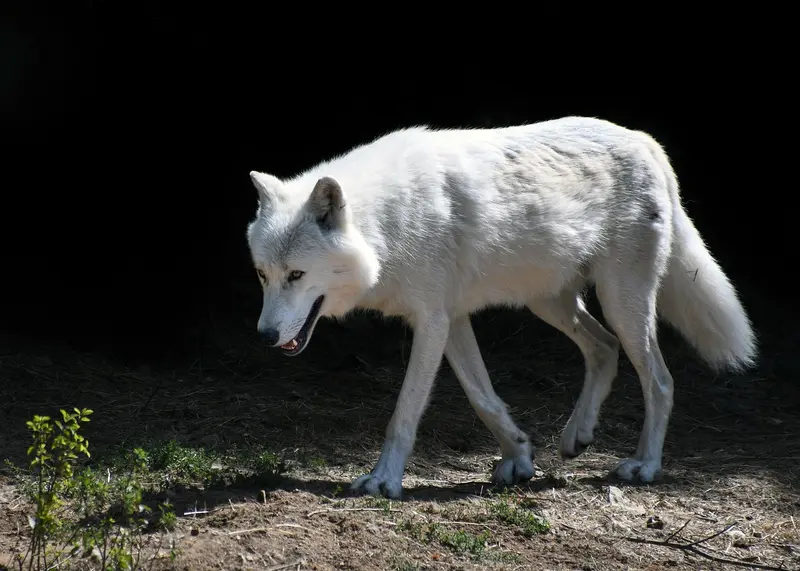
The Return of the Dire Wolf?
What happened in 2025
1 / 8
Model script
Good morning, everyone. In April 2025, a company called Colossal Biosciences announced that it had brought back the dire wolf, an animal that disappeared more than ten thousand years ago. The photos of white wolf pups went viral. But should we really bring back extinct animals? Today, I'll look at both sides of this question. First, I'll explain what the company actually did. Then I'll give two reasons for de-extinction and two reasons against it. Finally, I'll give my own conclusion, which is a "yes, but only under certain conditions."
Your recording
Say this slide out loud, then listen to yourself.
Recordings stay on this device and disappear when you leave the page.
Useful phrases
announced that it had
Told the public that it did something.
I'll look at both sides of this question
I'll explain the arguments for and against.
only under certain conditions
Only if some rules are followed.
Words
- dire wolf
- went viral
- extinct
- de-extinction
- gray wolf
- gene editing
- DNA
- black-footed ferret
- endangered
- genetic variety
- cloned
- clone
- conservation groups
- in the wild
- opportunity cost
- net loss
- undone
Highlighted words are on this slide. Tap a word to look it up on Google.
Full script
Read the whole talk.
All slides in one place. Read it through once, then practice slide by slide.
01The Return of the Dire Wolf?
Good morning, everyone. In April 2025, a company called Colossal Biosciences announced that it had brought back the dire wolf, an animal that disappeared more than ten thousand years ago. The photos of white wolf pups went viral. But should we really bring back extinct animals? Today, I'll look at both sides of this question. First, I'll explain what the company actually did. Then I'll give two reasons for de-extinction and two reasons against it. Finally, I'll give my own conclusion, which is a "yes, but only under certain conditions."
みなさん、おはようございます。2025年4月、コロッサル・バイオサイエンシズという会社が、ダイアウルフをよみがえらせたと発表しました。1万年以上前にいなくなった動物です。白いオオカミの子どもの写真は、あっという間に広まりました。でも、絶滅した動物を本当によみがえらせるべきなのでしょうか。今日は、この問いの両方の側を見ていきます。まず、会社が実際に何をしたのかを説明します。次に、「脱絶滅」に賛成する理由を2つ、反対する理由を2つ紹介します。最後に、私自身の結論をお話しします。それは「賛成。ただし、ある条件のもとでだけ」というものです。
Sources: Colossal Biosciences, "The Return of the Dire Wolf" (April 7, 2025): announcement of three dire wolf pups; NPR, "A biotech company says it has bred three pups with traits of the extinct dire wolf" (April 8, 2025)
02What Did the Company Actually Do?
So, what did the company actually do? It didn't find a living dire wolf, and it didn't build one from nothing. Instead, scientists took cells from a gray wolf, a living species, and made 20 changes in 14 of its genes. They used gene editing, a tool that lets scientists change small parts of DNA. Three pups were born, two in October 2024 and one in January 2025. However, many scientists disagreed with the word "dire wolf." They said these are gray wolves with a few changes. In my view, this argument matters, because the name shapes how people see the whole project.
では、この会社は実際に何をしたのでしょうか。生きているダイアウルフを見つけたわけでも、ゼロから作ったわけでもありません。そうではなく、科学者たちは、今も生きている種であるハイイロオオカミの細胞を取り、その14の遺伝子に20か所の変更を加えました。使ったのは「ゲノム編集」です。DNAの小さな部分を変えられる技術です。子どもは3匹生まれました。2024年10月に2匹、2025年1月に1匹です。しかし、多くの科学者が「ダイアウルフ」という呼び方に反対しました。これは、少し変更を加えたハイイロオオカミだというのです。私の考えでは、この議論は大切です。呼び方によって、人々がこの計画全体をどう見るかが変わるからです。
Sources: NPR, "A biotech company says it has bred three pups with traits of the extinct dire wolf" (April 8, 2025): the pups were made by editing gray wolf cells; two were born in October 2024 and one in January 2025; Scientific American, "This Company Claimed to 'De-extinct' Dire Wolves. Then the Fighting Started" (2025): 20 edits in 14 genes; many scientists argued the animals are gray wolves with a small number of changes
03For 1: The Tools Can Save Living Species
Let's start with the arguments for. My first reason is that the same tools can help animals that are still alive. A good example is the black-footed ferret, an endangered animal in North America. All of today's ferrets come from a very small group, so they have little genetic variety. In 2020, scientists cloned a ferret called Elizabeth Ann from cells that had been frozen since 1988. Then, in 2024, the U.S. Fish and Wildlife Service announced that another clone, Antonia, had given birth. This shows that these tools can bring lost genes back into a species that badly needs them.
まず、賛成の意見から始めましょう。1つ目の理由は、同じ技術が、今も生きている動物を助けられるということです。よい例が、北アメリカの絶滅危惧種、クロアシイタチです。今いるクロアシイタチはすべて、ごく少数の祖先から生まれているので、遺伝子の多様性がほとんどありません。2020年、科学者たちは1988年から凍結されていた細胞から、エリザベス・アンというクロアシイタチのクローンを作りました。そして2024年、アメリカ魚類野生生物局は、別のクローンのアントニアが子どもを産んだと発表しました。このことは、こうした技術が、失われた遺伝子を、それを強く必要としている種に戻せることを示しています。
Sources: U.S. Fish and Wildlife Service, "Innovative genetic research boosts black-footed ferret conservation efforts" (February 2021): Elizabeth Ann, born in December 2020, was cloned from cells of a ferret named Willa that were preserved in 1988; the species descends from a very small founding population with low genetic diversity; U.S. Fish and Wildlife Service, "Advancements in black-footed ferret conservation continue with new offspring from cloned ferret" (November 2024): Antonia, cloned from Willa's 1988 tissue samples, gave birth; the first time a cloned U.S. endangered species has produced offspring
04For 2: It Gets People Interested
My second reason for is about attention. When the dire wolf news came out, my friends who never talk about nature were sharing the photos and asking questions. One friend asked me why the dire wolf disappeared in the first place. That's exactly the kind of question conservation groups want people to ask. In my view, exciting projects like this can be a door into bigger topics, such as why animals go extinct and how we can protect the ones we still have. Of course, this is my own experience, not a study. But attention is often the first step toward support.
賛成の2つ目の理由は、人々の関心です。ダイアウルフのニュースが出たとき、ふだん自然の話なんてしない友だちが、写真をシェアしたり質問したりしていました。ある友だちは、そもそもなぜダイアウルフはいなくなったのかと私に聞きました。それこそ、自然保護の団体が人々に考えてほしい質問です。私の考えでは、このようなわくわくする計画は、もっと大きな話題への入り口になります。たとえば、なぜ動物は絶滅するのか、今いる動物をどう守ればよいのか、ということです。もちろん、これは研究ではなく、私自身の体験です。でも、関心はたいてい、支援への第一歩なのです。
05Against 1: Money Could Save More Species
Now, let's look at the arguments against. The strongest one, in my view, is about money. In 2017, Joseph Bennett and his team published a study in Nature Ecology and Evolution. They estimated the cost of protecting brought-back species in the wild. In New South Wales in Australia, the money needed for five brought-back species could instead protect 42 living species, more than eight times as many. Economists call this opportunity cost: when you spend money on one thing, you lose the chance to spend it on something else. So de-extinction could actually lead to a net loss of nature.
では、反対の意見を見てみましょう。私の考えでは、いちばん強いのはお金の問題です。2017年、ジョセフ・ベネットと彼のチームは、学術誌「ネイチャー・エコロジー・アンド・エボリューション」に研究を発表しました。よみがえらせた種を野生で守るのにかかる費用を見積もったものです。オーストラリアのニューサウスウェールズ州では、よみがえらせた5つの種に必要なお金で、代わりに今生きている42の種を守ることができました。8倍以上の数です。経済学者はこれを「機会費用」と呼びます。あることにお金を使うと、ほかのことに使うチャンスを失う、という考え方です。つまり、脱絶滅は、かえって自然全体を減らすことにつながるかもしれないのです。
Source: Bennett, J. R., et al. (2017). "Spending limited resources on de-extinction could lead to net biodiversity loss." Nature Ecology & Evolution, 1, 0053: in New South Wales, government funding for the conservation of five resurrected species could instead be used to conserve 42 extant species, more than eight times as many
06Against 2: Their World Is Gone
My second reason against is that the world these animals lived in is gone. The dire wolf lived in a time with very different animals and landscapes. Today, there is no place where a pack of these wolves could live freely. So, for now, the pups live in a fenced area owned by the company. This raises a hard question. If we bring an animal back but it can never live in the wild, who is it really for? Some people say it's mostly for science and for the company's image. That criticism seems fair to me, especially for animals that have been gone for thousands of years.
反対の2つ目の理由は、これらの動物が暮らしていた世界が、もうないということです。ダイアウルフは、今とはまったく違う動物や景色の時代に生きていました。今、この群れが自由に暮らせる場所はどこにもありません。そのため、今のところ子どもたちは、会社が持っている柵で囲まれた土地で暮らしています。ここで難しい問いが出てきます。動物をよみがえらせても、それが野生で暮らせないなら、いったいだれのためなのでしょうか。主に科学と、会社のイメージのためだと言う人もいます。特に何千年も前にいなくなった動物については、その批判はもっともだと私は思います。
Source: Colossal Biosciences, "The Return of the Dire Wolf" (April 2025): dire wolves went extinct more than 10,000 years ago; the pups live on a 2,000+ acre secure preserve at an undisclosed location, surrounded by high fencing
07My Conclusion: Yes, With Conditions
So, where do I stand? My answer is yes, but with three conditions. First, the main goal should be helping living species, like the black-footed ferret, not bringing back animals whose world is gone. Second, public conservation money shouldn't pay for it, because Bennett's study shows that the same money could protect many more living species. Private companies can pay for their own projects. Third, companies should use honest names. Calling a changed gray wolf a dire wolf gets attention, but it can make people think extinction can be undone. And it can't.
では、私はどちらの立場なのでしょうか。私の答えは「賛成。ただし3つの条件付き」です。1つ目に、いちばんの目的は、クロアシイタチのように今生きている種を助けることであるべきです。暮らす世界がなくなってしまった動物をよみがえらせることではありません。2つ目に、公的な自然保護のお金をそれに使うべきではありません。ベネットの研究が示すように、同じお金で、今生きているずっと多くの種を守れるからです。民間の会社は、自分たちの計画に自分たちでお金を出せばよいのです。3つ目に、会社は正直な名前を使うべきです。変更を加えたハイイロオオカミをダイアウルフと呼べば注目は集まりますが、絶滅は取り消せるものだと人々に思わせてしまうおそれがあります。でも、それはできないのです。
08Protect What We Still Have
To sum up, de-extinction has real benefits. The tools can help living species, and the news gets people interested in nature. But it also has serious costs: the money could protect more living species, and the world of many extinct animals is gone. That's why my answer is yes, but only with conditions. In the end, the best way to deal with extinction is to stop it from happening in the first place. Thank you for listening. I'm happy to take your questions.
まとめると、脱絶滅には本当の利点があります。その技術は今生きている種を助けられますし、ニュースは人々に自然への関心を持たせてくれます。でも、深刻なコストもあります。そのお金があれば、もっと多くの生きている種を守れますし、多くの絶滅した動物が暮らしていた世界はもうありません。だからこそ、私の答えは「賛成。ただし条件付きでだけ」です。結局のところ、絶滅にいちばんよく向き合う方法は、そもそも絶滅を起こさないことです。ご清聴ありがとうございました。ご質問があれば、喜んでお答えします。
More Environment & Nature presentations


Cover photo by christels on Pixabay