英語プレゼンのお手本の原稿と日本語訳。スライドごとに、聞いて・話して練習できます。
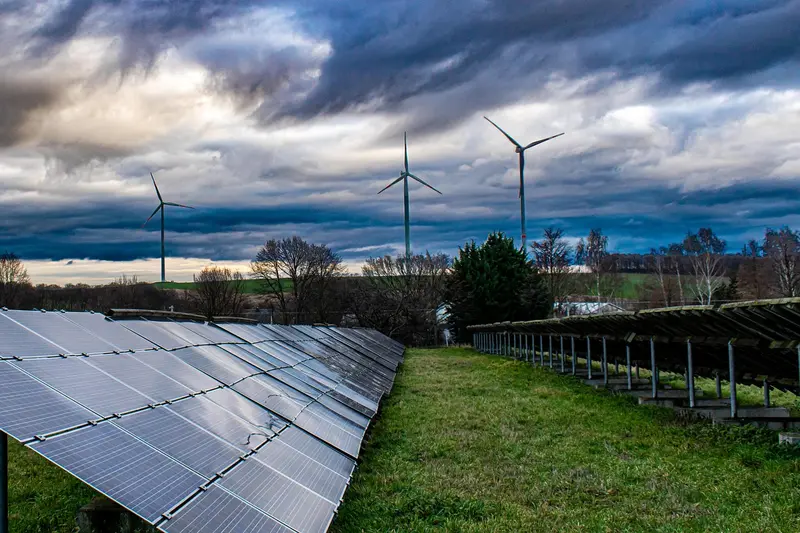
Where Will Our Electricity Come From?
Where we are now
1 / 8
Model script
Good morning, everyone. Every time you charge your phone, the electricity comes from somewhere. For many of us, it still comes from burning coal and gas. But that is changing, and it's changing fast. Today, I'd like to make a prediction about where our electricity will come from in 2050. First, I'll show you where we are now. Then, I'll look at a forecast for 2030 and the role of batteries. After that, I'll talk about the biggest problem. Finally, I'll give you my own prediction.
Your recording
Say this slide out loud, then listen to yourself.
Recordings stay on this device and disappear when you leave the page.
Useful phrases
I'd like to make a prediction
I want to say what I think will happen.
it's changing fast
It is changing quickly.
Finally, I'll give you
My last point will be...
Words
Highlighted words are on this slide. Tap a word to look it up on Google.
Full script
Read the whole talk.
All slides in one place. Read it through once, then practice slide by slide.
01Where Will Our Electricity Come From?
Good morning, everyone. Every time you charge your phone, the electricity comes from somewhere. For many of us, it still comes from burning coal and gas. But that is changing, and it's changing fast. Today, I'd like to make a prediction about where our electricity will come from in 2050. First, I'll show you where we are now. Then, I'll look at a forecast for 2030 and the role of batteries. After that, I'll talk about the biggest problem. Finally, I'll give you my own prediction.
みなさん、おはようございます。スマートフォンを充電するたびに、その電気はどこかから来ています。多くの人にとって、その電気は今も石炭やガスを燃やして作られています。でも、それは変わりつつあり、しかも速く変わっています。今日は、2050年に私たちの電気がどこから来るのかを予測してみたいと思います。まず、今の状況をお見せします。次に、2030年の予測と、電池の役割を見ていきます。そのあと、いちばん大きな問題についてお話しします。最後に、私自身の予測をお伝えします。
02Where We Are Now
Let's start with where we are now. According to Ember's Global Electricity Review 2025, renewable sources made about 32% of the world's electricity in 2024. Hydropower is still the biggest renewable source, at about 14%, followed by wind at about 8% and solar at about 7%. If we add nuclear power, clean sources reached 40.9%. Solar grew the most. It added 474 terawatt-hours in just one year, the biggest jump ever recorded. This shows that the change isn't just a plan for the future. It's already happening, and it's speeding up.
まず、今の状況から始めましょう。エンバーの「グローバル電力レビュー2025」によると、2024年、世界の電気のおよそ32%が再生可能エネルギーで作られました。いちばん大きいのは今も水力で約14%、次が風力の約8%、太陽光の約7%です。原子力を足すと、クリーンな電気は40.9%に達しました。いちばん伸びたのは太陽光です。たった1年で474テラワット時増え、これは記録上最大の伸びでした。このことから、この変化はただの未来の計画ではないことが分かります。もう起きていて、しかも速くなっているのです。
Source: Ember, "Global Electricity Review 2025" (April 2025; wind 8.1%, solar 6.9%, hydro 14.3%, other renewables 2.6%; clean power 40.9%; solar +474 TWh, the largest annual growth on record)
03The Forecast for 2030
My second point is the forecast. The International Energy Agency, or IEA, published a report called Renewables 2024. It forecasts that renewables will rise from 30% of global electricity in 2023 to 46% in 2030. Solar and wind make up almost all of this growth. In other words, in just seven years, almost half of the world's electricity could come from renewables. In my view, if this trend continues after 2030, renewables will become the main source of electricity well before 2050.
2つ目のポイントは予測です。国際エネルギー機関、IEAは「Renewables 2024」という報告書を出しました。それによると、再生可能エネルギーは、2023年の世界の電気の30%から、2030年には46%に増える見込みです。この伸びのほとんどは太陽光と風力です。言いかえると、たった7年で、世界の電気のほぼ半分が再生可能エネルギーになるかもしれないのです。私の考えでは、この流れが2030年以降も続けば、再生可能エネルギーは2050年よりずっと前に、電気の主な作り方になるでしょう。
Source: International Energy Agency (IEA), "Renewables 2024", Global overview (October 2024; renewable share of electricity forecast to expand from 30% in 2023 to 46% in 2030; solar and wind make up almost all this growth)
04Batteries Solve the Night Problem
Now, you might ask: what happens at night, or on a day with no wind? This is where batteries come in. According to the IEA's 2024 report on batteries, the cost of lithium-ion batteries has fallen by about 90% since 2010. And in 2023, the amount of battery storage added to power systems more than doubled. Cheaper batteries mean that solar power from a sunny afternoon can be used in the evening. This matters because it makes solar and wind much more reliable.
ここで、「夜や、風のない日はどうするの?」と思うかもしれません。そこで電池の出番です。IEAの2024年の電池についての報告書によると、リチウムイオン電池の値段は、2010年から約90%下がりました。そして2023年には、電力に使われる電池の導入量が前の年の2倍以上になりました。電池が安くなると、晴れた日の午後の太陽光の電気を、夜に使えるようになります。これが大切なのは、太陽光や風力をずっと頼れるものにしてくれるからです。
Source: International Energy Agency (IEA), "Batteries and Secure Energy Transitions" (April 2024; 90% cost reductions since 2010; battery storage in the power sector more than doubled year-on-year in 2023)
05The Biggest Problem: Rising Demand
However, there's a strong argument on the other side. Electricity demand is also growing quickly. Ember reports that global demand rose by 4% in 2024, and heatwaves caused nearly a fifth of that increase, as people used more air conditioning. Because of this, power from fossil fuels also went up a little, and emissions from electricity reached a record 14.6 billion tonnes of CO2. In short, clean power is growing, but demand is growing too. This is the most serious reason to doubt a fast change.
しかし、反対側にも強い意見があります。電気を使う量も速く増えているのです。エンバーによると、2024年の世界の電気の需要は4%増え、その増えた分の約5分の1は熱波が原因でした。人々がエアコンをたくさん使ったからです。そのため、化石燃料による発電も少し増え、電気から出る二酸化炭素は過去最高の146億トンになりました。つまり、クリーンな電気は増えていますが、使う量も増えているのです。これが、速い変化を疑ういちばんの理由です。
Source: Ember, "Global Electricity Review 2025" (April 2025; demand +4.0% in 2024, with heatwaves adding nearly a fifth of the increase; fossil generation +1.4%; power sector emissions a record 14.6 billion tonnes of CO2)
06What I Saw at My Grandparents' House
This reminds me of my grandparents. Five years ago, they put solar panels on the roof of their house in the countryside. At first, they could only use the power during the day. Last year, they added a home battery. Now, they use their own solar power in the evening, too, and my grandfather says his electricity bill is much lower. For me, this small example shows how the pieces fit together: solar power plus batteries. It also shows that the change can start at home, not only in big power plants.
このことで、祖父母のことを思い出します。5年前、祖父母は田舎の家の屋根に太陽光パネルを付けました。最初は、昼間しかその電気を使えませんでした。去年、家庭用の電池を付けました。今では夜も自分たちの太陽光の電気を使っていて、祖父は電気代がずっと安くなったと言っています。私にとってこの小さな例は、太陽光と電池がどう組み合わさるのかを示しています。そして、変化は大きな発電所だけでなく、家からも始められることも示しています。
07My Prediction for 2050
So, here is my prediction. This is my own view, not an official forecast. I think that by 2050, most of the world's electricity will come from solar and wind, supported by batteries, hydropower, and some nuclear power. But I don't think coal and gas will disappear completely. Some countries will probably still need them as a backup, especially in winter, or when demand suddenly jumps. In other words, renewables will be the main source, but not the only one.
では、私の予測です。これは私自身の考えで、公式の予測ではありません。2050年までには、世界の電気のほとんどが太陽光と風力で作られ、それを電池、水力、そして一部の原子力が支えると思います。でも、石炭やガスが完全になくなるとは思いません。特に冬や、使う量が急に増えたときのために、予備としてまだ必要な国もおそらくあるでしょう。言いかえると、再生可能エネルギーは主な作り方にはなりますが、ただ1つの作り方にはならないということです。
08Mostly Clean by 2050
To sum up, renewables already make about a third of the world's electricity. The IEA expects almost half by 2030, and cheaper batteries are solving the night problem. Growing demand is still the biggest challenge. That's why I predict a mostly clean, but not fully clean, power system in 2050. Thank you for listening. I'm happy to take your questions.
まとめると、再生可能エネルギーはすでに世界の電気のおよそ3分の1を作っています。IEAは2030年にはほぼ半分になると見ていて、安くなった電池が夜の問題を解決しつつあります。使う量が増えていることは、今もいちばん大きな課題です。だから私は、2050年の電気は、ほとんどクリーンだけれど完全にはクリーンではない、と予測します。ご清聴ありがとうございました。ご質問があればどうぞ。
Sources: Ember, "Global Electricity Review 2025" (April 2025); International Energy Agency (IEA), "Renewables 2024" (October 2024); International Energy Agency (IEA), "Batteries and Secure Energy Transitions" (April 2024)
More Environment & Nature presentations

Cover photo by Coernl on Pixabay