英語プレゼンのお手本の原稿と日本語訳。スライドごとに、聞いて・話して練習できます。
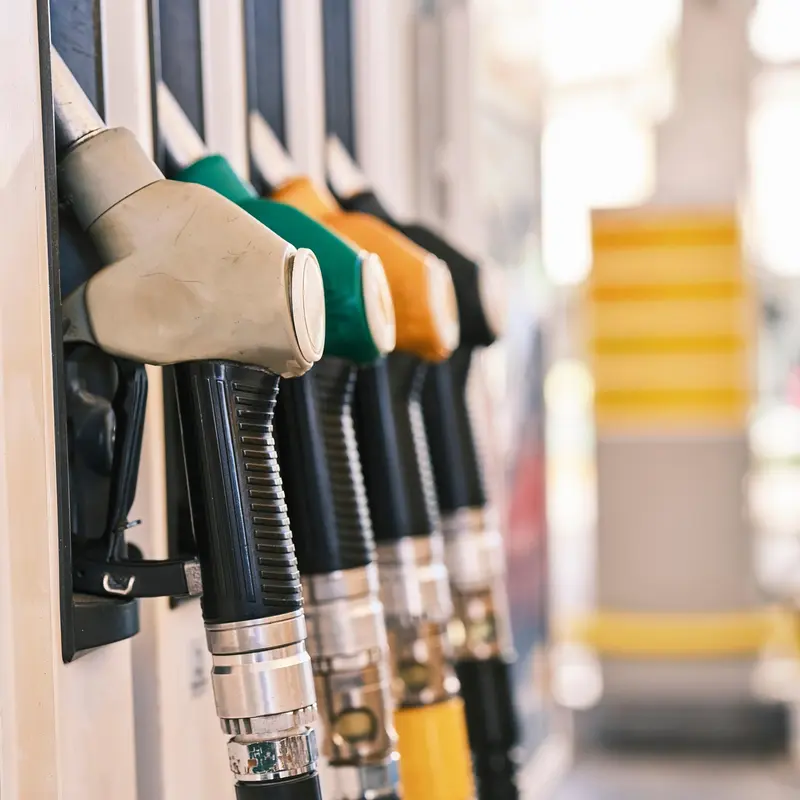
Ban It, or Price It?
Two ways to cut pollution
1 / 8
Model script
Good afternoon, everyone. If we want people to pollute less, we have two basic choices. We can ban things, or we can put a price on pollution. Today I'll look at the second choice: a carbon tax. First, I'll explain the basic idea. Then I'll show you two real cases, Sweden and the Canadian province of British Columbia. Both found that the tax reduced emissions. But British Columbia's story has a surprising ending, so I'll also look at why. Finally, I'll give my view on what this means for climate policy.
Your recording
Say this slide out loud, then listen to yourself.
Recordings stay on this device and disappear when you leave the page.
Useful phrases
we have two basic choices
There are two main ways to do it.
put a price on
Make people pay for something.
has a surprising ending
Ends in a way you don't expect.
Words
- pollute
- carbon tax
- emissions
- climate policy
- carbon dioxide
- economists
- external cost
- synthetic
- gasoline
- revenue-neutral
- negligible
- textbook
- fuel charge
- litre
- hit hardest
- predictably
Highlighted words are on this slide. Tap a word to look it up on Google.
Full script
Read the whole talk.
All slides in one place. Read it through once, then practice slide by slide.
01Ban It, or Price It?
Good afternoon, everyone. If we want people to pollute less, we have two basic choices. We can ban things, or we can put a price on pollution. Today I'll look at the second choice: a carbon tax. First, I'll explain the basic idea. Then I'll show you two real cases, Sweden and the Canadian province of British Columbia. Both found that the tax reduced emissions. But British Columbia's story has a surprising ending, so I'll also look at why. Finally, I'll give my view on what this means for climate policy.
みなさん、こんにちは。人に汚染を減らしてもらいたいとき、基本的な選び方は2つあります。何かを禁止するか、汚染に値段を付けるかです。今日は2つ目の方法、炭素税を取り上げます。まず、基本の考え方を説明します。次に、実際の例を2つ紹介します。スウェーデンと、カナダのブリティッシュコロンビア州です。どちらも、税によって排出が減ったことが分かりました。でも、ブリティッシュコロンビア州の話には意外な結末があるので、その理由も見ていきます。最後に、これが気候政策にとって何を意味するのか、私の考えをお話しします。
02The Basic Idea: An External Cost
Let's start with the basic idea. When we burn oil or gas, we release carbon dioxide, and everyone pays the cost through climate change. Economists call this an "external cost," because the person who causes it doesn't pay for it. A carbon tax adds that cost to the price. I've seen how a small price changes behavior in my own life. When shops near me started charging for plastic bags, I began carrying my own bag almost immediately. The fee was tiny, but it made me think. A carbon tax tries to do the same thing for a whole economy.
まず、基本の考え方から始めましょう。石油やガスを燃やすと、二酸化炭素が出ます。そして、そのつけは気候変動という形でみんなが払います。原因を作った人がその費用を払わないので、経済学者はこれを「外部費用」と呼びます。炭素税は、その費用を値段に上乗せするものです。小さな値段が行動を変えることを、私は自分の生活で見てきました。近所の店がレジ袋にお金を取るようになったとき、私はすぐに自分の袋を持ち歩くようになりました。料金はほんの少しでしたが、考えるきっかけになりました。炭素税は、同じことを経済全体でしようとするものです。
03Case 1: Sweden, Since 1991
My first case is Sweden, which introduced a carbon tax in 1991, one of the first in the world. But how can we know what the tax did? We can't run a second Sweden without the tax. So economist Julius Andersson built a comparison, a "synthetic Sweden," from a group of similar OECD countries. His study, published in 2019 in the American Economic Journal: Economic Policy, found that carbon dioxide emissions from transport fell almost 11% compared with this synthetic Sweden. In other words, the tax made a real difference, even in a rich country.
1つ目の例はスウェーデンです。スウェーデンは1991年に、世界でもいち早く炭素税を始めました。でも、税が何をもたらしたのか、どうすれば分かるのでしょうか。税のないもう1つのスウェーデンを用意することはできません。そこで経済学者のジュリアス・アンダーソンは、よく似たOECDの国々を組み合わせて、比べる相手となる「合成のスウェーデン」を作りました。2019年に「アメリカン・エコノミック・ジャーナル:経済政策」に発表されたこの研究によると、交通から出る二酸化炭素は、この合成のスウェーデンと比べて、11%近く減っていました。つまり、豊かな国でも、税は本当に違いを生んだのです。
Source: Andersson, J. J. (2019). "Carbon Taxes and CO2 Emissions: Sweden as a Case Study." American Economic Journal: Economic Policy, 11(4), 1–30: Sweden's carbon tax was introduced in 1991; after implementation, CO2 emissions from transport declined almost 11 percent relative to a synthetic control unit constructed from a comparable group of OECD countries
04A Strong Reaction, and Two Limits
The same study found something even more interesting. People reacted about three times more strongly to the carbon tax than to normal changes in the price of gasoline. My guess is that a tax feels permanent, while a normal price rise may go back down. However, we should be careful about two limits. First, the study only measured transport, not the whole economy. Second, a synthetic Sweden is a careful estimate, not a perfect experiment. So the evidence is strong, but it tells us about one sector in one country.
同じ研究は、さらに興味深いことも見つけました。人々は、ふつうのガソリンの値上がりに比べて、炭素税には約3倍も強く反応していたのです。私の推測ですが、税はずっと続くように感じられる一方で、ふつうの値上がりはまた下がるかもしれないからではないでしょうか。ただし、2つの限界には気をつけるべきです。1つ目に、この研究が測ったのは交通だけで、経済全体ではありません。2つ目に、合成のスウェーデンは注意深く作った推定であって、完ぺきな実験ではありません。つまり、根拠は強いのですが、それは1つの国の、1つの分野についての話なのです。
Source: Andersson, J. J. (2019). "Carbon Taxes and CO2 Emissions: Sweden as a Case Study." American Economic Journal: Economic Policy, 11(4), 1–30: the carbon tax elasticity of gasoline demand is about three times larger than the price elasticity; the estimated effect is for transport emissions, using a synthetic control method
05Case 2: British Columbia, 2008
My second case is British Columbia in Canada. In 2008, it introduced a carbon tax that was "revenue-neutral." This means the government gave the money back through lower taxes. The idea was that people would not pay more tax in total. In 2015, Brian Murray and Nicholas Rivers reviewed the research in the journal Energy Policy. According to their review, the tax reduced emissions in the province by between 5% and 15%, and models showed that it had negligible effects on the overall economy. For many economists, this was close to a textbook success.
2つ目の例は、カナダのブリティッシュコロンビア州です。2008年、この州は「税収中立」の炭素税を始めました。これは、集めたお金を、ほかの税を下げることで返すという意味です。全体としては税の負担が増えない、という考え方でした。2015年、ブライアン・マレーとニコラス・リバーズは、学術誌「エナジー・ポリシー」でこれまでの研究をまとめました。そのまとめによると、税は州の排出を5%から15%減らし、モデルでは経済全体への影響はほとんどありませんでした。多くの経済学者にとって、これは教科書どおりの成功に近いものでした。
Source: Murray, B., & Rivers, N. (2015). "British Columbia's revenue-neutral carbon tax: A review of the latest 'grand experiment' in environmental policy." Energy Policy, 86, 674–683: the tax has reduced emissions in the province by between 5% and 15% since being implemented (2008); models show negligible effects on the aggregate economy
06The Surprising Ending
However, here is the surprising ending. On April 1, 2025, British Columbia removed its consumer carbon tax. On the same day, Canada's federal government set its own consumer fuel charge to zero. The B.C. government said this would take about 17 cents per litre off the price of fuel. So a tax that research said was working was removed anyway. In my view, this is the strongest point against carbon taxes. It's not that they don't work. It's that people feel the cost every day at the gas station, while the benefits are hard to see.
ところが、ここで意外な結末です。2025年4月1日、ブリティッシュコロンビア州は、消費者向けの炭素税を廃止しました。同じ日に、カナダの連邦政府も、消費者向けの燃料の課金をゼロにしました。州政府は、これで燃料の値段が1リットルあたり約17セント下がると説明しました。つまり、研究ではうまくいっていると言われていた税が、それでも廃止されたのです。私の考えでは、これが炭素税に反対するいちばん強い点です。効果がないからではありません。人々は毎日ガソリンスタンドで負担を感じるのに、よい効果は目に見えにくいからです。
Sources: Government of British Columbia, Ministry of Finance news release (March 2025): legislation to remove the consumer carbon tax effective April 1, 2025, taking approximately 17 cents per litre off the cost of fuel; Department of Finance Canada (March 2025), "Removing the consumer carbon price, effective April 1, 2025": the federal fuel charge set to zero from April 1, 2025
07My View: Make It Last
So, in my view, the question is not whether carbon taxes work. The evidence from Sweden and British Columbia says they can. The real question is how to make them last. This is my own idea, but I think three things would help. First, show people clearly where the money goes. Second, protect the families who would be hit hardest. Third, raise the price slowly and predictably, so people can plan. A policy that works but cannot survive an election will not solve a long-term problem like climate change.
ですから、私の考えでは、問題は炭素税に効果があるかどうかではありません。スウェーデンとブリティッシュコロンビア州の根拠は、効果がありうることを示しています。本当の問題は、どうすれば長続きさせられるかです。これは私自身の案ですが、3つのことが役に立つと思います。1つ目に、お金の使い道を人々にはっきり見せること。2つ目に、いちばん大きな打撃を受ける家庭を守ること。3つ目に、人々が計画を立てられるように、値段をゆっくり、予測できる形で上げることです。効果があっても選挙を乗り越えられない政策では、気候変動のような長い時間のかかる問題は解決できません。
08Good Design Is Not Enough
To sum up, a carbon tax puts a price on pollution. Sweden's tax cut transport emissions by almost 11%, and British Columbia's tax cut emissions by 5 to 15% with little effect on its economy. But British Columbia also showed that a working policy can disappear if people don't support it. For me, that's the most important lesson for anyone studying environmental policy: good design is not enough. People have to understand it. Thank you for listening. I'm happy to take your questions.
まとめると、炭素税は汚染に値段を付けるものです。スウェーデンの税は交通からの排出を11%近く減らし、ブリティッシュコロンビア州の税は、経済にほとんど影響を与えずに排出を5%から15%減らしました。でもブリティッシュコロンビア州は、うまくいっている政策でも、人々の支持がなければ消えてしまうことも示しました。環境政策を学ぶ人にとって、私はこれがいちばん大切な教訓だと思います。よい設計だけでは足りません。人々に理解してもらう必要があるのです。ご清聴ありがとうございました。ご質問があればどうぞ。
Sources: Andersson, J. J. (2019). "Carbon Taxes and CO2 Emissions: Sweden as a Case Study." American Economic Journal: Economic Policy, 11(4), 1–30; Murray, B., & Rivers, N. (2015). Energy Policy, 86, 674–683: emissions 5–15% lower; negligible effects on the aggregate economy; Government of British Columbia (2025): consumer carbon tax removed effective April 1, 2025
More Environment & Nature presentations





Cover photo by Engin_Akyurt on Pixabay
Slide photos by articonn, Engin_Akyurt on Pixabay