Guion modelo de una presentación en inglés con traducción al español. Escucha y practica diapositiva por diapositiva.
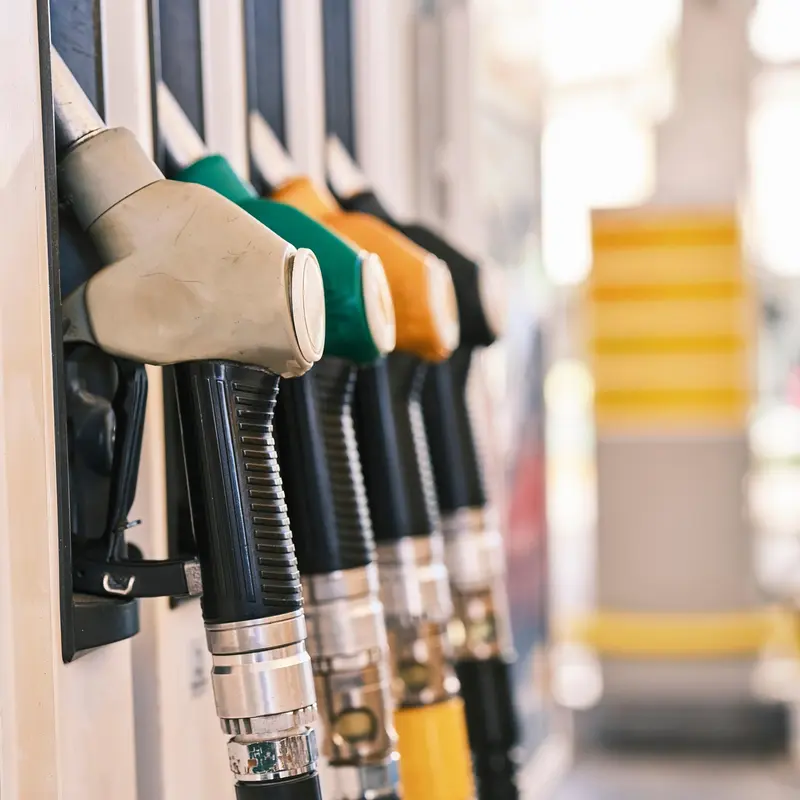
Ban It, or Price It?
Two ways to cut pollution
1 / 8
Model script
Good afternoon, everyone. If we want people to pollute less, we have two basic choices. We can ban things, or we can put a price on pollution. Today I'll look at the second choice: a carbon tax. First, I'll explain the basic idea. Then I'll show you two real cases, Sweden and the Canadian province of British Columbia. Both found that the tax reduced emissions. But British Columbia's story has a surprising ending, so I'll also look at why. Finally, I'll give my view on what this means for climate policy.
Your recording
Say this slide out loud, then listen to yourself.
Recordings stay on this device and disappear when you leave the page.
Useful phrases
we have two basic choices
There are two main ways to do it.
put a price on
Make people pay for something.
has a surprising ending
Ends in a way you don't expect.
Words
- pollute
- carbon tax
- emissions
- climate policy
- carbon dioxide
- economists
- external cost
- synthetic
- gasoline
- revenue-neutral
- negligible
- textbook
- fuel charge
- litre
- hit hardest
- predictably
Highlighted words are on this slide. Tap a word to look it up on Google.
Full script
Read the whole talk.
All slides in one place. Read it through once, then practice slide by slide.
01Ban It, or Price It?
Good afternoon, everyone. If we want people to pollute less, we have two basic choices. We can ban things, or we can put a price on pollution. Today I'll look at the second choice: a carbon tax. First, I'll explain the basic idea. Then I'll show you two real cases, Sweden and the Canadian province of British Columbia. Both found that the tax reduced emissions. But British Columbia's story has a surprising ending, so I'll also look at why. Finally, I'll give my view on what this means for climate policy.
Buenas tardes a todos. Si queremos que la gente contamine menos, tenemos dos opciones básicas. Podemos prohibir cosas o podemos ponerle un precio a la contaminación. Hoy voy a analizar la segunda opción: un impuesto al carbono. Primero, explicaré la idea básica. Luego les mostraré dos casos reales: Suecia y la provincia canadiense de Columbia Británica. En ambos casos se comprobó que el impuesto redujo las emisiones. Pero la historia de Columbia Británica tiene un final sorprendente, así que también veremos por qué. Por último, daré mi opinión sobre lo que esto significa para la política climática.
02The Basic Idea: An External Cost
Let's start with the basic idea. When we burn oil or gas, we release carbon dioxide, and everyone pays the cost through climate change. Economists call this an "external cost," because the person who causes it doesn't pay for it. A carbon tax adds that cost to the price. I've seen how a small price changes behavior in my own life. When shops near me started charging for plastic bags, I began carrying my own bag almost immediately. The fee was tiny, but it made me think. A carbon tax tries to do the same thing for a whole economy.
Empecemos por la idea básica. Cuando quemamos petróleo o gas, liberamos dióxido de carbono, y todos pagamos el costo a través del cambio climático. Los economistas llaman a esto un «costo externo», porque la persona que lo causa no lo paga. Un impuesto al carbono añade ese costo al precio. He visto en mi propia vida cómo un precio pequeño cambia el comportamiento. Cuando las tiendas cerca de mí empezaron a cobrar por las bolsas de plástico, empecé a llevar mi propia bolsa casi de inmediato. El cargo era mínimo, pero me hizo pensar. Un impuesto al carbono intenta hacer lo mismo en toda una economía.
03Case 1: Sweden, Since 1991
My first case is Sweden, which introduced a carbon tax in 1991, one of the first in the world. But how can we know what the tax did? We can't run a second Sweden without the tax. So economist Julius Andersson built a comparison, a "synthetic Sweden," from a group of similar OECD countries. His study, published in 2019 in the American Economic Journal: Economic Policy, found that carbon dioxide emissions from transport fell almost 11% compared with this synthetic Sweden. In other words, the tax made a real difference, even in a rich country.
Mi primer caso es Suecia, que introdujo un impuesto al carbono en 1991, uno de los primeros del mundo. Pero ¿cómo podemos saber qué logró el impuesto? No podemos tener una segunda Suecia sin el impuesto. Por eso, el economista Julius Andersson construyó una comparación, una «Suecia sintética», a partir de un grupo de países similares de la OCDE. Su estudio, publicado en 2019 en el American Economic Journal: Economic Policy, encontró que las emisiones de dióxido de carbono del transporte bajaron casi un 11% en comparación con esa Suecia sintética. En otras palabras, el impuesto marcó una diferencia real, incluso en un país rico.
Source: Andersson, J. J. (2019). "Carbon Taxes and CO2 Emissions: Sweden as a Case Study." American Economic Journal: Economic Policy, 11(4), 1–30: Sweden's carbon tax was introduced in 1991; after implementation, CO2 emissions from transport declined almost 11 percent relative to a synthetic control unit constructed from a comparable group of OECD countries
04A Strong Reaction, and Two Limits
The same study found something even more interesting. People reacted about three times more strongly to the carbon tax than to normal changes in the price of gasoline. My guess is that a tax feels permanent, while a normal price rise may go back down. However, we should be careful about two limits. First, the study only measured transport, not the whole economy. Second, a synthetic Sweden is a careful estimate, not a perfect experiment. So the evidence is strong, but it tells us about one sector in one country.
El mismo estudio encontró algo todavía más interesante. La gente reaccionó unas tres veces más fuerte al impuesto al carbono que a los cambios normales en el precio de la gasolina. Mi suposición es que un impuesto se siente permanente, mientras que una subida normal de precio puede volver a bajar. Sin embargo, debemos tener cuidado con dos límites. Primero, el estudio solo midió el transporte, no toda la economía. Segundo, una Suecia sintética es una estimación cuidadosa, no un experimento perfecto. Así que la evidencia es sólida, pero nos habla de un sector en un solo país.
Source: Andersson, J. J. (2019). "Carbon Taxes and CO2 Emissions: Sweden as a Case Study." American Economic Journal: Economic Policy, 11(4), 1–30: the carbon tax elasticity of gasoline demand is about three times larger than the price elasticity; the estimated effect is for transport emissions, using a synthetic control method
05Case 2: British Columbia, 2008
My second case is British Columbia in Canada. In 2008, it introduced a carbon tax that was "revenue-neutral." This means the government gave the money back through lower taxes. The idea was that people would not pay more tax in total. In 2015, Brian Murray and Nicholas Rivers reviewed the research in the journal Energy Policy. According to their review, the tax reduced emissions in the province by between 5% and 15%, and models showed that it had negligible effects on the overall economy. For many economists, this was close to a textbook success.
Mi segundo caso es Columbia Británica, en Canadá. En 2008, introdujo un impuesto al carbono «neutral en recaudación». Esto significa que el gobierno devolvía el dinero bajando otros impuestos. La idea era que la gente no pagara más impuestos en total. En 2015, Brian Murray y Nicholas Rivers revisaron las investigaciones en la revista Energy Policy. Según su revisión, el impuesto redujo las emisiones de la provincia entre un 5% y un 15%, y los modelos mostraron que tuvo efectos insignificantes en la economía en general. Para muchos economistas, fue casi un éxito de manual.
Source: Murray, B., & Rivers, N. (2015). "British Columbia's revenue-neutral carbon tax: A review of the latest 'grand experiment' in environmental policy." Energy Policy, 86, 674–683: the tax has reduced emissions in the province by between 5% and 15% since being implemented (2008); models show negligible effects on the aggregate economy
06The Surprising Ending
However, here is the surprising ending. On April 1, 2025, British Columbia removed its consumer carbon tax. On the same day, Canada's federal government set its own consumer fuel charge to zero. The B.C. government said this would take about 17 cents per litre off the price of fuel. So a tax that research said was working was removed anyway. In my view, this is the strongest point against carbon taxes. It's not that they don't work. It's that people feel the cost every day at the gas station, while the benefits are hard to see.
Sin embargo, aquí viene el final sorprendente. El 1 de abril de 2025, Columbia Británica eliminó su impuesto al carbono para los consumidores. Ese mismo día, el gobierno federal de Canadá redujo a cero su propio cargo al combustible para los consumidores. El gobierno de Columbia Británica dijo que esto bajaría el precio del combustible unos 17 centavos por litro. Así que un impuesto que, según las investigaciones, estaba funcionando, se eliminó de todos modos. En mi opinión, este es el argumento más fuerte contra los impuestos al carbono. No es que no funcionen. Es que la gente siente el costo todos los días en la gasolinera, mientras que los beneficios son difíciles de ver.
Sources: Government of British Columbia, Ministry of Finance news release (March 2025): legislation to remove the consumer carbon tax effective April 1, 2025, taking approximately 17 cents per litre off the cost of fuel; Department of Finance Canada (March 2025), "Removing the consumer carbon price, effective April 1, 2025": the federal fuel charge set to zero from April 1, 2025
07My View: Make It Last
So, in my view, the question is not whether carbon taxes work. The evidence from Sweden and British Columbia says they can. The real question is how to make them last. This is my own idea, but I think three things would help. First, show people clearly where the money goes. Second, protect the families who would be hit hardest. Third, raise the price slowly and predictably, so people can plan. A policy that works but cannot survive an election will not solve a long-term problem like climate change.
Entonces, en mi opinión, la pregunta no es si los impuestos al carbono funcionan. La evidencia de Suecia y de Columbia Británica dice que pueden funcionar. La verdadera pregunta es cómo hacer que duren. Esta es mi propia idea, pero creo que tres cosas ayudarían. Primero, mostrar claramente a la gente a dónde va el dinero. Segundo, proteger a las familias más afectadas. Tercero, subir el precio poco a poco y de forma predecible, para que la gente pueda planificar. Una política que funciona pero no sobrevive a unas elecciones no resolverá un problema a largo plazo como el cambio climático.
08Good Design Is Not Enough
To sum up, a carbon tax puts a price on pollution. Sweden's tax cut transport emissions by almost 11%, and British Columbia's tax cut emissions by 5 to 15% with little effect on its economy. But British Columbia also showed that a working policy can disappear if people don't support it. For me, that's the most important lesson for anyone studying environmental policy: good design is not enough. People have to understand it. Thank you for listening. I'm happy to take your questions.
En resumen, un impuesto al carbono le pone precio a la contaminación. El impuesto de Suecia redujo las emisiones del transporte casi un 11%, y el de Columbia Británica redujo las emisiones entre un 5% y un 15% con poco efecto en su economía. Pero Columbia Británica también mostró que una política que funciona puede desaparecer si la gente no la apoya. Para mí, esa es la lección más importante para cualquiera que estudie política ambiental: un buen diseño no basta. La gente tiene que entenderlo. Gracias por escucharme. Con gusto responderé sus preguntas.
Sources: Andersson, J. J. (2019). "Carbon Taxes and CO2 Emissions: Sweden as a Case Study." American Economic Journal: Economic Policy, 11(4), 1–30; Murray, B., & Rivers, N. (2015). Energy Policy, 86, 674–683: emissions 5–15% lower; negligible effects on the aggregate economy; Government of British Columbia (2025): consumer carbon tax removed effective April 1, 2025
More Environment & Nature presentations





Cover photo by Engin_Akyurt on Pixabay
Slide photos by articonn, Engin_Akyurt on Pixabay