Why Japanese Trains Are Always on Time
IntermediateJapan & CultureMusterskript einer englischen Präsentation mit deutscher Übersetzung. Hören und üben, Folie für Folie.
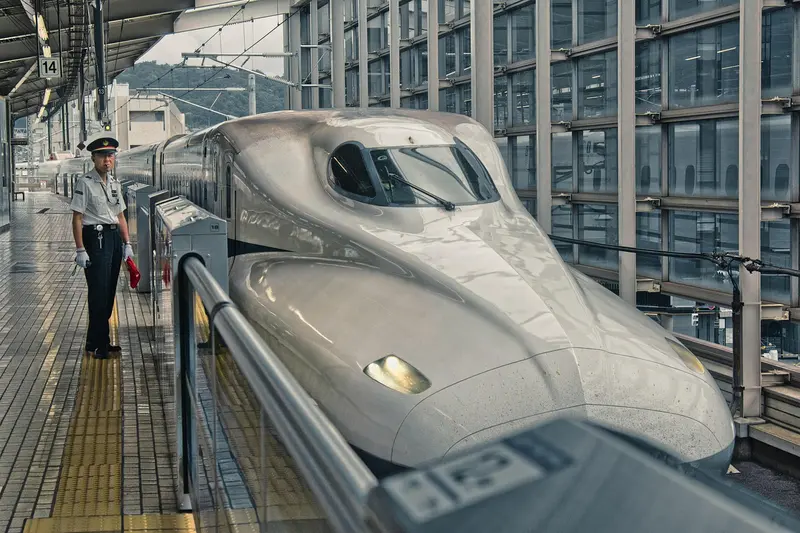
Why Japanese Trains Are Always on Time
You can almost set your watch by them
Model script
Hello, everyone. If you have ridden a train in Japan, you probably noticed something: it arrives exactly on time. Today, I'll explain why Japanese trains are so punctual.
Your recording
Say this slide out loud, then listen to yourself.
Recordings stay on this device and disappear when you leave the page.
Useful phrases
you probably noticed something:
Make the audience curious before you give the point.
punctual
Always on time.
Full script
Read the whole talk.
All slides in one place. Read it through once, then practice slide by slide.
01Why Japanese Trains Are Always on Time
Hello, everyone. If you have ridden a train in Japan, you probably noticed something: it arrives exactly on time. Today, I'll explain why Japanese trains are so punctual.
Hallo zusammen. Wenn Sie schon einmal in Japan Zug gefahren sind, ist Ihnen wahrscheinlich etwas aufgefallen: Er kommt auf die Minute pünktlich an. Heute erkläre ich, warum japanische Züge so pünktlich sind.
02How On Time Are They?
For example, in fiscal 2016, trains on the Tokaido Shinkansen were only twenty-four seconds late on average, even including delays from heavy rain and earthquakes. In big cities, many trains come every few minutes, and they still stay on schedule.
Im Geschäftsjahr 2016 hatten die Züge des Tokaido-Shinkansen zum Beispiel im Durchschnitt nur 24 Sekunden Verspätung, und das sogar einschließlich der Verspätungen durch Starkregen und Erdbeben. In Großstädten kommen viele Züge alle paar Minuten und halten trotzdem den Fahrplan ein.
Source: JR Central data for fiscal 2016, reported in Nippon.com, "The Tōkaidō Shinkansen's World-Class Safety, Reliability, and Frequency"
03A Famous Apology
Being on time is so important that, in 2017, a train company apologized because a train left twenty seconds early. The story surprised people all over the world.
Pünktlichkeit ist so wichtig, dass sich 2017 eine Bahngesellschaft entschuldigte, weil ein Zug 20 Sekunden zu früh abgefahren war. Die Geschichte hat Menschen auf der ganzen Welt überrascht.
Source: Metropolitan Intercity Railway Company (Tsukuba Express), apology in November 2017
04Reason 1: Careful Planning
The first reason is careful planning. Timetables are planned in great detail, and companies build in a little extra time for small problems.
Der erste Grund ist sorgfältige Planung. Die Fahrpläne werden bis ins kleinste Detail geplant, und die Unternehmen planen ein wenig Pufferzeit für kleine Probleme ein.
05Reason 2: Skilled Staff
The second reason is skilled staff. Train drivers go through long training, and many staff use a method called pointing and calling: they point at a signal and say it out loud to avoid mistakes.
Der zweite Grund ist gut ausgebildetes Personal. Lokführer durchlaufen eine lange Ausbildung, und viele Mitarbeiter nutzen eine Methode namens „Zeigen und Rufen“: Sie zeigen auf ein Signal und sprechen es laut aus, um Fehler zu vermeiden.
06Reason 3: A Culture of Being on Time
The third reason is culture. In Japan, many people see being on time as a way of respecting others. Passengers expect trains to be punctual, so companies work hard to meet that expectation.
Der dritte Grund ist die Kultur. In Japan sehen viele Menschen Pünktlichkeit als eine Form von Respekt gegenüber anderen. Die Fahrgäste erwarten pünktliche Züge, deshalb arbeiten die Unternehmen hart daran, diese Erwartung zu erfüllen.
07Conclusion
To sum up, Japanese trains are on time because of careful planning, skilled staff, and a strong culture of punctuality. Next time you ride one, check your watch! Thank you.
Zusammengefasst sind japanische Züge pünktlich dank sorgfältiger Planung, gut ausgebildetem Personal und einer starken Kultur der Pünktlichkeit. Wenn Sie das nächste Mal mitfahren, schauen Sie auf die Uhr! Vielen Dank.
Cover photo by ArminEP on Pixabay