Why Japanese Trains Are Always on Time
IntermediateJapan & Culture英語プレゼンのお手本の原稿と日本語訳。スライドごとに、聞いて・話して練習できます。
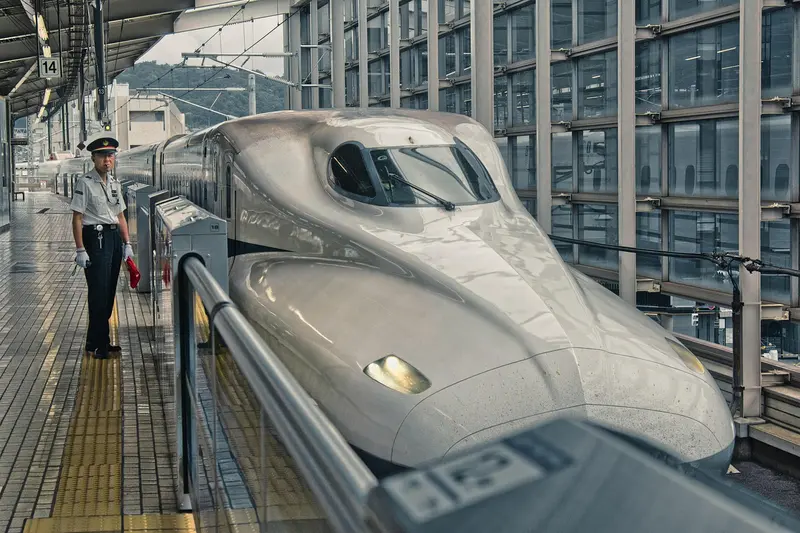
Why Japanese Trains Are Always on Time
You can almost set your watch by them
Model script
Hello, everyone. If you have ridden a train in Japan, you probably noticed something: it arrives exactly on time. Today, I'll explain why Japanese trains are so punctual.
Your recording
Say this slide out loud, then listen to yourself.
Recordings stay on this device and disappear when you leave the page.
Useful phrases
you probably noticed something:
Make the audience curious before you give the point.
punctual
Always on time.
Full script
Read the whole talk.
All slides in one place. Read it through once, then practice slide by slide.
01Why Japanese Trains Are Always on Time
Hello, everyone. If you have ridden a train in Japan, you probably noticed something: it arrives exactly on time. Today, I'll explain why Japanese trains are so punctual.
皆さん、こんにちは。日本で電車に乗ったことがあるなら、たぶん気づいたことがあるでしょう。電車が時間ぴったりに来るのです。今日は、日本の電車がなぜこれほど時間に正確なのかを説明します。
02How On Time Are They?
For example, in fiscal 2016, trains on the Tokaido Shinkansen were only twenty-four seconds late on average, even including delays from heavy rain and earthquakes. In big cities, many trains come every few minutes, and they still stay on schedule.
たとえば、2016年度、東海道新幹線の遅れは、大雨や地震による遅れを含めても、平均でたった24秒でした。大都市では、多くの電車が数分おきに来るのに、それでも時刻表どおりに走っています。
Source: JR Central data for fiscal 2016, reported in Nippon.com, "The Tōkaidō Shinkansen's World-Class Safety, Reliability, and Frequency"
03A Famous Apology
Being on time is so important that, in 2017, a train company apologized because a train left twenty seconds early. The story surprised people all over the world.
時間を守ることはとても大切にされていて、2017年には、電車が20秒早く出発したことで、鉄道会社がおわびをしました。この話は、世界中の人を驚かせました。
Source: Metropolitan Intercity Railway Company (Tsukuba Express), apology in November 2017
04Reason 1: Careful Planning
The first reason is careful planning. Timetables are planned in great detail, and companies build in a little extra time for small problems.
一つ目の理由は、念入りな計画です。時刻表はとても細かく計画されていて、会社は小さな問題に備えて、少しだけ余分な時間を組み込んでいます。
05Reason 2: Skilled Staff
The second reason is skilled staff. Train drivers go through long training, and many staff use a method called pointing and calling: they point at a signal and say it out loud to avoid mistakes.
二つ目の理由は、熟練したスタッフです。運転士は長い訓練を受けますし、多くのスタッフは「指差喚呼」という方法を使っています。ミスを防ぐために、信号を指さして、声に出して確認するのです。
06Reason 3: A Culture of Being on Time
The third reason is culture. In Japan, many people see being on time as a way of respecting others. Passengers expect trains to be punctual, so companies work hard to meet that expectation.
三つ目の理由は、文化です。日本では、時間を守ることを、ほかの人を尊重する方法だと考える人が多いです。乗客は電車が時間どおりに来ることを期待しているので、会社はその期待にこたえようと一生懸命努力しているのです。
07Conclusion
To sum up, Japanese trains are on time because of careful planning, skilled staff, and a strong culture of punctuality. Next time you ride one, check your watch! Thank you.
まとめると、日本の電車が時間どおりなのは、念入りな計画と、熟練したスタッフと、時間を守る強い文化のおかげです。次に乗るときは、時計を確かめてみてください!ありがとうございました。
Cover photo by ArminEP on Pixabay