Japan's Plastic Bag Fee: Small Change or Real Progress?
AdvancedSociety & EnvironmentMusterskript einer englischen Präsentation mit deutscher Übersetzung. Hören und üben, Folie für Folie.
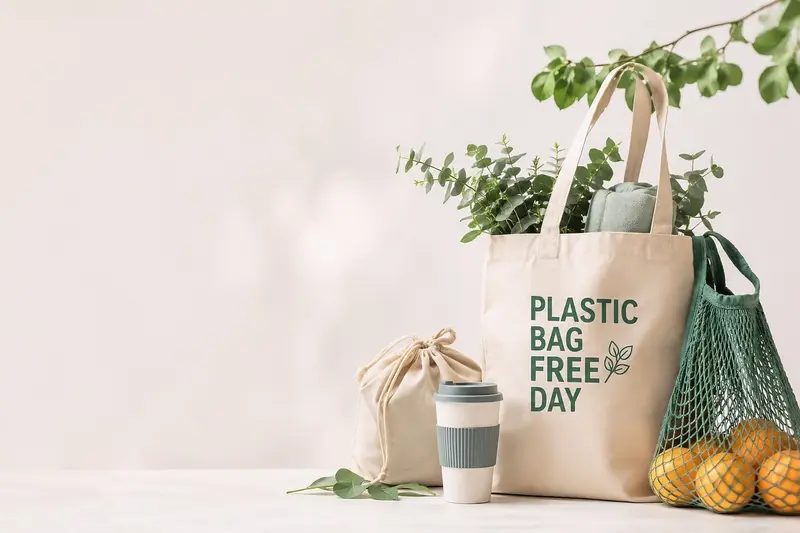
Japan's Plastic Bag Fee
Small change or real progress?
Model script
Good afternoon. I'm an exchange student from Sweden, studying environmental policy in Kyoto. Today, I'd like to look at a small policy that changed daily life in Japan: the plastic bag fee. Was it real progress, or just a small change?
Your recording
Say this slide out loud, then listen to yourself.
Recordings stay on this device and disappear when you leave the page.
Useful phrases
changed daily life
Made everyday life different.
just a small change
Only a minor difference.
Full script
Read the whole talk.
All slides in one place. Read it through once, then practice slide by slide.
01Japan's Plastic Bag Fee
Good afternoon. I'm an exchange student from Sweden, studying environmental policy in Kyoto. Today, I'd like to look at a small policy that changed daily life in Japan: the plastic bag fee. Was it real progress, or just a small change?
Guten Tag. Ich komme aus Schweden und studiere im Rahmen eines Austauschs Umweltpolitik in Kyoto. Heute möchte ich eine kleine Maßnahme betrachten, die den Alltag in Japan verändert hat: die Gebühr für Plastiktüten. War sie ein echter Fortschritt oder nur eine kleine Änderung?
02What Happened
From July 1, 2020, all retailers in Japan had to start charging for plastic shopping bags. The government didn't set one price. Each shop decides how much to charge.
Seit dem 1. Juli 2020 müssen alle Einzelhändler in Japan Geld für Plastiktragetaschen verlangen. Die Regierung hat keinen einheitlichen Preis festgelegt. Jedes Geschäft entscheidet selbst, wie viel es verlangt.
Source: Ministry of Economy, Trade and Industry (METI), Japan: "プラスチック製買物袋有料化 2020年7月1日スタート"
03Why Japan Did It
According to the government, the goal was to make people rethink their use of plastic, because of problems like ocean waste and climate change. The bag itself was a starting point for changing habits.
Laut der Regierung war das Ziel, die Menschen dazu zu bringen, ihren Plastikverbrauch zu überdenken, wegen Problemen wie Meeresmüll und Klimawandel. Die Tüte selbst war ein Ausgangspunkt, um Gewohnheiten zu ändern.
Source: Ministry of Economy, Trade and Industry (METI), Japan: "プラスチック製買物袋有料化 2020年7月1日スタート"
04For: It Changed Behavior
Supporters say the fee worked as a daily reminder. In my host family, everyone now carries an eco-bag. Every time a cashier asks, "Do you need a bag?", people think about plastic for a second.
Befürworter sagen, die Gebühr wirke wie eine tägliche Erinnerung. In meiner Gastfamilie hat jetzt jeder eine Stofftasche dabei. Jedes Mal, wenn an der Kasse gefragt wird: „Brauchen Sie eine Tüte?“, denken die Leute kurz über Plastik nach.
05Against: Bags Are a Tiny Part of the Problem
Critics, however, argue that shopping bags are only a small part of plastic waste. In many stores, snacks are still individually wrapped in plastic. They worry the fee lets people feel good without solving the bigger problem.
Kritiker wenden jedoch ein, dass Tragetaschen nur einen kleinen Teil des Plastikmülls ausmachen. In vielen Geschäften sind Snacks immer noch einzeln in Plastik verpackt. Sie befürchten, dass die Gebühr den Menschen ein gutes Gefühl gibt, ohne das größere Problem zu lösen.
06Against: Hidden Side Effects
Critics also point to side effects. They say some people used to reuse shopping bags for their trash, and now buy plastic trash bags instead. Also, thicker bags that can be reused many times are not covered by the rule.
Kritiker verweisen auch auf Nebenwirkungen. Sie sagen, manche Leute hätten früher Einkaufstüten als Müllbeutel wiederverwendet und kauften jetzt stattdessen Plastikmüllbeutel. Außerdem fallen dickere Tüten, die man oft wiederverwenden kann, nicht unter die Regel.
Source: Ministry of Economy, Trade and Industry (METI), Japan: "プラスチック製買物袋有料化 2020年7月1日スタート" (exemptions)
07My View
In my view, both sides are right. The fee didn't solve plastic waste, and it was never going to. But it changed habits and started a national conversation. The next step should be reducing plastic packaging, which is much harder.
Meiner Meinung nach haben beide Seiten recht. Die Gebühr hat das Plastikmüllproblem nicht gelöst, und das sollte sie auch nie. Aber sie hat Gewohnheiten verändert und eine landesweite Debatte angestoßen. Der nächste Schritt sollte sein, Plastikverpackungen zu reduzieren, und das ist viel schwieriger.
08Conclusion
To conclude, Japan's bag fee is a small policy with a big message. It's not the end of the plastic story, but it may be an important beginning. Thank you.
Zum Schluss: Japans Tütengebühr ist eine kleine Maßnahme mit einer großen Botschaft. Sie ist nicht das Ende der Plastikgeschichte, aber vielleicht ein wichtiger Anfang. Vielen Dank.
Cover photo by Arhazel on Pixabay