英语演讲的示范讲稿与中文翻译。每一页都可以听示范、开口练习。
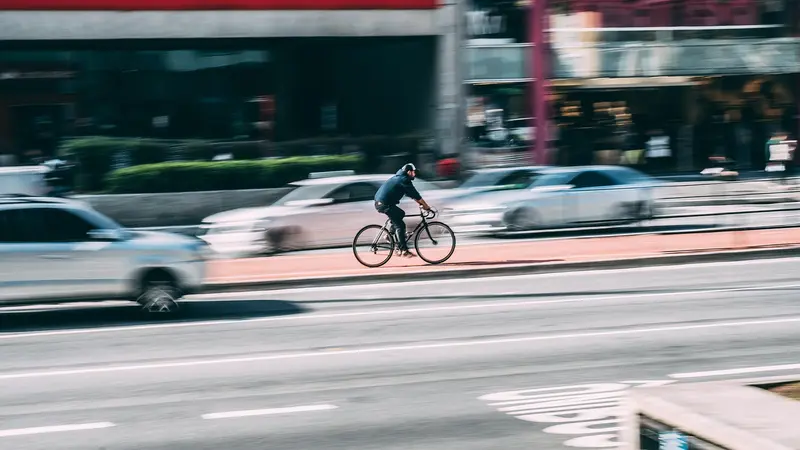
How We'll Get Around Cities in 2050
Stuck in traffic
1 / 8
Model script
Good morning. This morning, my bus was stuck in traffic for twenty minutes. I was late for my first class, again. While I was waiting, I started to wonder: how will we get around cities in 2050? Today, I'll make three predictions. For each one, I'll show you something that is already happening somewhere in the world. Then I'll talk honestly about what could go wrong.
Your recording
Say this slide out loud, then listen to yourself.
Recordings stay on this device and disappear when you leave the page.
Useful phrases
stuck in traffic
Not able to move because of too many cars.
I started to wonder
I began to ask myself.
already happening
Taking place now, not only in the future.
Words
Highlighted words are on this slide. Tap a word to look it up on Google.
Full script
Read the whole talk.
All slides in one place. Read it through once, then practice slide by slide.
01How We'll Get Around Cities in 2050
Good morning. This morning, my bus was stuck in traffic for twenty minutes. I was late for my first class, again. While I was waiting, I started to wonder: how will we get around cities in 2050? Today, I'll make three predictions. For each one, I'll show you something that is already happening somewhere in the world. Then I'll talk honestly about what could go wrong.
早上好。今天早上,我坐的公交车堵在路上二十分钟。我第一节课又迟到了。在等的时候,我开始想:到2050年,我们会怎样在城市里出行呢?今天,我要做三个预测。对每一个预测,我都会给大家看一个在世界某个地方已经发生的例子。然后,我会坦白地谈谈可能出现的问题。
02Cities Today
Let's start with today. In many big cities, we have the same problems: traffic jams, dirty air, and noise. And cars take up a lot of space. Think about your own family's car. How many hours a day does it actually move? Probably one or two. The rest of the time, it just sits in a parking space. In a crowded city, that's a lot of valuable land used for cars that aren't going anywhere.
我们先从现在说起。在很多大城市,我们都面临同样的问题:堵车、空气污染和噪音。而且汽车占了很多空间。想想你们自己家的车。它一天真正在开的时间有几个小时?大概一两个小时吧。其余的时间,它只是停在停车位上。在拥挤的城市里,这意味着大量宝贵的土地被用来停放哪儿也不去的车。
03Prediction 1: Fewer Cars of Our Own
My first prediction is that fewer people will own a car. Instead, we'll use self-driving shared cars. This may sound like science fiction, but it's already happening. In March 2026, the company Waymo said it was giving about 500,000 paid rides a week in cars with no driver, across ten cities in the United States. You call one with your phone, ride to where you're going, and just get out. The car drives away to pick up the next person, so it doesn't need a parking space.
我的第一个预测是:自己有车的人会变少。取而代之的是,我们会使用无人驾驶的共享汽车。这听起来像科幻小说,但它已经发生了。2026年3月,Waymo公司表示,它在美国十个城市,每周用没有司机的汽车提供约500,000次付费乘车服务。你用手机叫车,坐到目的地,直接下车就行。车会开走去接下一位乘客,所以它不需要停车位。
Source: Waymo, announcement of 500,000 weekly paid rides across ten U.S. cities (March 2026)
04Prediction 2: Streets for People
My second prediction follows from the first. If we don't need so many parking spaces, cities can give that space back to people. Again, one city has already tried this. Pontevedra, a small city in Spain, removed most cars from its center. According to the city, traffic in the center dropped by 97%, and there were no traffic deaths there from 2011 to 2020. I think by 2050, many more cities will look like this, with wide bike lanes, small parks, and streets for walking.
我的第二个预测和第一个有关。如果我们不需要那么多停车位,城市就可以把这些空间还给人们。同样,已经有一座城市尝试过了。西班牙的一座小城市蓬特韦德拉,把大部分汽车从市中心移走了。据该市介绍,市中心的车流量减少了97%,而且从2011年到2020年,那里没有发生过交通死亡事故。我认为到2050年,会有更多城市变成这样,有宽阔的自行车道、小公园和步行街。
Sources: Santé publique France, "Pontevedra, Spain: pedestrians rule the roads, relegating cars to the sidelines" (interview, citing the City of Pontevedra); City of Pontevedra (Concello de Pontevedra), urban mobility model
05Prediction 3: One App for Every Trip
My third prediction is about how we plan trips, and this one is more of a guess. Today, I use one app for the train, another for the bus, and another for renting a bike. In 2050, I think one app will plan your whole trip. It might say, "Take a bike to the station, a train into the city, and a shared car for the last part." And you'll pay once for everything. If it's easier than owning a car, more people will choose it.
我的第三个预测是关于我们如何规划出行的,这个更像是一个猜测。现在,我坐电车用一个应用,坐公交车用另一个,租自行车又用另一个。我认为到2050年,一个应用就能规划好整个行程。它可能会说:“骑自行车到车站,坐电车进城,最后一段坐共享汽车。”而且所有费用只需付一次。如果这比自己有车更方便,就会有更多人选择它。
06What Could Go Wrong
Of course, this future has risks. It could be expensive. Many taxi and bus drivers could lose their jobs. Self-driving cars could be hacked. And people who don't use smartphones, like some older people, could be left behind. Even Pontevedra has critics. Some people say the traffic didn't disappear, it just moved to the roads outside the center. A good plan has to deal with all of these problems, not just the exciting parts.
当然,这样的未来也有风险。它可能很贵。很多出租车和公交车司机可能会失业。无人驾驶汽车可能会被黑客攻击。而不使用智能手机的人,比如一些老年人,可能会被落下。就连蓬特韦德拉也有批评的声音。有人说,车流并没有消失,只是转移到了市中心外面的道路上。一个好的计划必须解决所有这些问题,而不只是关注令人兴奋的部分。
Source: Associated Press, "Spanish city offers a road map for a future with far fewer cars"
07My Guess at the Timeline
So when will this happen? This is just my guess, so please don't hold me to it. By 2030, I think driverless taxis will be common in many more cities, not just in the United States. By 2040, many city centers will be mostly car-free, like Pontevedra today. And by 2050, using a shared car will feel as normal as taking the bus. Owning your own car in the city might feel a bit like owning a horse does today: possible, but unusual.
那么,这些什么时候会实现呢?这只是我的猜测,所以请不要太当真。我认为到2030年,无人驾驶出租车会在更多城市普及,而不只是在美国。到2040年,很多城市的中心会基本没有汽车,就像今天的蓬特韦德拉一样。到2050年,使用共享汽车会像坐公交车一样平常。在城市里拥有自己的车,可能就有点像今天养一匹马:可以,但不常见。
08Not Faster Cars. Fewer Cars.
To wrap up, driverless taxis and car-free city centers are not just dreams. They already exist in some places. So I believe the future of city travel is not about faster cars. It's about fewer cars. If my predictions are right, the bus I was stuck on this morning won't be stuck anymore, and I won't be late for class. Thank you for listening, and I'm happy to take your questions.
最后总结一下,无人驾驶出租车和没有汽车的市中心不只是梦想。它们已经在一些地方存在了。所以我相信,城市出行的未来不在于更快的车,而在于更少的车。如果我的预测是对的,我今天早上坐的那辆公交车就不会再堵车,我上课也不会迟到了。谢谢大家的聆听,欢迎提问。
Sources: Waymo, announcement of 500,000 weekly paid rides across ten U.S. cities (March 2026); Santé publique France, "Pontevedra, Spain: pedestrians rule the roads, relegating cars to the sidelines" (interview, citing the City of Pontevedra)
More Travel & Places presentations





Cover photo by Pexels on Pixabay
Slide photos by pixaoppa, Michael_Luenen on Pixabay