Why Cities Still Need Cars
AdvancedAgainstSociety & EnvironmentGuion modelo de una presentación en inglés con traducción al español. Escucha y practica diapositiva por diapositiva.
Practice the other side:Should Cities Be Designed for Cars or People?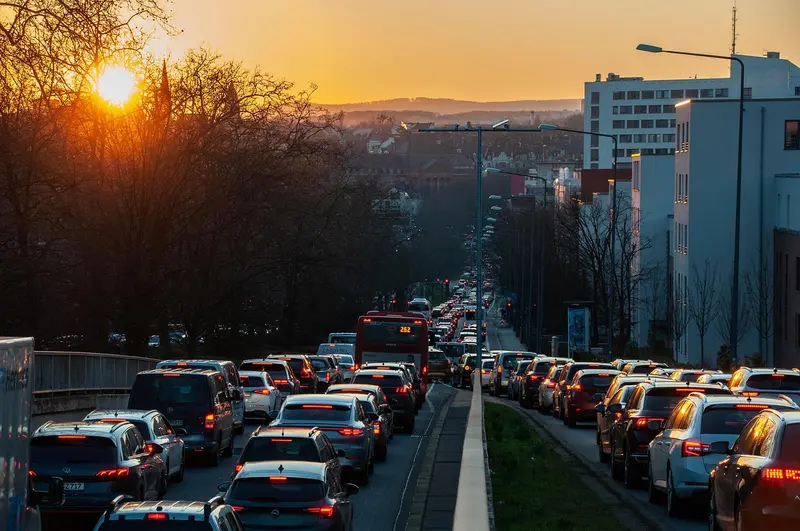
Why Cities Still Need Cars
Why removing cars is not so simple
Model script
Good morning. Car-free streets look beautiful in photos, and it's easy to see why people love the idea. However, today I'll argue that removing cars from our cities is not as simple, or as fair, as it sounds.
Your recording
Say this slide out loud, then listen to yourself.
Recordings stay on this device and disappear when you leave the page.
Useful phrases
it's easy to see why
Show that you understand why others like an idea.
not as simple ... as it sounds
Harder than it seems at first.
Full script
Read the whole talk.
All slides in one place. Read it through once, then practice slide by slide.
01Why Cities Still Need Cars
Good morning. Car-free streets look beautiful in photos, and it's easy to see why people love the idea. However, today I'll argue that removing cars from our cities is not as simple, or as fair, as it sounds.
Buenos días. Las calles sin autos se ven preciosas en las fotos, y es fácil entender por qué a la gente le encanta la idea. Sin embargo, hoy voy a argumentar que sacar los autos de nuestras ciudades no es tan sencillo, ni tan justo, como parece.
02Not Everyone Can Walk or Cycle
First, not everyone can walk or ride a bike easily. Older people, people with disabilities, and parents with small children often depend on cars to get around.
En primer lugar, no todo el mundo puede caminar o andar en bicicleta con facilidad. Las personas mayores, las personas con discapacidad y los padres con niños pequeños a menudo dependen del auto para moverse.
03Public Transport Isn't Everywhere
Second, good public transport isn't available everywhere. In a big city center, a train may come every few minutes. But in the suburbs and the countryside, buses can be rare, and distances are long.
En segundo lugar, no en todas partes hay un buen transporte público. En el centro de una gran ciudad, puede pasar un tren cada pocos minutos. Pero en las afueras y en el campo, los autobuses pueden ser escasos y las distancias, largas.
04Cities Still Need Vehicles
Third, cities need vehicles to work. Shops need deliveries, ambulances and fire engines need to reach people quickly, and construction work needs trucks. We cannot simply remove roads.
En tercer lugar, las ciudades necesitan vehículos para funcionar. Las tiendas necesitan entregas, las ambulancias y los camiones de bomberos tienen que llegar rápido hasta la gente, y las obras de construcción necesitan camiones. No podemos simplemente eliminar las calzadas.
05Some Shops May Suffer
There is also a risk for some local businesses. Shops that sell large or heavy items, like furniture, may lose customers who can no longer drive and park nearby.
También hay un riesgo para algunos comercios locales. Las tiendas que venden artículos grandes o pesados, como muebles, pueden perder a los clientes que ya no pueden llegar en auto y estacionar cerca.
06A Better Balance
So what's the alternative? Instead of banning cars, cities can improve public transport first, make streets safer for walking and cycling, and make changes slowly, together with local people.
Entonces, ¿cuál es la alternativa? En lugar de prohibir los autos, las ciudades pueden primero mejorar el transporte público, hacer las calles más seguras para caminar y andar en bicicleta, y hacer los cambios poco a poco, junto con los vecinos.
07My Position
My position is this: cities should put people first, but that does not mean removing cars completely. The goal should be streets that work for everyone.
Mi postura es esta: las ciudades deberían poner a las personas en primer lugar, pero eso no significa eliminar los autos por completo. El objetivo debería ser tener calles que funcionen para todos.
08Conclusion
In the end, a good city is one where everyone can get where they need to go. Let's design streets that are fair, not just beautiful. Thank you.
Al final, una buena ciudad es aquella en la que todos pueden llegar adonde necesitan ir. Diseñemos calles que sean justas, no solo bonitas. Gracias.
Cover photo by wal_172619 on Pixabay
Slide photos by StockSnap, khoinguyenfoto on Pixabay