英文簡報的示範講稿與中文翻譯。每一頁都可以聽示範、開口練習。
Two Countries, Two Lunches
How food is served
1 / 7
Model script
Hello, everyone. I went to elementary school in Japan, and in high school, I spent one year as an exchange student in the United States. So I've eaten school lunch in both countries, and they felt very different. Today, I'll compare them in three ways. First, how the food is served. Second, what lunch is for. Third, who it helps. Finally, I'll tell you what I think each country does best.
Your recording
Say this slide out loud, then listen to yourself.
Recordings stay on this device and disappear when you leave the page.
Useful phrases
I've eaten school lunch in both countries
Shows you have personal experience of both.
I'll compare them in three ways
Tells the audience the structure of your talk.
what I think each country does best
Your view of each one's strongest point.
Words
- exchange student
- food education
- shokuiku
- cafeteria
- skipped
- local vegetables
- fiscal year
- reduced price
- safety net
Highlighted words are on this slide. Tap a word to look it up on Google.
Full script
Read the whole talk.
All slides in one place. Read it through once, then practice slide by slide.
01Two Countries, Two Lunches
Hello, everyone. I went to elementary school in Japan, and in high school, I spent one year as an exchange student in the United States. So I've eaten school lunch in both countries, and they felt very different. Today, I'll compare them in three ways. First, how the food is served. Second, what lunch is for. Third, who it helps. Finally, I'll tell you what I think each country does best.
大家好。我在日本念小學,高中時又以交換學生的身分在美國待了一年。所以,兩個國家的學校午餐我都吃過,感覺非常不一樣。今天,我會從三個方面來比較。第一,餐點是怎麼發送的。第二,午餐的目的是什麼。第三,它幫助了哪些人。最後,我會分享我認為每個國家最擅長的是什麼。
02Two Long Histories
First, some background. Both countries have had national school lunch laws for a long time. In the United States, the National School Lunch Act was passed in 1946. In Japan, the School Lunch Act was passed in 1954. Then, in 2008, Japan changed the law to add the goal of food education, or shokuiku. This means lunch is officially a part of learning, not just a meal.
首先是一些背景。兩個國家很早就都有全國性的學校午餐法律。在美國,《全國學校午餐法》在1946年通過。在日本,《學校供餐法》在1954年通過。之後在2008年,日本修改了這部法律,加入了「食育」,也就是飲食教育的目標。這表示午餐正式成為學習的一部分,而不只是一頓飯。
Sources: USDA Economic Research Service, "National School Lunch Program": the program was established under the National School Lunch Act, signed in 1946; Ministry of Education, Culture, Sports, Science and Technology (MEXT), Japan: the School Lunch Act was enacted in 1954 and amended in 2008 (in force April 2009) to add the promotion of shokuiku (food education) to its purpose
03Point 1: How the Food Is Served
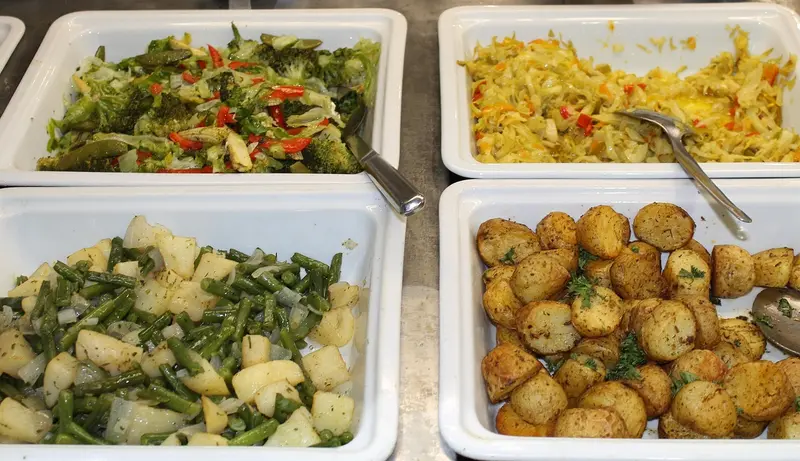
My first point is how the food is served. In my Japanese school, we ate in our classroom. Every week, a few students wore white coats and served the food to everyone else, and then we all cleaned up together. In my American school, on the other hand, we walked through a cafeteria line and chose our food. I liked having choices, but I noticed many students skipped the vegetables. So Japan teaches teamwork, while the U.S. gives students more choice.
第一點是餐點的發送方式。在我日本的學校,我們是在教室裡吃飯。每個禮拜會有幾個學生穿上白色的工作服,幫大家打菜,吃完後全班一起收拾。而在我美國的學校,我們是在餐廳排隊,自己選餐點。我很喜歡可以自己選,但我發現很多學生都不拿蔬菜。所以,日本教的是團隊合作,美國則給學生更多選擇。
04Point 2: What Lunch Is For
My second point is what lunch is for. In Japan, because of the 2008 change to the law, lunch is part of food education. At my school, the menu often had local vegetables, and our teacher explained where the food came from. In the U.S., lunch felt more like a quick break. We had about 25 minutes, and many people just ate and talked. Both are fine, but Japan clearly uses lunch as a lesson.
第二點是午餐的目的。在日本,因為2008年法律的修改,午餐是飲食教育的一部分。在我的學校,菜單上常常有在地的蔬菜,老師也會跟我們說明食物是從哪裡來的。在美國,午餐比較像是短暫的休息時間。我們大約有25分鐘,很多人就是邊吃邊聊天。兩種方式都不錯,但日本很明顯是把午餐當成一堂課。
Source: Ministry of Education, Culture, Sports, Science and Technology (MEXT), Japan: the School Lunch Act was amended in 2008 (in force April 2009) to add the promotion of shokuiku (food education) to its purpose
05Point 3: Who It Helps
My third point is who school lunch helps. In the U.S., the program is very large. According to the U.S. Department of Agriculture, it served more than 4.8 billion lunches in fiscal year 2024. And 72.4% of those lunches were free or reduced price. This shows that in the U.S., school lunch is an important safety net. For many families, it means their children get at least one full meal every school day.
第三點是學校午餐幫助了哪些人。在美國,這個計畫規模非常大。根據美國農業部的資料,2024會計年度一共提供了超過48億份午餐。其中有72.4%是免費或減價的。這表示,在美國,學校午餐是一張重要的社會安全網。對很多家庭來說,這代表孩子在每個上學日,至少能吃到一頓完整的餐點。
Source: USDA Economic Research Service, "National School Lunch Program": in fiscal year 2024, the program provided more than 4.8 billion lunches; 72.4% of lunches were served free or at a reduced price
06Is Japan's Lunch Simply Better?
Some people say Japan's school lunch is simply better. That's fair in some ways. The meals I ate in Japan were healthier, and I learned a lot from serving and cleaning. But I don't think it's that simple. The U.S. program feeds a huge number of children, and for many of them, it's the most reliable meal of the day. And choosing your own food also teaches something: making decisions. In my view, the two countries are trying to do different jobs.
有人說,日本的學校午餐就是比較好。從某些方面來看,這說得沒錯。我在日本吃的午餐比較健康,而且我從打菜和打掃中學到很多。但我認為事情沒有那麼簡單。美國的計畫為非常多的孩子提供餐點,對其中很多孩子來說,這是一天中最有保障的一餐。而且,自己選擇食物也能學到東西:做決定。我認為,這兩個國家是在努力完成不同的任務。
07What Each Country Does Best
To sum up, Japan and the U.S. serve school lunch in very different ways. Japan does best at using lunch as a lesson, with teamwork and food education. The U.S. does best at using lunch as a safety net for millions of families. If I could mix them, I'd take Japan's classroom lunch and America's free meals for families who need them. Thank you for listening. Do you have any questions?
總結來說,日本和美國提供學校午餐的方式非常不同。日本最擅長的,是透過團隊合作和飲食教育,把午餐變成一堂課。美國最擅長的,是把午餐變成幾百萬個家庭的安全網。如果可以把兩者結合,我會採用日本在教室吃午餐的方式,再加上美國為有需要的家庭提供免費餐點的做法。謝謝大家的聆聽。大家有什麼問題嗎?
More School & Learning presentations


Cover photo by AlbanyColley on Pixabay
Slide photos by congerdesign on Pixabay