英文簡報的示範講稿與中文翻譯。每一頁都可以聽示範、開口練習。
Is Space Worth the Money?
The cost
1 / 8
Model script
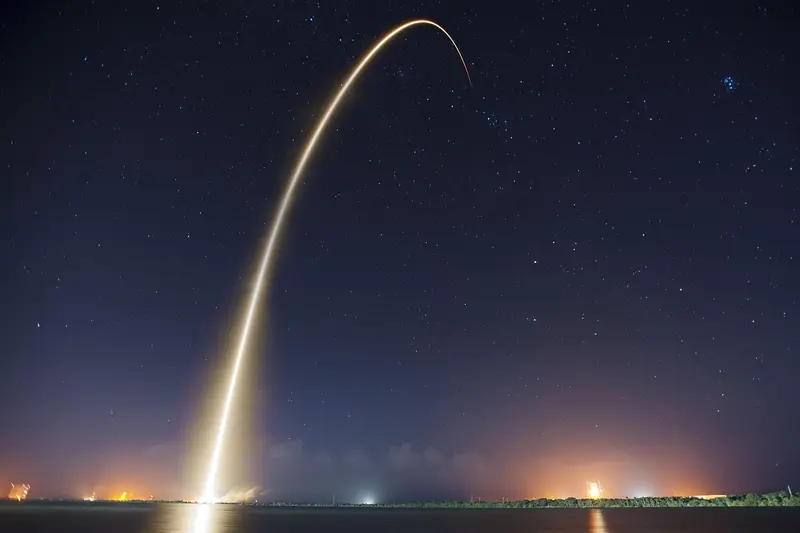
Good morning, everyone. Last year, I watched a rocket launch online, live, with millions of other people. It was exciting. But afterwards, my friend asked me a hard question: "Why spend so much money on space when we have so many problems on Earth?" Today, I'll try to answer that question fairly. First, I'll look at how much space really costs. Then, I'll give two arguments for space and the strongest argument against it. Finally, I'll give my conclusion.
Your recording
Say this slide out loud, then listen to yourself.
Recordings stay on this device and disappear when you leave the page.
Useful phrases
asked me a hard question
Asked something difficult to answer.
answer that question fairly
Reply in a balanced way, looking at both sides.
Finally, I'll give my conclusion
My last point will be my final opinion.
Words
Highlighted words are on this slide. Tap a word to look it up on Google.
Full script
Read the whole talk.
All slides in one place. Read it through once, then practice slide by slide.
01Is Space Worth the Money?
Good morning, everyone. Last year, I watched a rocket launch online, live, with millions of other people. It was exciting. But afterwards, my friend asked me a hard question: "Why spend so much money on space when we have so many problems on Earth?" Today, I'll try to answer that question fairly. First, I'll look at how much space really costs. Then, I'll give two arguments for space and the strongest argument against it. Finally, I'll give my conclusion.
大家早安。去年,我和好幾百萬人一起在網路上看了一場火箭發射直播。真的很令人興奮。但看完之後,朋友問了我一個很難的問題:「地球上有那麼多問題,為什麼還要花那麼多錢在太空上?」今天,我想盡量公平地回答這個問題。首先,我會看看太空探索實際上要花多少錢。接著,提出兩個支持的理由,以及最有力的反對理由。最後,說出我的結論。
02What Does It Cost?
Let's start with the numbers. According to The Planetary Society, NASA's budget for 2024 was about 24.9 billion dollars. That sounds huge, and it is. But USAFacts, a non-profit that studies government data, reports that NASA's spending was only about 0.4% of all U.S. federal spending that year. In other words, for every 100 dollars the U.S. government spent, NASA got about 40 cents. Of course, other countries spend money on space, too, but the U.S. budget is the easiest to check, so I'll use it as an example. So space is expensive, but it's a small part of the total.
我們先從數字開始。根據美國行星協會的資料,2024年美國太空總署的預算大約是249億美元。聽起來很多,實際上也真的很多。但研究政府資料的非營利組織USAFacts指出,美國太空總署的支出只佔當年美國聯邦總支出的大約0.4%。換句話說,美國政府每花100美元,美國太空總署大約只分到40美分。當然,其他國家也會在太空上花錢,但美國的預算最容易查證,所以我拿它來當例子。所以,太空探索很貴,但只佔整體的一小部分。
Sources: The Planetary Society, "NASA's FY 2024 Budget" ($24.875 billion); USAFacts, "National Aeronautics and Space Administration" (NASA spent $25 billion in FY 2024, 0.4% of the $6.78 trillion in federal spending)
03For: Inventions We Use Every Day
Now, the case for space. My first reason is that space research often brings benefits back to Earth. Here's one example from NASA itself. In 1966, NASA paid an engineer to design a safer airplane seat that could absorb shock. The result was a new kind of foam, first sold in 1969 as "temper foam." Today, we call it memory foam, and it's in pillows and mattresses around the world. I sleep on a memory foam pillow every night, and I had no idea it was connected to space. This shows that money spent on space can create things we use every day.
接下來是支持太空探索的看法。我的第一個理由是,太空研究常常會為地球帶來好處。這裡有一個美國太空總署自己介紹的例子。1966年,美國太空總署出錢請一位工程師設計一種能吸收衝擊、更安全的飛機座椅。結果誕生了一種新的泡棉,1969年第一次以「temper foam」的名稱上市。現在,我們叫它記憶泡棉,世界各地的枕頭和床墊都有用到。我每天晚上都睡記憶泡棉枕,卻完全不知道它跟太空有關。這說明,花在太空上的錢,可以創造出我們每天都在用的東西。
Source: NASA Spinoff 2005, "Consumer, Home, and Recreation" (temper foam developed in 1966 under a NASA contract to improve airplane seat protection; commercialized in 1969)
04For: Satellites Guide Us
My second reason is that space technology is already part of our daily lives. Think about GPS. According to GPS.gov, the official U.S. government website, the United States is committed to keeping at least 24 GPS satellites working, 95% of the time. Every time you use a map app, order a delivery, or call for help and share your location, you're using satellites in space. In other words, space isn't far away. It's in your pocket.
我的第二個理由是,太空科技已經是我們日常生活的一部分。想想GPS吧。根據美國政府的官方網站GPS.gov,美國承諾在95%的時間裡,讓至少24顆GPS衛星正常運作。每次你用地圖App、叫外送,或是打電話求救並分享自己的位置,你都在使用太空中的衛星。換句話說,太空一點也不遙遠,它就在你的口袋裡。
Source: GPS.gov, "Space Segment" (the United States is committed to maintaining the availability of at least 24 operational GPS satellites, 95% of the time; operated by the U.S. Space Force)
05Against: Costs Keep Growing
However, there's a strong argument on the other side. Big space programs often cost far more than planned. In 2021, NASA's own Office of Inspector General, which checks how NASA uses its money, projected that NASA would spend 93 billion dollars on its Artemis Moon program from 2012 to 2025. It also said that NASA's estimates significantly understate the real cost. Critics ask a fair question: what could that money do for health, schools, or climate change here on Earth? When I read this report, I understood my friend's question much better.
不過,另一方也有很有力的論點。大型太空計畫的花費,常常遠遠超出原本的規劃。2021年,負責檢查美國太空總署如何用錢的該署監察長辦公室估計,從2012年到2025年,美國太空總署會在阿提米絲登月計畫上花掉930億美元。報告也指出,美國太空總署的估算明顯低估了實際成本。批評的人提出了一個很合理的問題:這些錢如果用在地球上的醫療、學校或氣候變遷,可以做多少事?讀了這份報告後,我更能理解朋友的問題了。
Source: NASA Office of Inspector General, "NASA's Management of the Artemis Missions" (IG-22-003, November 2021; projected $93 billion on Artemis from FY 2012 through FY 2025; estimates "significantly understate" the cost)
06Lost at Night
To be honest, I understand both sides, because of something that happened to me. Last year, I traveled abroad and got lost in a city late at night. My phone battery was low, and I didn't speak the language. But the map on my phone, using GPS, showed me exactly where I was and guided me back to my hotel. At that moment, I didn't think about budgets. I just felt thankful for those satellites. It made me realize that space technology is not only for astronauts.
老實說,我能理解雙方的看法,因為我自己遇過一件事。去年,我出國旅行,半夜在一座城市裡迷路了。手機快沒電,我也不會說當地的語言。但手機上的地圖靠著GPS,準確顯示出我在哪裡,把我帶回飯店。那一刻,我完全沒想到預算的事,只覺得很感謝那些衛星。這讓我發現,太空科技不只屬於太空人。
07Yes, With Conditions
So, is it worth it? In my view, yes, but with conditions. First, space programs should have honest budgets and clear goals from the start. Second, independent groups, like NASA's inspector general, should keep checking the costs, and governments should listen to them. And third, this is my own idea, but countries could share the costs by working together on big missions, so that no single country has to pay for everything. Without these conditions, I think my friend's criticism would be right.
那麼,太空探索值得嗎?我個人認為,值得,但有條件。第一,太空計畫從一開始就應該有誠實的預算和明確的目標。第二,像美國太空總署監察長這樣的獨立單位,應該持續檢查成本,政府也要聽取他們的意見。第三,這是我自己的想法:在大型任務上,各國可以合作分擔成本,這樣就不必由一個國家負擔全部的費用。如果沒有這些條件,我覺得朋友的批評才是對的。
08Worth It, If We Spend It Wisely
To sum up, space is a small part of government spending, about 40 cents of every 100 dollars in the U.S. It has given us real benefits, like memory foam and GPS. But big programs can cost far more than planned, so the costs must be watched closely. That's why my answer is yes, space exploration is worth the money, if we spend it wisely. Thank you for listening. I'm happy to take your questions.
總結來說,太空探索只佔政府支出的一小部分,在美國大約是每100美元中的40美分。它帶給我們真正的好處,像是記憶泡棉和GPS。但大型計畫的花費可能遠遠超出規劃,所以必須密切注意成本。因此我的答案是:是的,只要我們聰明地花錢,太空探索是值得的。謝謝大家,歡迎提問。
Sources: USAFacts, "National Aeronautics and Space Administration" (0.4% of federal spending in FY 2024); NASA Spinoff 2005; GPS.gov, "Space Segment"; NASA Office of Inspector General, IG-22-003 (2021)
More Science & Technology presentations
Cover photo by SpaceX-Imagery on Pixabay