Guion modelo de una presentación en inglés con traducción al español. Escucha y practica diapositiva por diapositiva.
I Almost Shared a Fake Post
It looked real
1 / 7
Model script
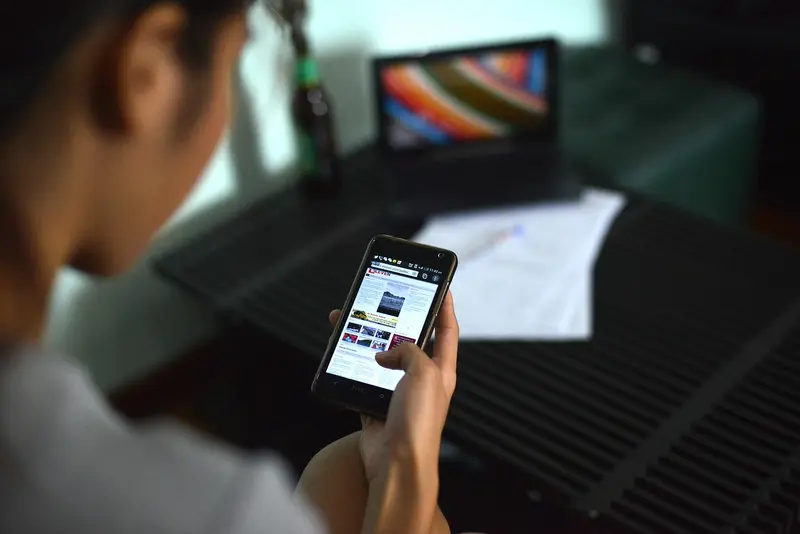
Hi, everyone. Last month, I almost shared a post in my class group chat. It said a famous singer was giving a free concert on our campus. It looked real, with a colorful poster, a date, and a time. My thumb was already on the share button. But it wasn't real. Today, I'll talk about why fake news spreads so easily, and the four quick checks I do now before I share anything.
Your recording
Say this slide out loud, then listen to yourself.
Recordings stay on this device and disappear when you leave the page.
Useful phrases
I almost shared
I nearly shared, but didn't.
It looked real
It seemed true.
spreads so easily
Moves to many people very quickly.
Words
Highlighted words are on this slide. Tap a word to look it up on Google.
Full script
Read the whole talk.
All slides in one place. Read it through once, then practice slide by slide.
01I Almost Shared a Fake Post
Hi, everyone. Last month, I almost shared a post in my class group chat. It said a famous singer was giving a free concert on our campus. It looked real, with a colorful poster, a date, and a time. My thumb was already on the share button. But it wasn't real. Today, I'll talk about why fake news spreads so easily, and the four quick checks I do now before I share anything.
Hola a todos. El mes pasado, casi comparto una publicación en el grupo de chat de mi clase. Decía que un cantante famoso iba a dar un concierto gratis en nuestro campus. Parecía real, con un póster colorido, una fecha y una hora. Mi pulgar ya estaba sobre el botón de compartir. Pero no era real. Hoy voy a hablar de por qué las noticias falsas se difunden tan fácilmente, y de los cuatro controles rápidos que hago ahora antes de compartir cualquier cosa.
02False News Spreads Faster
This is a big problem. A 2018 study by researchers at MIT looked at news stories shared on Twitter from 2006 to 2017. They found that false news was 70% more likely to be retweeted than true news. And it wasn't mainly because of bots. Even after the researchers removed bots, false news still spread faster. In other words, the problem is us, real people.
Este es un gran problema. Un estudio de 2018 de investigadores del MIT analizó noticias compartidas en Twitter de 2006 a 2017. Descubrieron que las noticias falsas tenían un 70% más de probabilidades de ser retuiteadas que las verdaderas. Y no era principalmente por los bots. Incluso después de quitar los bots, las noticias falsas seguían difundiéndose más rápido. En otras palabras, el problema somos nosotros, las personas reales.
Source: Vosoughi, S., Roy, D., & Aral, S. (2018). "The spread of true and false news online." Science, 359(6380)
03Why We Share Fake News
So why do we share it? The same study found that false news was usually more new and surprising than true news. When something is surprising, we want to tell people. I think there are two more reasons. Fake news often makes us feel strongly, like angry or excited. And we share very fast, with one tap, before we stop to think. That's exactly what almost happened to me.
Entonces, ¿por qué las compartimos? El mismo estudio descubrió que las noticias falsas solían ser más novedosas y sorprendentes que las verdaderas. Cuando algo nos sorprende, queremos contárselo a otros. Yo creo que hay dos razones más. Las noticias falsas a menudo nos provocan emociones fuertes, como enojo o entusiasmo. Y compartimos muy rápido, con un solo toque, antes de pararnos a pensar. Eso es exactamente lo que casi me pasó a mí.
Source: Vosoughi, S., Roy, D., & Aral, S. (2018). "The spread of true and false news online." Science, 359(6380)
04My Four Checks
So here's my solution. Before I share something, I do four quick checks. First, who posted it? Is it a real news site, an official account, or a person I know? Second, I search the main claim and see if trusted sites say the same thing. Third, I check the date, because old news often comes back as if it's new. And fourth, I wait a moment before sharing, especially if the post makes me angry or excited.
Así que esta es mi solución. Antes de compartir algo, hago cuatro controles rápidos. Primero, ¿quién lo publicó? ¿Es un sitio de noticias real, una cuenta oficial o una persona que conozco? Segundo, busco la afirmación principal y veo si sitios confiables dicen lo mismo. Tercero, reviso la fecha, porque las noticias viejas a menudo vuelven como si fueran nuevas. Y cuarto, espero un momento antes de compartir, sobre todo si la publicación me hace enojar o me emociona.
05Checking the Concert Post
Let me show you how this worked with the concert post. First, the account was new, with no other posts. Second, when I searched, the concert wasn't on the singer's official page. Third, there was nothing on our university's website either. It took me less than a minute. So I didn't share it. Two days later, the post was gone, and a friend told me the account had been reported as a scam.
Les muestro cómo funcionó esto con la publicación del concierto. Primero, la cuenta era nueva y no tenía otras publicaciones. Segundo, cuando busqué, el concierto no aparecía en la página oficial del cantante. Tercero, tampoco había nada en la página web de nuestra universidad. Me tomó menos de un minuto. Así que no lo compartí. Dos días después, la publicación había desaparecido, y un amigo me contó que la cuenta había sido denunciada como estafa.
06When You're Not Sure
Now, some people say, "I don't have time to check everything." That's fair. You don't need to check every funny video. But for news, health, money, or anything that makes you angry, check first. And if you can't find the answer, my rule is simple: if I'm not sure, I don't share. Or I say, "I'm not sure this is true. Does anyone know?" That way, people can help check it.
Ahora bien, algunas personas dicen: «No tengo tiempo para revisarlo todo». Es razonable. No necesitan revisar cada video gracioso. Pero si se trata de noticias, salud, dinero o cualquier cosa que les haga enojar, revisen primero. Y si no encuentran la respuesta, mi regla es sencilla: si tengo dudas, no lo comparto. O digo: «No sé si esto es verdad. ¿Alguien sabe?». Así, otras personas pueden ayudar a comprobarlo.
07Thirty Seconds Can Stop a Lie
To sum up, false news spreads faster than the truth, and it spreads because of people like us. But that also means we can slow it down. Four quick checks take about thirty seconds. Thirty seconds of checking can stop a lie from spreading. So next time your thumb is on the share button, stop and check first. Thank you. I'm happy to take your questions.
En resumen, las noticias falsas se difunden más rápido que la verdad, y se difunden por culpa de personas como nosotros. Pero eso también significa que podemos frenarlas. Cuatro controles rápidos toman unos treinta segundos. Treinta segundos de revisión pueden impedir que una mentira se difunda. Así que la próxima vez que tengan el pulgar sobre el botón de compartir, deténganse y revisen primero. Gracias. Con gusto respondo sus preguntas.
Source: Vosoughi, S., Roy, D., & Aral, S. (2018). "The spread of true and false news online." Science, 359(6380)
More Science & Technology presentations



Cover photo by MoteOo on Pixabay
Slide photos by bluebudgie on Pixabay