Guion modelo de una presentación en inglés con traducción al español. Escucha y practica diapositiva por diapositiva.
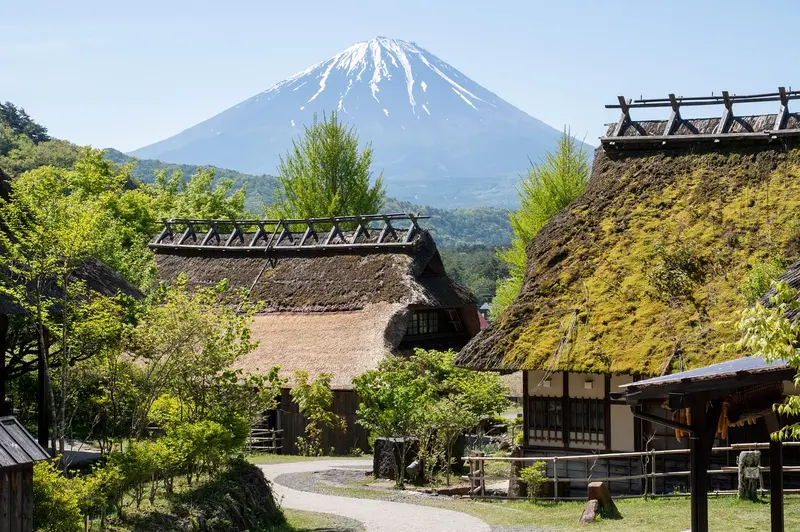
A Picture of Japan in 2070
Fewer people
1 / 8
Model script
Hello, everyone. In 2070, many of us in this room will be in our sixties or seventies. So what kind of country will Japan be by then? Today, I'll use Japan's official population projection to answer that question. First, I'll explain what a projection is. Then I'll show you three big changes: there will be fewer people, the population will be older, and it will be more international. After that, I'll talk about the limits of these numbers. Finally, I'll share my own predictions about what daily life could look like.
Your recording
Say this slide out loud, then listen to yourself.
Recordings stay on this device and disappear when you leave the page.
Useful phrases
many of us in this room
A lot of the people listening now.
to answer that question
To give a reply to the question I just asked.
I'll share my own predictions
I'll tell you what I think will happen.
Words
- population projection
- migration
- scenario
- taxpayers
- foreign residents
- coworkers
- weather forecast
- self-service
- care homes
Highlighted words are on this slide. Tap a word to look it up on Google.
Full script
Read the whole talk.
All slides in one place. Read it through once, then practice slide by slide.
01A Picture of Japan in 2070
Hello, everyone. In 2070, many of us in this room will be in our sixties or seventies. So what kind of country will Japan be by then? Today, I'll use Japan's official population projection to answer that question. First, I'll explain what a projection is. Then I'll show you three big changes: there will be fewer people, the population will be older, and it will be more international. After that, I'll talk about the limits of these numbers. Finally, I'll share my own predictions about what daily life could look like.
Hola a todos. En 2070, muchos de los que estamos en esta sala tendremos sesenta o setenta años. Entonces, ¿qué tipo de país será Japón para entonces? Hoy usaré la proyección oficial de población de Japón para responder a esa pregunta. Primero, explicaré qué es una proyección. Luego les mostraré tres grandes cambios: habrá menos personas, la población será más mayor y será más internacional. Después, hablaré de los límites de estas cifras. Por último, compartiré mis propias predicciones sobre cómo podría ser la vida diaria.
02What Is a Projection?
First, what is a projection? Japan's National Institute of Population and Social Security Research, often called IPSS, makes one about every five years. The latest one was published in 2023. A projection is not a guess, and it's not a promise. It shows what will happen if today's trends in births, deaths, and migration continue. I saw these trends in my own family. My grandparents' town had two elementary schools when my mother was a child. Now it has one, because there aren't enough children. Today, I'll use the middle scenario, which is the one most news reports use.
Primero, ¿qué es una proyección? El Instituto Nacional de Investigación sobre Población y Seguridad Social de Japón, conocido como IPSS, elabora una aproximadamente cada cinco años. La más reciente se publicó en 2023. Una proyección no es una adivinanza ni una promesa. Muestra lo que pasará si continúan las tendencias actuales de nacimientos, muertes y migración. Yo vi estas tendencias en mi propia familia. El pueblo de mis abuelos tenía dos escuelas primarias cuando mi madre era niña. Ahora tiene una, porque no hay suficientes niños. Hoy usaré el escenario intermedio, que es el que usa la mayoría de las noticias.
Source: National Institute of Population and Social Security Research (IPSS), "Population Projections for Japan (2023 revision): 2021 to 2070": based on the 2020 Population Census; the medium-fertility, medium-mortality projection is the main scenario
03Change 1: Fewer People
Let's look at the first change: fewer people. According to the IPSS projection, Japan's population was 126.15 million in 2020. By 2070, it's projected to fall to about 87 million. That's about 30% fewer people. To make this easier to imagine, think of a class of ten students. In 2070, that class would have only seven. This matters because fewer people means fewer workers, fewer customers, and fewer taxpayers. So shops, train lines, and hospitals in small towns may be harder to keep open.
Veamos el primer cambio: menos personas. Según la proyección del IPSS, la población de Japón era de 126.15 millones en 2020. Para 2070, se prevé que baje a unos 87 millones. Eso es aproximadamente un 30% menos de personas. Para imaginarlo mejor, piensen en una clase de diez estudiantes. En 2070, esa clase tendría solo siete. Esto importa porque menos personas significa menos trabajadores, menos clientes y menos contribuyentes. Por eso, puede ser más difícil mantener abiertas las tiendas, las líneas de tren y los hospitales en los pueblos pequeños.
Source: National Institute of Population and Social Security Research (IPSS), "Population Projections for Japan (2023 revision)", medium-fertility and medium-mortality projection: total population of 126.15 million in 2020 (census) is projected to fall to 87.00 million in 2070, a decrease of about 30%
04Change 2: An Older Population
My second point is that Japan will be older. According to the government's Annual Report on the Ageing Society, people aged 65 and over were 28.6% of the population in 2020. In 2070, they're projected to be 38.7%. That's about one in every 2.6 people. In other words, if you walk down a street in 2070, almost two out of every five people you see will be 65 or older. This shows that the biggest challenge isn't only the number of people. It's the balance between people who need care and people who can give it.
Mi segundo punto es que Japón será más mayor. Según el Informe Anual sobre la Sociedad que Envejece del gobierno, las personas de 65 años o más eran el 28.6% de la población en 2020. En 2070, se prevé que sean el 38.7%. Eso es aproximadamente una de cada 2.6 personas. En otras palabras, si caminan por una calle en 2070, casi dos de cada cinco personas que vean tendrán 65 años o más. Esto muestra que el mayor reto no es solo el número de personas. Es el equilibrio entre quienes necesitan cuidados y quienes pueden darlos.
Source: Cabinet Office, Government of Japan, "Annual Report on the Ageing Society 2024" (based on IPSS 2023 projections, medium fertility and medium mortality): the share of people aged 65 and over rises from 28.6% in 2020 to 38.7% in 2070, when about 1 in 2.6 people will be 65 or older
05Change 3: More Foreign Residents
Now, let's look at the third change, which surprised me the most. The same projection expects the number of foreign residents to grow from about 2.7 million in 2020 to about 9.4 million in 2070. That would be about one in ten people living in Japan. I already see the start of this. At my part-time job, two of my coworkers are from Vietnam and Nepal, and they often help customers in English. So Japan in 2070 may not only be smaller and older. It may also feel much more international than it does today.
Ahora veamos el tercer cambio, el que más me sorprendió. La misma proyección prevé que el número de residentes extranjeros pase de unos 2.7 millones en 2020 a unos 9.4 millones en 2070. Eso sería aproximadamente una de cada diez personas que viven en Japón. Ya veo el comienzo de esto. En mi trabajo de medio tiempo, dos de mis compañeros son de Vietnam y Nepal, y a menudo ayudan a los clientes en inglés. Así que el Japón de 2070 quizá no solo sea más pequeño y más mayor. También puede sentirse mucho más internacional que hoy.
Source: National Institute of Population and Social Security Research (IPSS), "Population Projections for Japan (2023 revision)", medium projection: foreign residents increase from about 2.7 million in 2020 to about 9.4 million in 2070, about 10.8% of the total population (as reported by The Japan Times, April 26, 2023)
06The Limits of a Projection
However, we should be careful with these numbers. Some people say a 50-year projection is too uncertain to be useful. That's a fair point. Birth rates can change, and the number of foreign residents depends on an assumption about how many people will move to Japan each year. If the government changes its immigration rules, that number could be very different. But I don't think this makes the projection useless. It's more like a weather forecast for society. It doesn't tell us exactly what will happen, but it tells us what to prepare for.
Sin embargo, debemos tener cuidado con estas cifras. Algunas personas dicen que una proyección a 50 años es demasiado incierta para ser útil. Es un punto válido. Las tasas de natalidad pueden cambiar, y el número de residentes extranjeros depende de una suposición sobre cuántas personas se mudarán a Japón cada año. Si el gobierno cambia sus normas de inmigración, esa cifra podría ser muy diferente. Pero no creo que esto haga inútil la proyección. Es más bien como un pronóstico del tiempo para la sociedad. No nos dice exactamente qué pasará, pero sí para qué prepararnos.
07My Predictions for Daily Life
So, what will daily life look like? These are my own predictions, not facts. First, I think robots and self-service machines will be normal in shops, restaurants, and care homes, because there won't be enough workers. Second, I think many small towns will join together, and some schools and train lines will close, like the school in my grandparents' town. Third, I think working with people from many countries will be normal, even in small companies. That's why I believe learning English and other languages now will be even more useful in 2070.
Entonces, ¿cómo será la vida diaria? Estas son mis propias predicciones, no hechos. Primero, creo que los robots y las máquinas de autoservicio serán normales en tiendas, restaurantes y residencias de mayores, porque no habrá suficientes trabajadores. Segundo, creo que muchos pueblos pequeños se unirán, y algunas escuelas y líneas de tren cerrarán, como la escuela del pueblo de mis abuelos. Tercero, creo que trabajar con personas de muchos países será normal, incluso en empresas pequeñas. Por eso creo que aprender inglés y otros idiomas ahora será todavía más útil en 2070.
08Prepare, Don't Panic
To sum up, the official projection shows three big changes for Japan by 2070. It will be smaller, with about 87 million people. It will be older, with about one in 2.6 people aged 65 or over. And it will be more international, with about one in ten people from other countries. These numbers aren't certain, but they tell us what to prepare for. So my message is simple: prepare, don't panic. Thank you for listening. I'm happy to take your questions.
En resumen, la proyección oficial muestra tres grandes cambios para Japón hacia 2070. Será más pequeño, con unos 87 millones de personas. Será más mayor, con aproximadamente una de cada 2.6 personas de 65 años o más. Y será más internacional, con aproximadamente una de cada diez personas de otros países. Estas cifras no son seguras, pero nos dicen para qué prepararnos. Así que mi mensaje es sencillo: prepárense, no se asusten. Gracias por su atención. Con gusto responderé a sus preguntas.
Sources: National Institute of Population and Social Security Research (IPSS), "Population Projections for Japan (2023 revision)", medium projection for 2070: total population 87.00 million; foreign residents about 10.8% of the total; Cabinet Office, Government of Japan, "Annual Report on the Ageing Society 2024": 38.7% aged 65 and over in 2070, about 1 in 2.6 people
More Society & Politics presentations
Cover photo by jackmac34 on Pixabay
Slide photos by WOKANDAPIX, wal_172619 on Pixabay