Guion modelo de una presentación en inglés con traducción al español. Escucha y practica diapositiva por diapositiva.
Are We Alone?
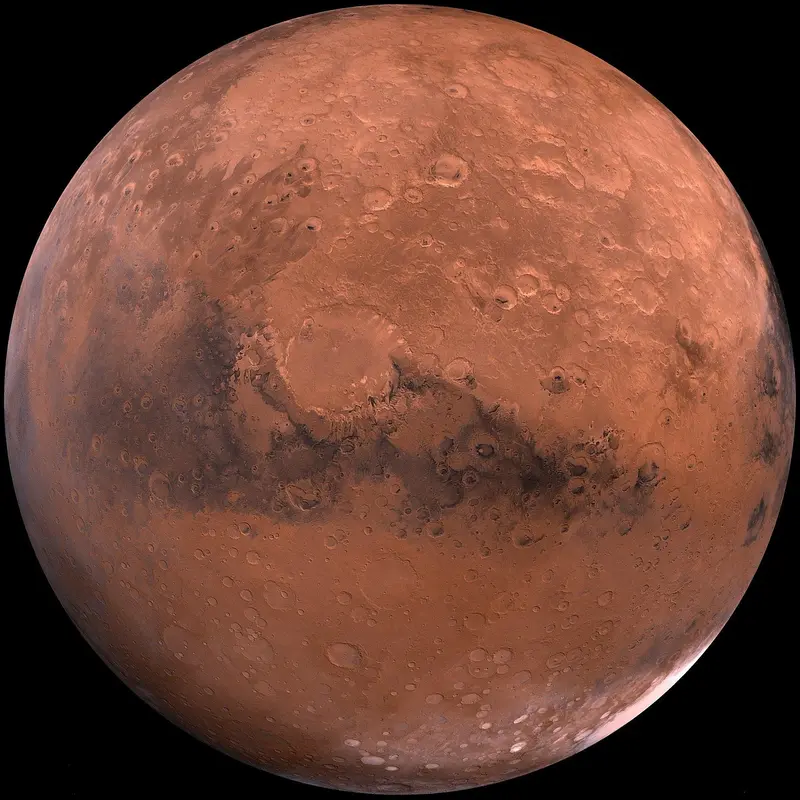
Mars: a rock with strange spots
1 / 8
Model script
Good afternoon, everyone. Are we alone in the universe? For most of history, this was a question for philosophers. Now, for the first time, we have real tools that can look for an answer. Today, I'll make a prediction: will we find signs of life beyond Earth by 2050? To answer, I'll look at three places. First, Mars, where a rover found a very interesting rock. Next, Europa, a moon of Jupiter with an ocean under its ice. Then, distant planets around other stars. Finally, I'll give my prediction and explain why I'm careful about it.
Your recording
Say this slide out loud, then listen to yourself.
Recordings stay on this device and disappear when you leave the page.
Useful phrases
for the first time
This has never happened before.
I'll make a prediction
I'll say what I think will happen in the future.
explain why I'm careful about it
Say why I don't want to be too sure.
Words
- philosophers
- rover
- biosignature
- astronomy
- crater
- riverbed
- minerals
- microbes
- ruled out
- icy surface
- spacecraft
- life-detection mission
- space telescope
- made headlines
Highlighted words are on this slide. Tap a word to look it up on Google.
Full script
Read the whole talk.
All slides in one place. Read it through once, then practice slide by slide.
01Are We Alone?
Good afternoon, everyone. Are we alone in the universe? For most of history, this was a question for philosophers. Now, for the first time, we have real tools that can look for an answer. Today, I'll make a prediction: will we find signs of life beyond Earth by 2050? To answer, I'll look at three places. First, Mars, where a rover found a very interesting rock. Next, Europa, a moon of Jupiter with an ocean under its ice. Then, distant planets around other stars. Finally, I'll give my prediction and explain why I'm careful about it.
Buenas tardes a todos. ¿Estamos solos en el universo? Durante la mayor parte de la historia, esta fue una pregunta para filósofos. Ahora, por primera vez, tenemos herramientas reales para buscar una respuesta. Hoy voy a hacer una predicción: ¿encontraremos señales de vida fuera de la Tierra para 2050? Para responder, voy a analizar tres lugares. Primero, Marte, donde un rover encontró una roca muy interesante. Luego, Europa, una luna de Júpiter con un océano bajo su hielo. Después, planetas lejanos que giran alrededor de otras estrellas. Por último, daré mi predicción y explicaré por qué soy prudente con ella.
02Key Term: A Biosignature
Before we start, I need to explain one key term: biosignature. A biosignature is a clue that life may have made something, such as a chemical or a pattern in a rock. The important word is "may." A biosignature is not proof, because many clues can also be made without life. I first learned this in an astronomy class in my first year. My professor showed us a news headline that said scientists had found life, and then she asked us one question: "What else could explain this?" I'll ask that same question for each example today.
Antes de empezar, necesito explicar un término clave: biofirma. Una biofirma es una pista de que la vida pudo haber producido algo, como una sustancia química o un patrón en una roca. La palabra importante es «pudo». Una biofirma no es una prueba, porque muchas pistas también pueden formarse sin vida. Aprendí esto por primera vez en una clase de astronomía en mi primer año. Mi profesora nos mostró un titular que decía que los científicos habían encontrado vida, y luego nos hizo una sola pregunta: «¿Qué otra cosa podría explicar esto?». Hoy haré esa misma pregunta con cada ejemplo.
03Mars: The Leopard Spots
My first place is Mars. In July 2024, NASA's Perseverance rover drilled a sample from a rock nicknamed "Cheyava Falls" in Jezero Crater, an area that was once an ancient riverbed. The rock has small marks that scientists call "leopard spots." In September 2025, a team led by Joel Hurowitz published a study in the journal Nature. They described the sample as a potential biosignature, because on Earth, minerals like these can form when microbes are involved. NASA said it was one of the clearest signs of possible ancient life it had found.
Mi primer lugar es Marte. En julio de 2024, el rover Perseverance de la NASA perforó una muestra de una roca apodada «Cheyava Falls» en el cráter Jezero, una zona que fue el lecho de un río antiguo. La roca tiene pequeñas marcas que los científicos llaman «manchas de leopardo». En septiembre de 2025, un equipo dirigido por Joel Hurowitz publicó un estudio en la revista Nature. Describieron la muestra como una posible biofirma, porque en la Tierra minerales como estos pueden formarse cuando intervienen microbios. La NASA dijo que era una de las señales más claras de posible vida antigua que había encontrado.
Sources: Hurowitz, J. A., et al. (2025). "Redox-driven mineral and organic associations in Jezero Crater, Mars." Nature, published 10 September 2025: the Sapphire Canyon sample was drilled from the rock "Cheyava Falls" in July 2024 in Jezero Crater's ancient river valley; its "leopard spots" were described as a potential biosignature; NASA, "NASA Says Mars Rover Discovered Potential Biosignature Last Year" (September 10, 2025): NASA described the sample as its clearest sign yet of possible ancient life on Mars
04What Else Could Explain It?
So, have we found life on Mars? Not yet. Let's ask my professor's question: what else could explain it? The researchers themselves said that non-living chemistry could not be fully ruled out. In other words, the spots might have formed without any microbes at all. There's also a practical problem. Perseverance's instruments are small, and the sample is still sitting on Mars. In my view, scientists will only be confident after they study pieces of this rock in large laboratories on Earth. So Mars gives us a strong clue, but it doesn't give us an answer yet.
Entonces, ¿hemos encontrado vida en Marte? Todavía no. Hagamos la pregunta de mi profesora: ¿qué otra cosa podría explicarlo? Los propios investigadores dijeron que no se podía descartar del todo una química sin vida. En otras palabras, las manchas podrían haberse formado sin ningún microbio. También hay un problema práctico. Los instrumentos de Perseverance son pequeños, y la muestra sigue en Marte. En mi opinión, los científicos solo estarán seguros después de estudiar trozos de esta roca en grandes laboratorios en la Tierra. Así que Marte nos da una pista fuerte, pero todavía no nos da una respuesta.
Source: Hurowitz, J. A., et al. (2025). Nature: the authors state that abiotic (non-biological) processes cannot be fully excluded and that further study is needed; the sample remains in a sealed tube carried by Perseverance on Mars
05Europa: An Ocean Under the Ice
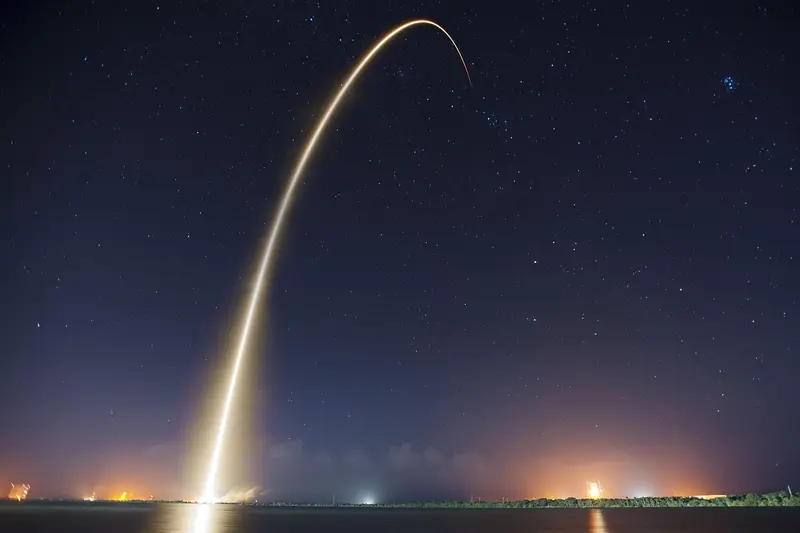
My second place is Europa, one of Jupiter's moons. Scientists believe it has a huge ocean of salty water under its icy surface. On October 14, 2024, NASA launched a spacecraft called Europa Clipper. It's planned to reach Jupiter in 2030 and then fly past Europa again and again. But here's an important detail. According to NASA, Europa Clipper is not a life-detection mission. Its job is to find out whether Europa has the conditions that could support life. So even if everything goes well, Europa Clipper will tell us where to look next, not whether anything lives there.
Mi segundo lugar es Europa, una de las lunas de Júpiter. Los científicos creen que tiene un enorme océano de agua salada bajo su superficie helada. El 14 de octubre de 2024, la NASA lanzó una nave espacial llamada Europa Clipper. Está previsto que llegue a Júpiter en 2030 y que luego pase cerca de Europa una y otra vez. Pero aquí hay un detalle importante. Según la NASA, Europa Clipper no es una misión de detección de vida. Su trabajo es averiguar si Europa tiene las condiciones que podrían permitir la vida. Así que, aunque todo salga bien, Europa Clipper nos dirá dónde buscar después, no si algo vive allí.
Source: NASA Science, "Europa Clipper" mission page: launched October 14, 2024; arrival at Jupiter in 2030; the mission's goal is to determine whether Europa has conditions suitable for life, and it is not a life-detection mission
06Distant Planets: A Claim That Fell Apart
My third place is much farther away. In 2025, a team led by Nikku Madhusudhan used the James Webb Space Telescope to study a planet called K2-18b. They reported a possible sign of a gas that, on Earth, is mostly made by living things. It made headlines around the world. However, other teams looked at all of the telescope data again. A study led by Rafael Luque, published in Astronomy and Astrophysics in 2025, found no strong evidence for the gas. To me, this is the best example of why we should wait before getting excited.
Mi tercer lugar está mucho más lejos. En 2025, un equipo dirigido por Nikku Madhusudhan usó el telescopio espacial James Webb para estudiar un planeta llamado K2-18b. Informaron de una posible señal de un gas que, en la Tierra, producen sobre todo los seres vivos. La noticia apareció en titulares de todo el mundo. Sin embargo, otros equipos volvieron a analizar todos los datos del telescopio. Un estudio dirigido por Rafael Luque, publicado en Astronomy and Astrophysics en 2025, no encontró pruebas sólidas de ese gas. Para mí, este es el mejor ejemplo de por qué debemos esperar antes de emocionarnos.
Sources: Madhusudhan, N., et al. (2025). "New Constraints on DMS and DMDS in the Atmosphere of K2-18 b from JWST MIRI." The Astrophysical Journal Letters, 983, L40: reported features consistent with dimethyl sulfide (DMS) and/or dimethyl disulfide (DMDS), which on Earth are produced mainly by life; Luque, R., et al. (2025). "Insufficient evidence for DMS and DMDS in the atmosphere of K2-18 b." Astronomy & Astrophysics: a joint analysis of all JWST observations found no statistically significant evidence for DMS or DMDS
07My Prediction for 2050
So, here's my prediction. I think that by 2050, we will probably have strong signs that simple life existed on ancient Mars. I think this because the Mars sample already exists, and scientists only need to study it properly. However, I don't think we'll have proof of anything alive today, on Europa or on distant planets. Some people say this search is a waste of money if the answer is so uncertain. That's a fair point. But even a "no" teaches us something: it tells us how rare life might be. In my view, that's worth knowing.
Entonces, esta es mi predicción. Creo que para 2050 probablemente tendremos señales fuertes de que existió vida simple en el Marte antiguo. Lo creo porque la muestra de Marte ya existe, y los científicos solo necesitan estudiarla bien. Sin embargo, no creo que tengamos pruebas de algo vivo hoy, ni en Europa ni en planetas lejanos. Algunas personas dicen que esta búsqueda es un desperdicio de dinero si la respuesta es tan incierta. Es un punto válido. Pero incluso un «no» nos enseña algo: nos dice lo rara que podría ser la vida. En mi opinión, vale la pena saberlo.
08Clues, Not Answers, for Now
To sum up, Mars has given us the strongest clue so far, but the rock still needs to be studied on Earth. Europa Clipper will tell us whether Europa could support life, not whether it does. And the story of K2-18b reminds us to ask, "What else could explain this?" So my answer to today's question is a careful one: by 2050, we'll probably have strong signs of ancient life, but not final proof. Thank you for listening. I'm happy to take your questions.
En resumen, Marte nos ha dado la pista más fuerte hasta ahora, pero la roca todavía necesita estudiarse en la Tierra. Europa Clipper nos dirá si Europa podría albergar vida, no si la alberga. Y la historia de K2-18b nos recuerda que debemos preguntar: «¿Qué otra cosa podría explicar esto?». Así que mi respuesta a la pregunta de hoy es prudente: para 2050 probablemente tendremos señales fuertes de vida antigua, pero no una prueba definitiva. Gracias por su atención. Con gusto responderé a sus preguntas.
More Science & Technology presentations




Cover photo by WikiImages on Pixabay