Should Cities Be Designed for Cars or People?
AdvancedForSociety & Environment英文簡報的示範講稿與中文翻譯。每一頁都可以聽示範、開口練習。
Practice the other side:Why Cities Still Need Cars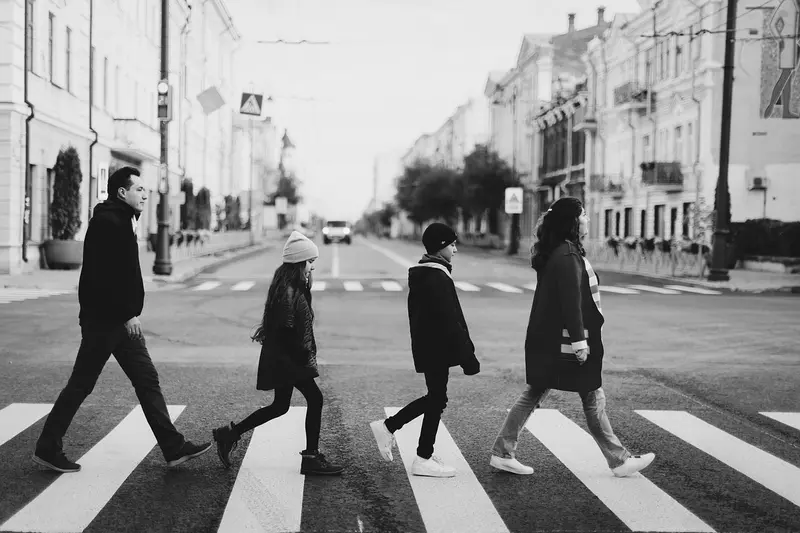
Should Cities Be Designed for Cars or People?
Rethinking the streets we live on
Model script
Good morning. Look at any street in a big city, and you'll notice something: most of the space is given to cars. Today, I want to challenge that idea and ask whether our cities should be designed for people instead.
Your recording
Say this slide out loud, then listen to yourself.
Recordings stay on this device and disappear when you leave the page.
Useful phrases
you'll notice something:
Make the audience curious before you give the point.
I want to challenge that idea
A polite way to say you disagree with a common belief.
Full script
Read the whole talk.
All slides in one place. Read it through once, then practice slide by slide.
01Should Cities Be Designed for Cars or People?
Good morning. Look at any street in a big city, and you'll notice something: most of the space is given to cars. Today, I want to challenge that idea and ask whether our cities should be designed for people instead.
大家早安。隨便看看大城市裡的任何一條街,你都會發現一件事:大部分的空間都留給了車子。今天,我想挑戰這個觀念,和大家一起思考:我們的城市是不是應該改成以人為本來設計。
02The Cost of Car-Centered Cities
Car-centered design comes at a cost. It leads to traffic jams, noise, and air pollution. On top of that, every parking lot is space that could have been a park, a café, or a place for kids to play.
以汽車為中心的設計是要付出代價的。它會造成塞車、噪音和空氣汙染。不只如此,每一座停車場,原本都可以是一座公園、一間咖啡廳,或是讓孩子玩耍的地方。
03Cars Are Mostly Standing Still
Here's a surprising fact. According to a study in the UK, the average car is parked about ninety-six percent of the time. That means we give huge amounts of city space to objects that are mostly standing still.
跟大家分享一個令人驚訝的事實。根據英國的一項研究,一般的汽車大約有百分之九十六的時間都是停著的。也就是說,我們把大量的城市空間,給了大部分時間都靜止不動的東西。
Source: RAC Foundation, "Spaced Out" (2012), UK
04What People-First Cities Look Like
Some cities are already making this shift. Paris has turned busy roads along the river into spaces for walking and cycling. Barcelona has created "superblocks," where cars are limited and streets become public spaces.
有些城市已經開始做出這樣的轉變。巴黎把河岸邊車流量大的道路,改成了步行和騎自行車的空間。巴塞隆納則打造了「超級街區」,在那裡限制車輛進入,讓街道變成公共空間。
Sources: City of Paris (riverside roads for walking and cycling); Barcelona City Council (Superblocks program)
05Benefits for Everyone
These changes don't just help pedestrians. When streets become safer and quieter, people walk and cycle more, which is good for their health. Local shops can benefit too, because people on foot tend to stop and look around.
這些改變不只對行人有好處。當街道變得更安全、更安靜,大家就會更常走路和騎腳踏車,這對健康很有幫助。在地的店家也能受惠,因為走路的人比較會停下腳步,四處逛逛。
06Common Objections
Naturally, there are objections. Shop owners worry about losing customers, and drivers worry about traffic. However, research on "traffic evaporation" shows that when road space is reduced, some car trips simply disappear as people change their habits.
當然,也會有反對的聲音。店家老闆擔心客人變少,駕駛人擔心交通變糟。不過,關於「交通蒸發」的研究顯示,當道路空間減少時,隨著大家改變習慣,有一部分開車的行程就這樣自然消失了。
Source: Cairns, Hass-Klau & Goodwin, "Traffic Impact of Highway Capacity Reductions" (1998)
07A Step-by-Step Approach
The smartest cities don't change everything overnight. They start with temporary trials, listen carefully to residents, and only then make successful changes permanent.
最聰明的城市不會在一夜之間改變一切。它們會先從短期試辦開始,仔細聆聽居民的意見,之後才把成功的改變正式定下來。
08Who Are Streets For?
Of course, cars won't disappear. But streets are one of the largest public spaces we have. The real question is: who should they be for? I'll leave you with that question. Thank you.
當然,汽車不會消失。但街道是我們擁有的最大公共空間之一。真正的問題是:街道應該屬於誰?我就把這個問題留給大家。謝謝。
Cover photo by vetta85 on Pixabay