Should Cities Be Designed for Cars or People?
AdvancedForSociety & EnvironmentBài nói mẫu của bài thuyết trình tiếng Anh kèm bản dịch tiếng Việt. Nghe và luyện nói theo từng slide.
Practice the other side:Why Cities Still Need Cars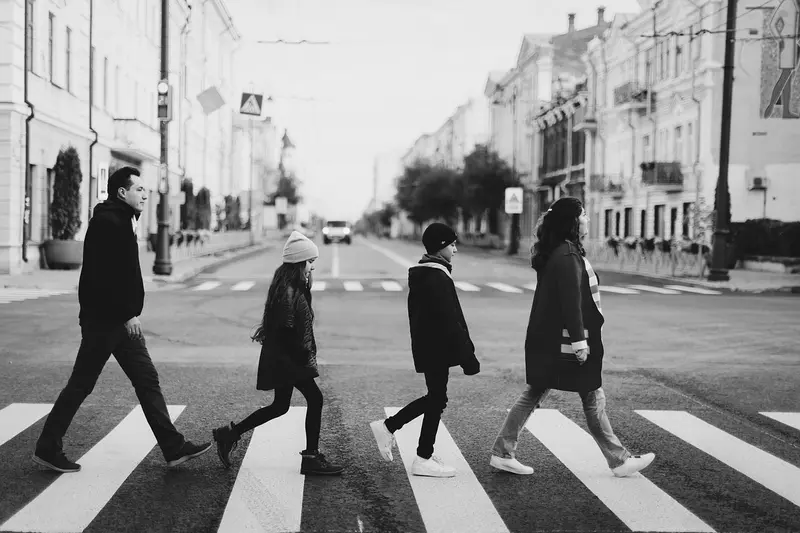
Should Cities Be Designed for Cars or People?
Rethinking the streets we live on
Model script
Good morning. Look at any street in a big city, and you'll notice something: most of the space is given to cars. Today, I want to challenge that idea and ask whether our cities should be designed for people instead.
Your recording
Say this slide out loud, then listen to yourself.
Recordings stay on this device and disappear when you leave the page.
Useful phrases
you'll notice something:
Make the audience curious before you give the point.
I want to challenge that idea
A polite way to say you disagree with a common belief.
Full script
Read the whole talk.
All slides in one place. Read it through once, then practice slide by slide.
01Should Cities Be Designed for Cars or People?
Good morning. Look at any street in a big city, and you'll notice something: most of the space is given to cars. Today, I want to challenge that idea and ask whether our cities should be designed for people instead.
Chào buổi sáng. Hãy nhìn bất kỳ con phố nào ở một thành phố lớn, và các bạn sẽ nhận ra một điều: phần lớn không gian được dành cho ô tô. Hôm nay, tôi muốn đặt câu hỏi về điều đó, và hỏi xem liệu thành phố của chúng ta có nên được thiết kế cho con người hay không.
02The Cost of Car-Centered Cities
Car-centered design comes at a cost. It leads to traffic jams, noise, and air pollution. On top of that, every parking lot is space that could have been a park, a café, or a place for kids to play.
Thiết kế lấy ô tô làm trung tâm có cái giá của nó. Nó dẫn đến tắc đường, tiếng ồn và ô nhiễm không khí. Hơn nữa, mỗi bãi đỗ xe là một khoảng không gian lẽ ra có thể là công viên, quán cà phê hay chỗ cho trẻ em vui chơi.
03Cars Are Mostly Standing Still
Here's a surprising fact. According to a study in the UK, the average car is parked about ninety-six percent of the time. That means we give huge amounts of city space to objects that are mostly standing still.
Đây là một sự thật đáng ngạc nhiên. Theo một nghiên cứu ở Anh, một chiếc ô tô trung bình nằm đỗ khoảng 96% thời gian. Điều đó có nghĩa là chúng ta dành một lượng lớn không gian thành phố cho những vật thể gần như lúc nào cũng đứng yên.
Source: RAC Foundation, "Spaced Out" (2012), UK
04What People-First Cities Look Like
Some cities are already making this shift. Paris has turned busy roads along the river into spaces for walking and cycling. Barcelona has created "superblocks," where cars are limited and streets become public spaces.
Một số thành phố đã bắt đầu thay đổi. Paris đã biến những con đường đông đúc ven sông thành không gian cho người đi bộ và đi xe đạp. Barcelona đã tạo ra các "siêu khối", nơi ô tô bị hạn chế và đường phố trở thành không gian công cộng.
Sources: City of Paris (riverside roads for walking and cycling); Barcelona City Council (Superblocks program)
05Benefits for Everyone
These changes don't just help pedestrians. When streets become safer and quieter, people walk and cycle more, which is good for their health. Local shops can benefit too, because people on foot tend to stop and look around.
Những thay đổi này không chỉ giúp người đi bộ. Khi đường phố an toàn và yên tĩnh hơn, mọi người đi bộ và đạp xe nhiều hơn, điều đó tốt cho sức khỏe. Các cửa hàng địa phương cũng có thể được lợi, vì người đi bộ thường dừng lại và nhìn ngắm xung quanh.
06Common Objections
Naturally, there are objections. Shop owners worry about losing customers, and drivers worry about traffic. However, research on "traffic evaporation" shows that when road space is reduced, some car trips simply disappear as people change their habits.
Tất nhiên, có những ý kiến phản đối. Chủ cửa hàng lo mất khách, còn người lái xe lo tắc đường. Tuy nhiên, nghiên cứu về "hiện tượng giao thông bốc hơi" cho thấy khi diện tích đường bị thu hẹp, một số chuyến đi bằng ô tô đơn giản là biến mất, vì mọi người thay đổi thói quen.
Source: Cairns, Hass-Klau & Goodwin, "Traffic Impact of Highway Capacity Reductions" (1998)
07A Step-by-Step Approach
The smartest cities don't change everything overnight. They start with temporary trials, listen carefully to residents, and only then make successful changes permanent.
Những thành phố thông minh nhất không thay đổi mọi thứ chỉ sau một đêm. Họ bắt đầu bằng các thử nghiệm tạm thời, lắng nghe người dân thật kỹ, rồi mới biến những thay đổi thành công thành vĩnh viễn.
08Who Are Streets For?
Of course, cars won't disappear. But streets are one of the largest public spaces we have. The real question is: who should they be for? I'll leave you with that question. Thank you.
Tất nhiên, ô tô sẽ không biến mất. Nhưng đường phố là một trong những không gian công cộng lớn nhất mà chúng ta có. Câu hỏi thực sự là: đường phố nên dành cho ai? Tôi xin gửi lại câu hỏi đó cho các bạn. Xin cảm ơn.
Cover photo by vetta85 on Pixabay