Should Cities Be Designed for Cars or People?
AdvancedForSociety & EnvironmentMusterskript einer englischen Präsentation mit deutscher Übersetzung. Hören und üben, Folie für Folie.
Practice the other side:Why Cities Still Need Cars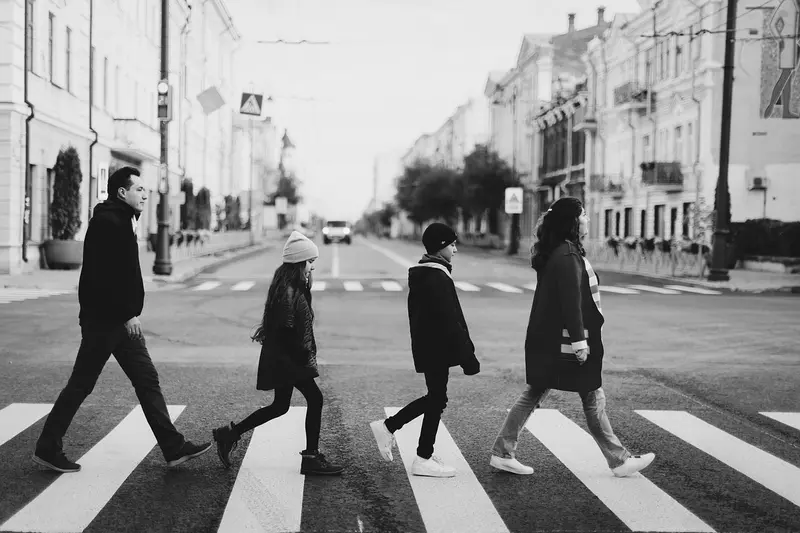
Should Cities Be Designed for Cars or People?
Rethinking the streets we live on
Model script
Good morning. Look at any street in a big city, and you'll notice something: most of the space is given to cars. Today, I want to challenge that idea and ask whether our cities should be designed for people instead.
Your recording
Say this slide out loud, then listen to yourself.
Recordings stay on this device and disappear when you leave the page.
Useful phrases
you'll notice something:
Make the audience curious before you give the point.
I want to challenge that idea
A polite way to say you disagree with a common belief.
Full script
Read the whole talk.
All slides in one place. Read it through once, then practice slide by slide.
01Should Cities Be Designed for Cars or People?
Good morning. Look at any street in a big city, and you'll notice something: most of the space is given to cars. Today, I want to challenge that idea and ask whether our cities should be designed for people instead.
Guten Morgen. Schauen Sie sich irgendeine Straße in einer Großstadt an, und Ihnen fällt etwas auf: Der meiste Platz gehört den Autos. Heute möchte ich diese Idee infrage stellen und fragen, ob unsere Städte nicht eher für Menschen gestaltet sein sollten.
02The Cost of Car-Centered Cities
Car-centered design comes at a cost. It leads to traffic jams, noise, and air pollution. On top of that, every parking lot is space that could have been a park, a café, or a place for kids to play.
Eine autozentrierte Planung hat ihren Preis. Sie führt zu Staus, Lärm und Luftverschmutzung. Außerdem ist jeder Parkplatz eine Fläche, die ein Park, ein Café oder ein Spielplatz für Kinder hätte sein können.
03Cars Are Mostly Standing Still
Here's a surprising fact. According to a study in the UK, the average car is parked about ninety-six percent of the time. That means we give huge amounts of city space to objects that are mostly standing still.
Hier ist eine überraschende Tatsache. Laut einer Studie aus Großbritannien steht ein durchschnittliches Auto etwa 96 % der Zeit geparkt herum. Das heißt, wir geben riesige Flächen der Stadt an Gegenstände, die meistens stillstehen.
Source: RAC Foundation, "Spaced Out" (2012), UK
04What People-First Cities Look Like
Some cities are already making this shift. Paris has turned busy roads along the river into spaces for walking and cycling. Barcelona has created "superblocks," where cars are limited and streets become public spaces.
Einige Städte vollziehen diesen Wandel bereits. Paris hat stark befahrene Straßen am Fluss in Flächen für Fußgänger und Radfahrer verwandelt. Barcelona hat „Superblocks“ geschaffen, in denen Autos eingeschränkt sind und Straßen zu öffentlichen Räumen werden.
Sources: City of Paris (riverside roads for walking and cycling); Barcelona City Council (Superblocks program)
05Benefits for Everyone
These changes don't just help pedestrians. When streets become safer and quieter, people walk and cycle more, which is good for their health. Local shops can benefit too, because people on foot tend to stop and look around.
Diese Veränderungen helfen nicht nur Fußgängern. Wenn Straßen sicherer und ruhiger werden, gehen die Menschen mehr zu Fuß und fahren mehr Rad, und das ist gut für ihre Gesundheit. Auch lokale Geschäfte können profitieren, denn wer zu Fuß unterwegs ist, bleibt eher stehen und schaut sich um.
06Common Objections
Naturally, there are objections. Shop owners worry about losing customers, and drivers worry about traffic. However, research on "traffic evaporation" shows that when road space is reduced, some car trips simply disappear as people change their habits.
Natürlich gibt es Einwände. Ladenbesitzer fürchten, Kunden zu verlieren, und Autofahrer fürchten mehr Verkehr. Die Forschung zur sogenannten „Verkehrsverdunstung“ zeigt jedoch: Wenn Straßenraum verringert wird, verschwinden manche Autofahrten einfach, weil die Menschen ihre Gewohnheiten ändern.
Source: Cairns, Hass-Klau & Goodwin, "Traffic Impact of Highway Capacity Reductions" (1998)
07A Step-by-Step Approach
The smartest cities don't change everything overnight. They start with temporary trials, listen carefully to residents, and only then make successful changes permanent.
Die klügsten Städte ändern nicht alles über Nacht. Sie beginnen mit befristeten Versuchen, hören den Anwohnern genau zu und machen erst dann erfolgreiche Änderungen dauerhaft.
08Who Are Streets For?
Of course, cars won't disappear. But streets are one of the largest public spaces we have. The real question is: who should they be for? I'll leave you with that question. Thank you.
Natürlich werden Autos nicht verschwinden. Aber Straßen gehören zu den größten öffentlichen Räumen, die wir haben. Die eigentliche Frage ist: Für wen sollen sie da sein? Mit dieser Frage möchte ich Sie entlassen. Vielen Dank.
Cover photo by vetta85 on Pixabay